The Linda Walking Skirt and Short Dolman Sleeve Blouse, 1940s style

Introduction

Last Spring I began development of a walking skirt and short dolman sleeve blouse based on two vintage pattern illustrations. I studied the wardrobe basics of 1940s everyday women’s wear. Clothing in the early to mid-1940s had to be functional. Fabrics, threads and notions were not easily available due to rationing. All resources, including textiles, were prioritized for the use by the troops and initiatives to move the American people towards victory in the war. This meant great sacrifice and rationing of many necessities.

Americans received ration coupons for clothing, food, shoes and other items needed for daily life. To get a new blouse, for example, so many ration book coupons had to be used for the purchase. One had to be very careful with how they used their allotment of coupons. When they were gone, there was a wait until the government issued new ration books.

This is why many everday clothes of the WWII period and shortly thereafter had a minimum of details. Everything had to be functional. Because of this simplicity, it was important to buy clothes that fit well and were well made. They had to last for a long time.

Development of the outfit

I took inspiration from two 1940s pattern envelope illustrations. The pattern was developed using a Misses Size 8 sloper developed through Precision Draping. Further draping was done on the basic blouse to develop the dolman sleeves.

The blouse features a shoulder dart, short dolman sleeves and a round neckline. As I developed the pattern and tested the toile, I learned that I needed a shoulder pad to support the shape of the sleeve on the shoulder line. Omitting the shoulder pad caused the sleeve to droop and the entire blouse looked tired. My solution was to purchase very thin, regular set-in sleeve shoulder pads and use them for the blouse. I had to experiment with the placement until they looked just right. In the end, the shoulder pad extended about 1/4″ past the shoulder line. The shoulder pads are about 1/4″ thick.

I lowered the neckline of the blouse so I could wear a locket or chocker with the blouse if I wanted to. I selected a very silky, dotted print. To create some visual interest I used 1/2 wide white buttons sewn on with red thread. The contrast worked with the red background and the white dots on the fabric.

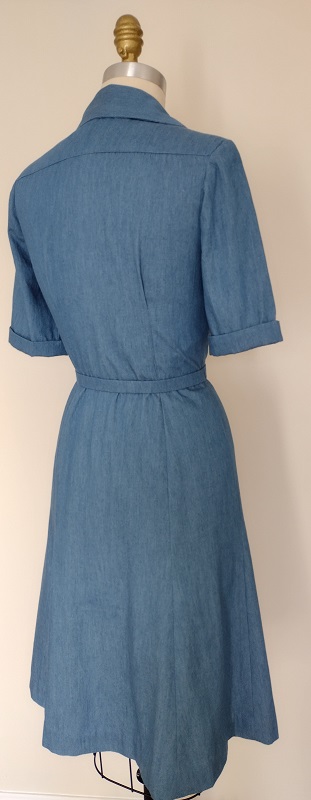
I think that 1940 walking skirts are much more figure flattering than pencil skirts. Most 1940s skirts curve over the hip and slightly extend out from there to the hemline. This is not the cookie-cutter A-Line skirt of the 1960s. This is more a slim skirt with a nice built in movement. The skirt moves very nicely when walking. I added kick pleats in front and back to get the most movement out of my skirt.

Fabrics, sewing and finishing details
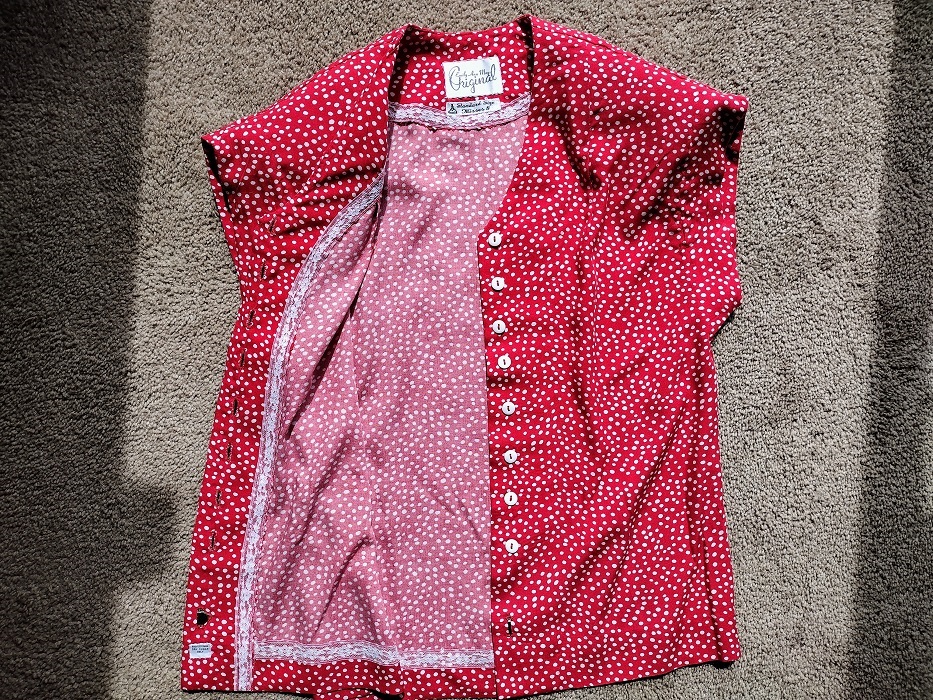
The front facing of the blouse is in one with the blouse front. A separate facing piece is used for the back. The fabric is very slippery and needed gentle shaping for the neckline and blouse front. I cut the cotton batiste used for the interfacing on the true bias. This worked well with the fluid properties of the fabric. Seams were stitched together, pinked and then stitched again away from the edge. All seams were pressed to the back. Wrights Flexi-Lace was used to finish facing, sleeve hem and blouse hem. The entire facing was slant stitched by hand to the blouse using a fine hand sewing needle and small stitches that were not too tight.

The bias cut batiste interfacing has 1/2″ extra past center front. This creates a soft roll on the front of the blouse. The sleeve edges have a 3/8″ bias cut interfacing that extends past the hemline to create a soft fold when hemmed. The sleeves also are finished with Wrights Flexi-Lace.

The skirtis a lightweight blend that needed body to support the kick pleats. For this reason I choose to underline the skirt. Seams were pinked and straight stitched 1/8″ from the edge. The edges around each kick pleat and the hem are finished with Wrights Flexi-Lace. To add some visual interest I backed the kick pleat insert with the blouse fabric. On the back of the skirt I placed the size and designer labels on the kick pleat. The kick pleat is catched stitched to the underlining at the top.

The skirt has a side lapped zipper application that is hand stitched into place. The waistband uses Banroll to maintain the shape.

The dolman sleeve has a low armhole opening. This blouse is very comfortable but the bra shows just a little if the arm is raised. If this is a problem a camisole or slip can offer some more coverage. Personally this does not matter to me, as I do not think that many people are going to be looking under my arms and into my blouse.

Since the fabric was very slippery, easing the facing into the proper position created problems. I had to place the blouse inside out on the dress form. Then I pinned and basted the facing into place and after that the hem.
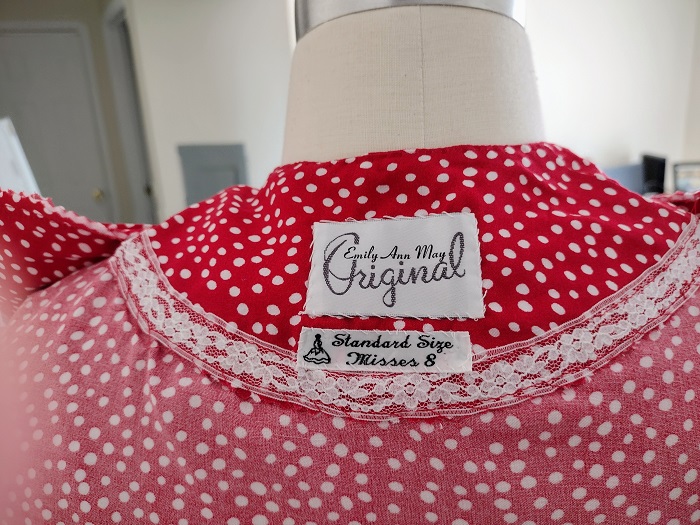
The finishing touch is a custom made label and size label. This always gives me a great sense of accomplishment. I recommend getting your own custom labels for your own creations.

Photos of me wearing the Linda skirt and blouse

Linda was a popular name for girls in the 1940s. I chose this name because it conveys a sense of the everyday which this outfit is meant to do. The emphasis is on fit and a flattering result. I am delighted with this vintage inspired outfit because it can work today and any day in any year.

The finished pattern diagram is available in this posting. It may be copied and sized in your graphics program. I release the pattern into the commons for anyone to use. Always test the pattern and make adjustments where needed.

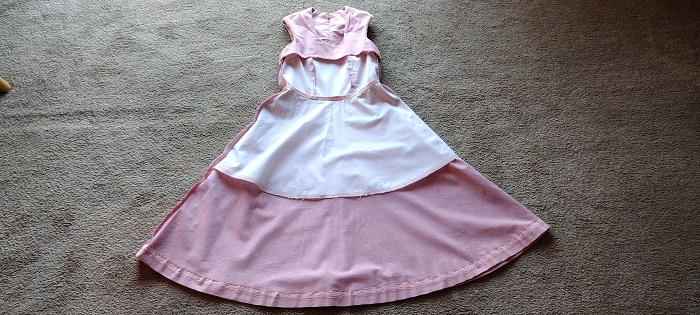
Draped Princess Bodice and Flared Skirt Jumper 1950s Style

Introduction

I always wanted a princess seamed dress or overblouse. Now that I have fulfilled the realization of my idea I have to say that it did not fulfill all my expectations. It did turn into a good learning experience about fit, style lines and individual body shapes.

Photos of the Jumper

Background of the pattern

The pattern was based on the Misses Size 8 sloper developed using the Precision Draping technique created by Nellie Weymouth Link. The technique is detailed in a reprint of the 1947 book through Amazon and other booksellers online.

I altered the pattern after fitting the toile on myself and making adjustments.

Expectations vs. Reality

Originally I envisioned the princess seam over my bustline to be very flattering. Once it was finished I did not care for the look on myself.

I have sloping shoulders. This causes the apex of my bustline to be lower than a standard size. The result is that the princess seam curves a bit lower, emphasizing both my bustline and narrow, sloping shoulders. I straightened the curve on the pattern, but that did not make much difference.

I offer this experience as a way for others to learn what makes the most flattering fit for their own body type.

I love the flared skirt of the jumper, the neckline and the armholes. If I were to make this again I would use a vertical dart below the bust or perhaps two French darts in the side seam of the bodice front.

Sewing Techniques

The jumper is made from 100% cotton chambray I ordered from Mood Fabrics. The underlining is cotton batiste.

I underlined the bodice. The skirt was underlined from waist to a few inches below the waistline. I wanted the fabric to have less transparency. The underlining also served as an anchor to the zipper.

Hidden Zipper: A 1960s Couture Technique

I used the instructions for the hidden zipper sewing technique detailed in Couture Sewing by Claire Shaeffer.

The zipper must be sewn to garment pieces that are underlined. This is because the finished seam is anchored to the underlining with catch stitches or fell stitches.

The resulting zipper is a little like an invisible zipper but less rigid.

Seam Finishes

I cut the seams wider than usual because the fabric frayed. Edges were pinked and zig-zagged for durability.

Other Finishes

The all-in-one facing and hemline were finished with Wright’s Flexi-Lace. I used the Flexi-Lace for the waistline stay, too.

Free Pat Perkins 1950s inspired Repro Dress Pattern

Introduction

Left: First sketch. Right: Finished dress.

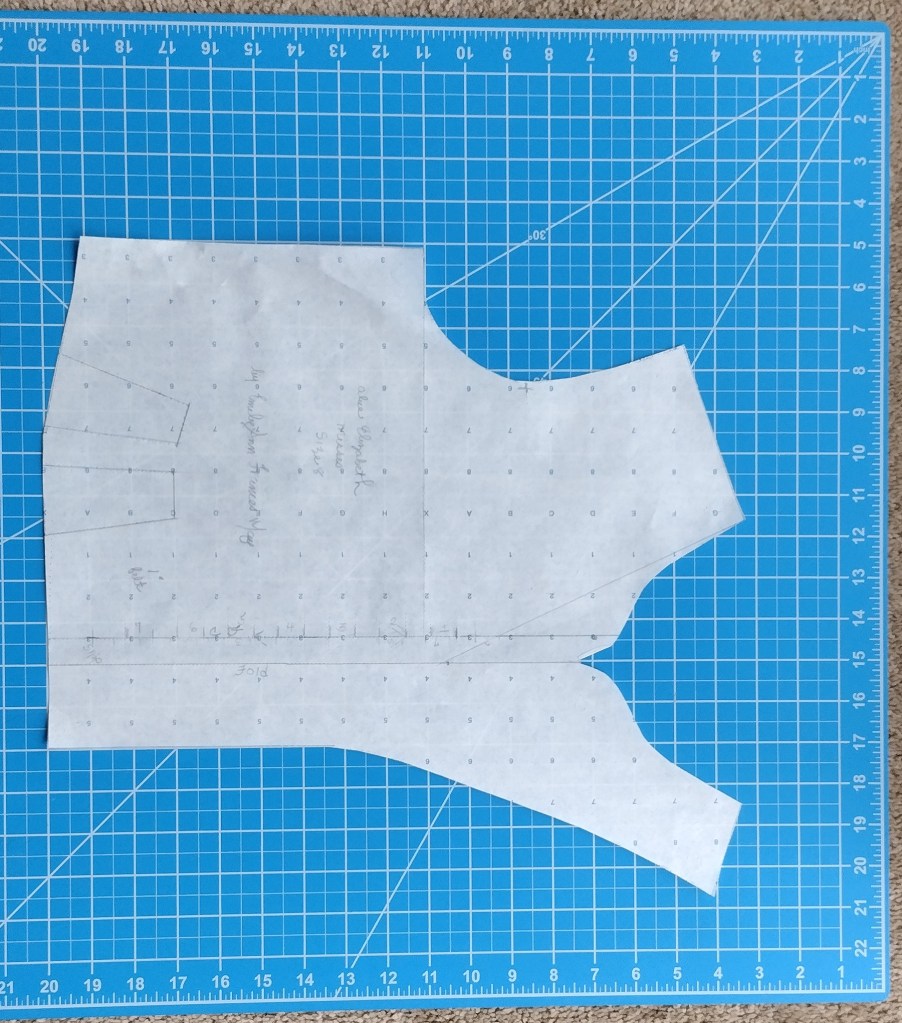
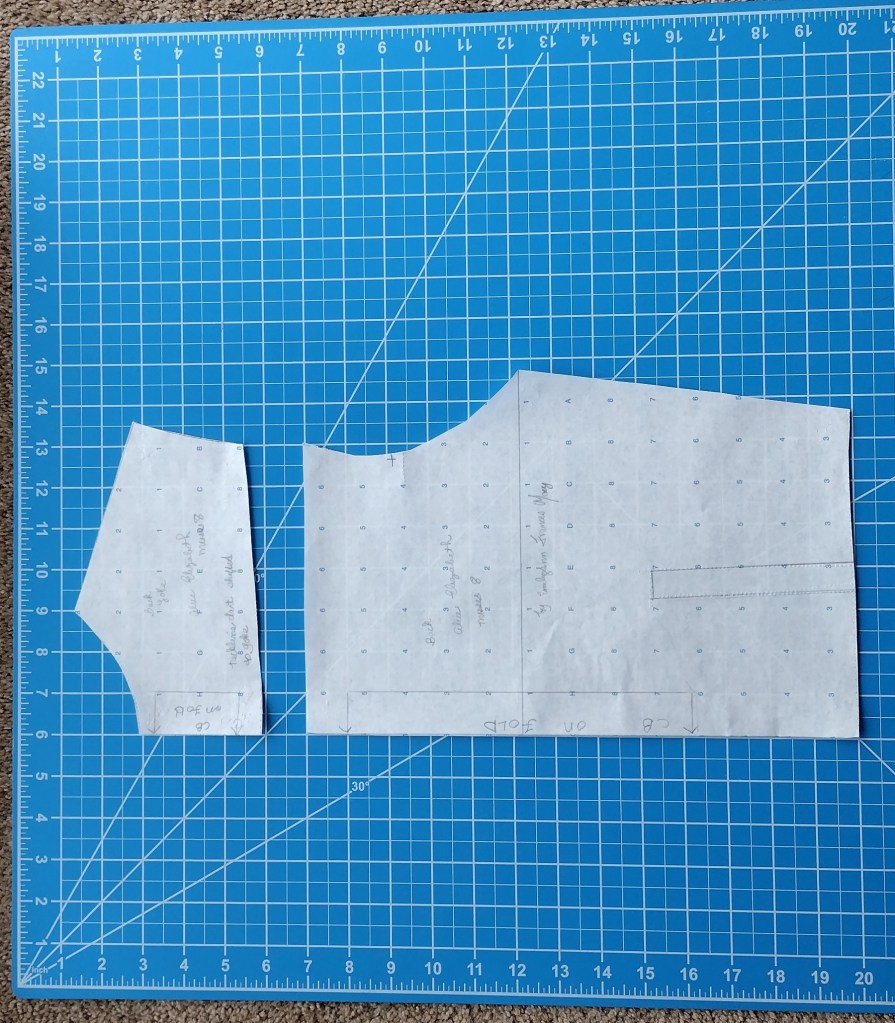
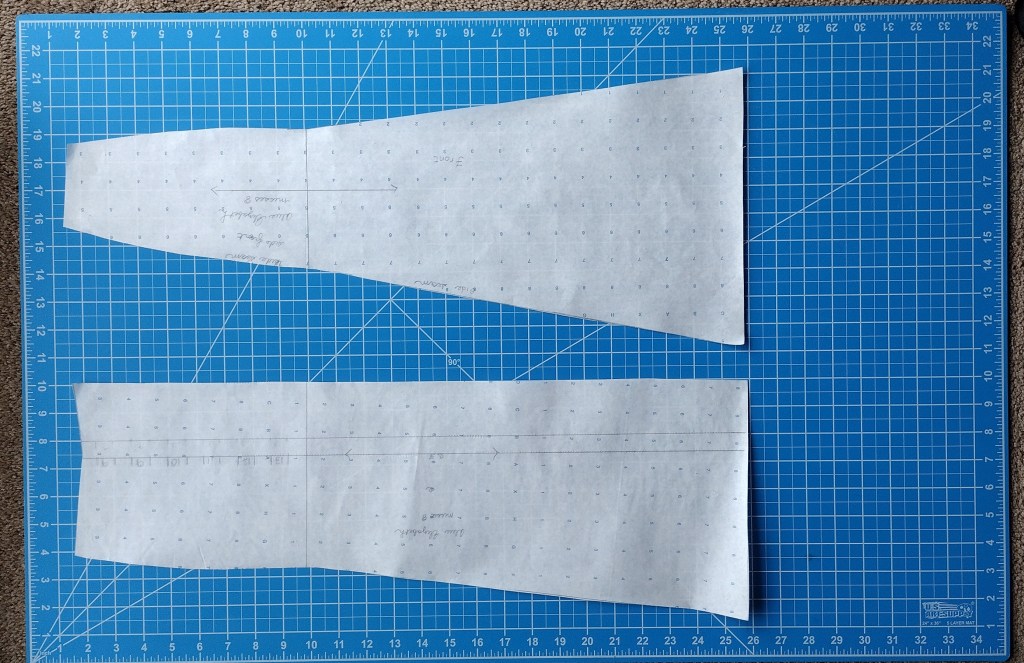
I am releasing my pattern for the Alice Elizabeth dress into the public domain. You are free to download and size it up or down in a graphics program. You can alter the design. I also give permission to use it privately or commercially.

This is a basic pattern that you can use as the basis of your own rendition of the style.

Please refer to the following posting for further details and as a guide to whether or not you want to make the dress with closures like I used or that are on the original 1950s dress.

Pat Perkins Everyday/House Dress Circa 1950s – Analysis

Alice Elizabeth dress – Construction details on my interpretation of the Pat Perkins dress

This pattern was created using a combination of draping and flat pattern making based on the 1947 technique, Precision Draping. A Wolf Form in Misses 8 was used. The resulting dress can be labelled a Misses 6/8.

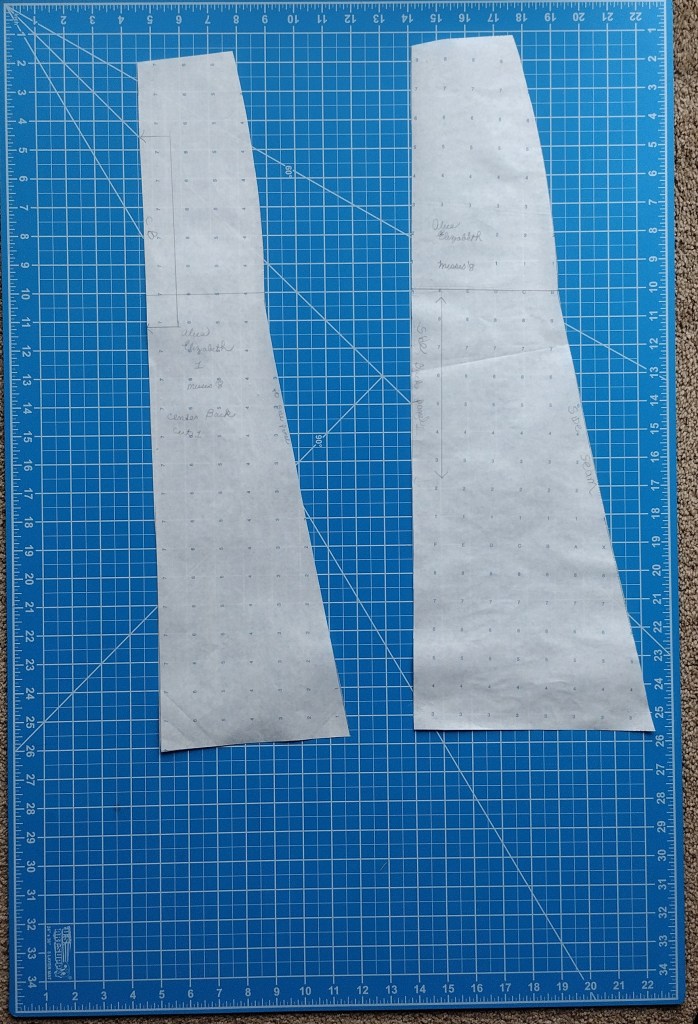
The pattern is showed on a cutting mat using inches. All pattern pieces do not have seam allowances.

Bodices

Front Bodice
Back Yoke and Bodic

Six-gore Skirt

Frong of six-gore skirt.
Back of six-gore skirt

All-in-one sleeve

All-in-one sleeve

Top collar, under collar, front interfacing

Top collar and bottom collar.
Interfacing front bodice and skirt.

Alice Elizabeth: My version of a 1950s House Dress by Pat Perkins

Introduction

The dress pattern and design is based on a 1950s house dress by Pat Perkins that I bought during Lockdown 2020. I wanted to create a basic pattern to dervice this and future retro inspired clothes I make. I bought the dress from a vintage seller on Etsy and posted a detailed style analysis . I had plenty of time during lockdown to learn about different vintage draping and patternmaking systems. I chose to teach myself Precision Draping from the book of the same title by Nellie Weymouth Link.

After draping the basic toile on a 2019 Misses Size 8 Wolf Form, I created a sloper on oaktag. I released this sloper into the public domain for anyone to use and improve on. This sloper is the basis of the pattern for the Alice Elizabeth dress.

Dress and Pattern Details

The dress consists of a fitted bodice with two vertical dart tucks on each side of the bodice in front. The skirt is six gores with a very moderate flare at the bottom. The Pat Perkins dress has buttons and loop closure down center front. A metal zipper was sewn into the left seam from 2″ under the arm until the hip line using a lapped application.

I do not like side seam zippers for two reasons. First they can be uncomfortable. Second they interfere with the flow of the underarm seam and skirt side seam. Since fitted clothing often falls on the bias at the side seams the potential for distortion exists. I hand sewed six button holes in the front of the bodice.

My reasons for avoiding buttonholes on the entire dress is that it would spoil the look of simplicity and efficiency the house dress is supposed to convey. I had not thought about using a hidden zipper when the dress was in progress. Now that it is finished I have a hidden zipper in mind for the future. It is a simple application I will detail when it is in progress. I used snaps because the front portion of the skirt looks better. The eye is drawn upwards to focus on the striped buttons and self-fabric belt. I do not care for metal eyelets and prongs in a belt so I used snaps to fasten the belt.

The edge of the front facing, the waistline stay and hem were finished with navy blue Flexi-Lace by Wrights. Seams were pinked. I chose these finishes because they are similar to home based seamstresses used in the 1950s. The Flexi-Lace tape was completely stitched by hand to the waistline seam using a running stitch at the waist and edge for flexibility. I used a cross-hatch stitch to join the stay to side seams and dart tucks.

The dress is made from 100% cotton chambray. It is very soft with a good drape. To support the dart tucks more a small edge stitching was used.

A back yoke was used to eliminate the neckline dart on the basic back bodice pattern. That too was edge stitch. On the inside, the yoke is interfaced and lined. The dart tucks in the back are also top stitched.

The collar is a basic collar pattern with a high stand. The undercollar and interfacing are cut on the bias. The sleeves have all-in-one cuffs.

Accessories

I chose understated accessories in sterling silver to keep to the everyday quality I want this outfit to have. The earrings have a pretty filigree. A small silver necklace, about 16″ long, with tiny beads would also look good with this dress.

Ballerina flats in navy blue complete the outfit. They pick up on the color of the stripes on the buttons. The overall impression of this outfit is meant to make the wearer attractive in a modest, understated fashion just as house dresses were intended in the 1950s.

New Dress “Alice”: Progress Photos 2-6-21

Introduction

In this posting I share progress photos of a new dress developed through a combo of flat patternmaking and draping. The photos featured are of the half-toile to test the fit.

Combination Technique: Draping and flat patternmaking

95% of this toile was made using a flat pattern. I used the Misses Size 8 sloper to create the fitted bodice, semi-fitted skirt and basic unfitted sleeve.

3/4 view of half-toile.

The flat pattern for the bodice front had the horizontal side dart closed and vertical dart opened. The construction of the bodice shoulder, back yoke, back tuck and side seams were completed. After steam pressing the bodice was pinned to the form. The excess dart intake below the bust was draped into two vertical tucks each 3 1/8″ high and about 1 1/2″ wide. I like the softer look of the tucks over the dressmaker dart under the bust.

Front view of half-toile..

I am very pleased so far with the 6 gore skirt. It was created by closing the darts of the basic semi-fitted skirt. The skirt front and back were cut along the lines of the dart and below the dart. Each piece then had extra width added at the hemline along front and back princess lines and side seams. I find the fit of this kind of gored skirt even more flattering than that of the 6 or 8 gore skirt created through flat patternmaking.

The collar was simple, easy flat patternmaking as was the sleeve. The next posting will be published once the fitting toile is complete.

Giving a Name to the Dress

As I work on a new project and gather the notions and fabric, I develop an image of who the dress will be for. I choose a name to create a sense of space between my self and what is coming to expression. This permits me to think whether or not improvements are needed. When I am too close personally and emotionally to a project become too attached. That is not good because it prevents perception of where the fit or creative result is lacking. This dress is called Alice. I will add a middle name once I feel more of the character of the dress emerging.