The Fashion Croquis: Preliminary Sketches of Ensembles

Introduction

The full figure does not always have to be drawn in and developed. When you need to focus on the ensemble itself, you can sketch just the outfit and accessories using the croquis under a sheet of tracing paper.

Developing the sense of proportion and harmonizing accessories

When you are exploring proportions, acceossories and the total look of an ensemble the full figure can be omitted from the sketch. Sometimes the only detail I add is a hairstyle.  This initial sketch helps finalize the personality of an ensemble.  From there a second sketch can be made, this time drawing in the figure and expression on the face.  Remember, the croquis is a muse and flight of fancy.  You are free to depict both as your imagination concieves of them.

The Fashion Croquis: Muse and Model, source of inspiration!

Introduction

The fashion croquis is meant to represent a stylized version of the dressmaker’s or designer’s muse. The form does not have to be realistic. The purpose is to use a representation that enables the imagination to become inspired. The croquis is a means upon which to bring an idea to life in it’s very first stages.

Sources of Inspiration

The appearance given to the croquis is meant to be dramatic. It should tell the story of the creator’s vision and the aesthetic upon which the designs are based. In the initial stages proportions, colors and poses can all be exaggerated. The key word is inspiration.

Realism of the figure and the proportions of the garment details are worked out later, once the draping or patternmaking begins.

My personal choice is the 10 or 12 heads croquis that represents a tall, willowy and slender woman. My inspiration is rooted in the artwork of Erte. As well, I take inspiration from the illustrations in the stylebooks of Marfy Studio. My reasons for choosing this style of croquis is that I find great enjoyment in the sketching as well as the sources from which I derive that inspiration.

IMy sketches always have a cartoon-like quality to them. Again, it is to give the finished sketch a sense of light-heartedness. When it comes to sketching a design it is up to the individual to choose the kind of croquis they use. Nobody can dictate which one is right or wrong. Go with what best expresses your creative vision and move forward from there.

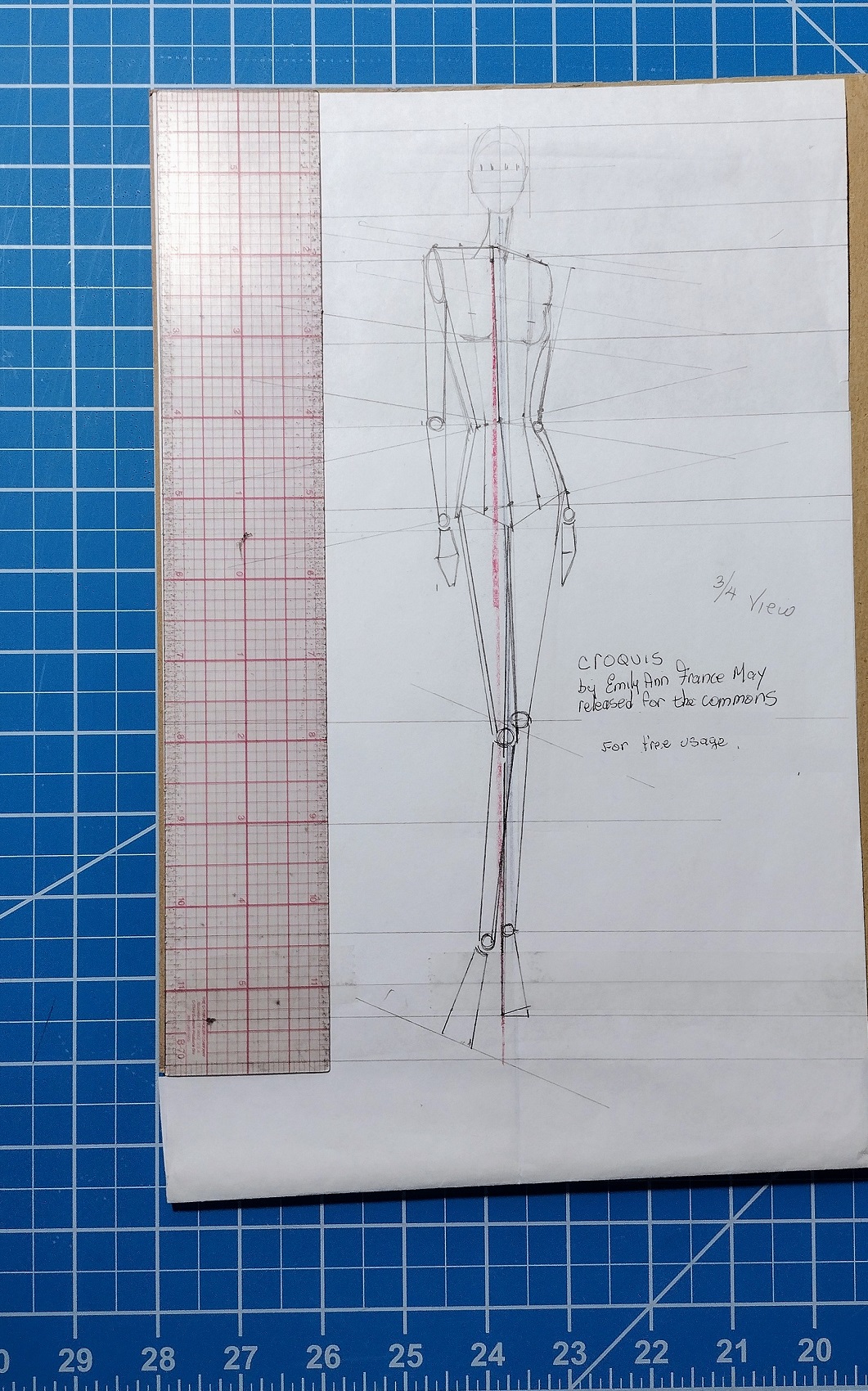
My 3/4 Croquis which you may copy, distribute and use

My sketches using the 3/4 croquis

The above sketch was made using the 3/4 10-heads croquis. Notice how it is filled out. The croquis because it represents the bone structure of the figure will always be slimmer than the final sketch. I like my sketches to look old, as if they came from a vintage sketch book, comic book or series of drafts from long ago. To get that look I use colored pencils and color from the wrong side of the sketch. I also use crayon on the wrong side and then smudge with a Q-tip.

Sheath Skirt Half-toile created from pattern drafting instruction sheet circa 1960s

Introduction

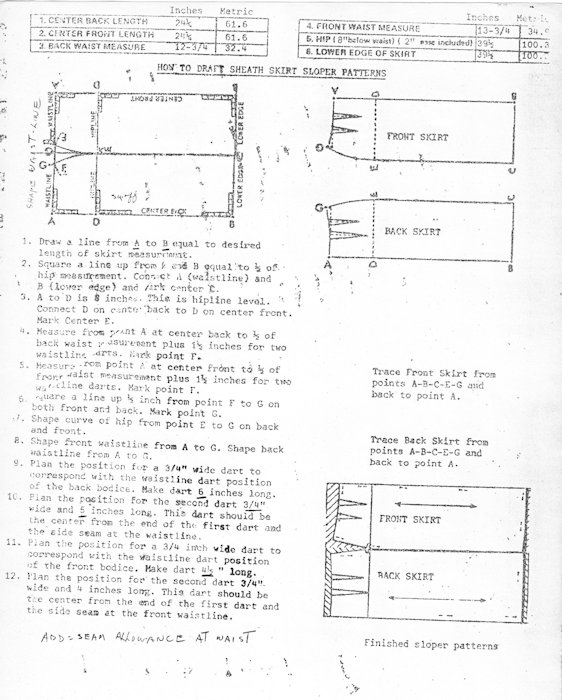
Close-up of the vintage pattern drafting instructions circa 1960s.

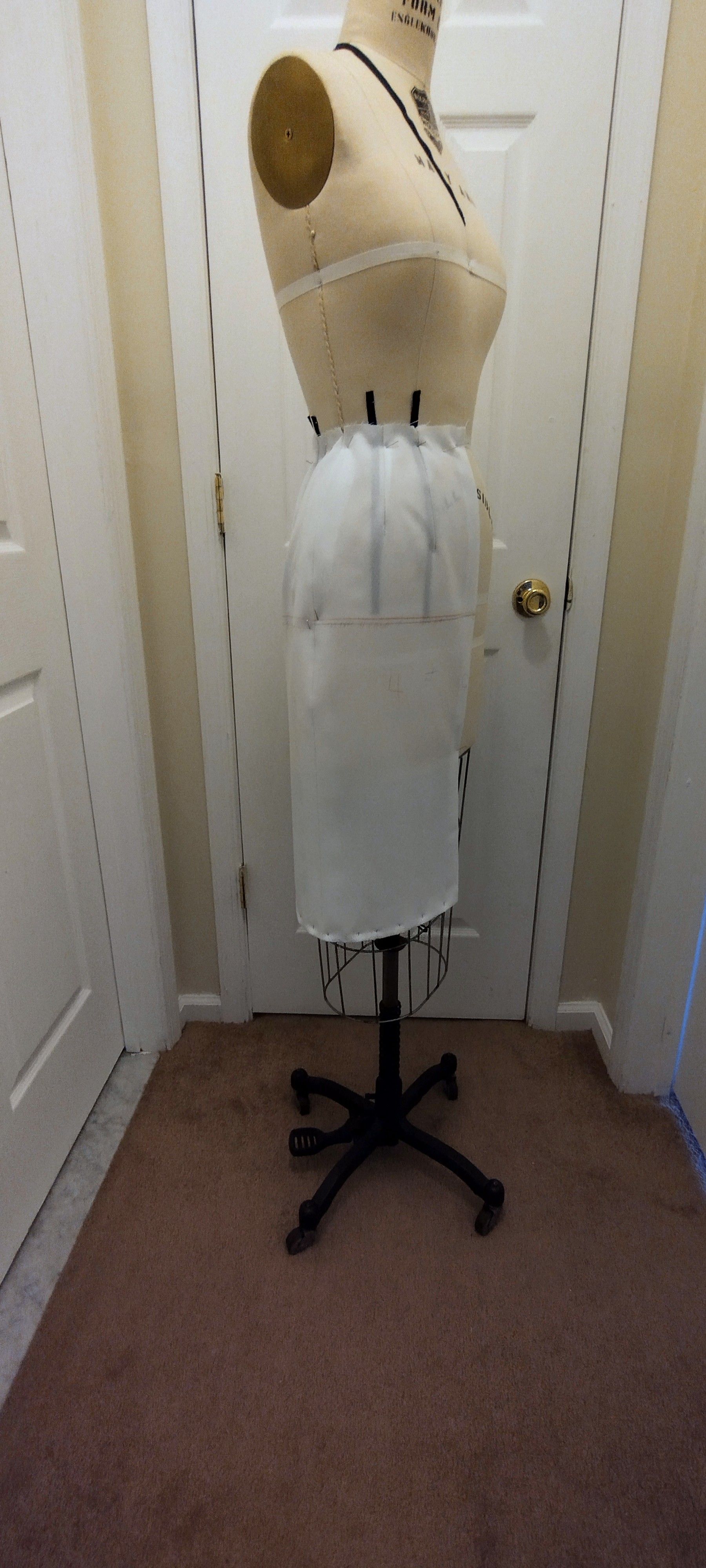
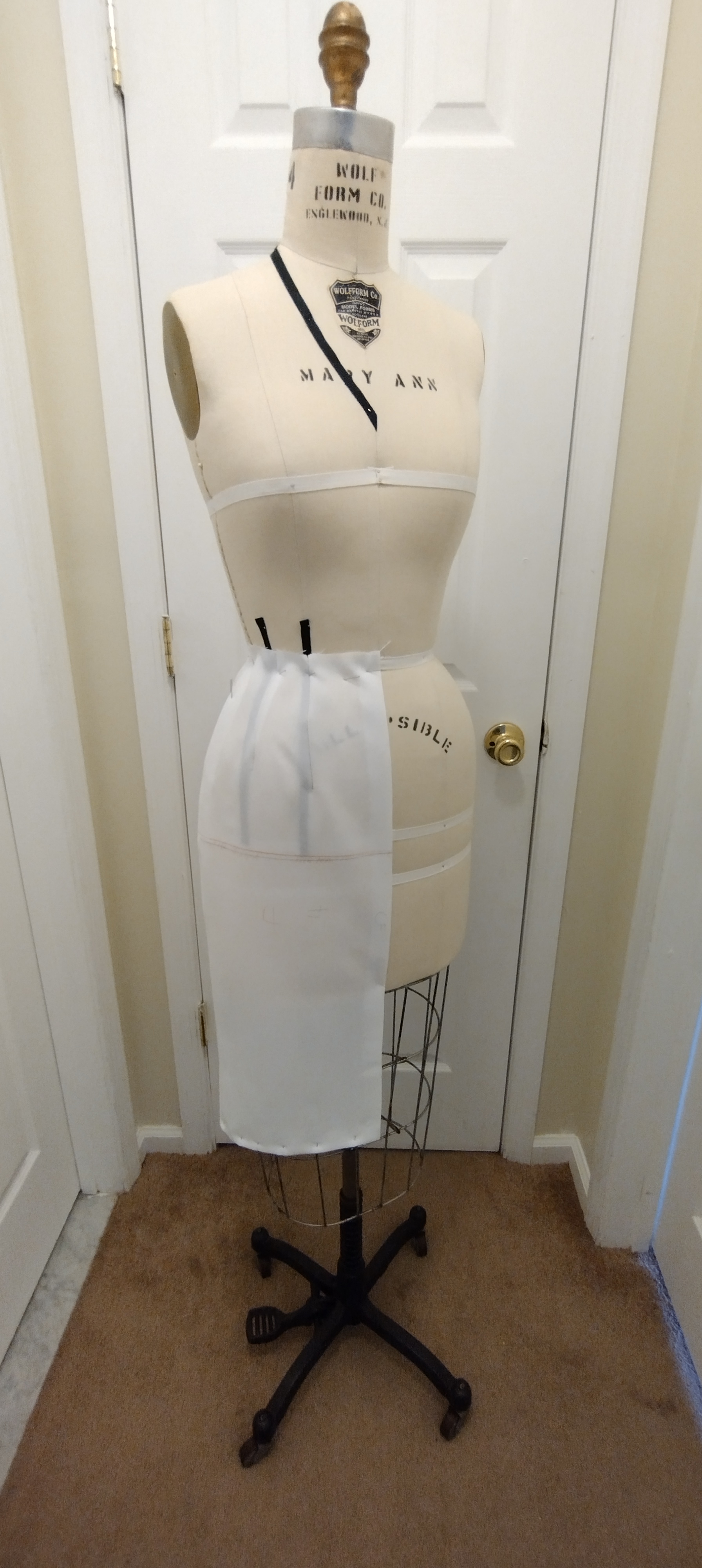
On 6th January 2022, I posted screen shots of an original 1960s pattern drafting instruction sheet. Since the original is faded, I typed up the instructions along with my comments. The instructions are the simplest flat pattern drafting instructions I’ve used so far. In this posting I evaluation the half-toile created using the measurements for a Misses Size 4. Please click this link for the pattern drafting instructions

Evaluating the Results

The instructions about dart placement referred to a basic bodice with a vertical dart under the bust. The position of the first dart for skirt front and back had to align with that dart on the bodice. I used the measurement from Center Front to Princess Line and the waist. For the back skirt I measured from Center Back to the Princess Line at the back waist. The second dart was located in the center between the princess line and side seam .

I am very pleased with the fit of the skirt. The drafting instructions state that 2 inches is added to the hip measurement for ease. However, no ease is factored in for the waistline. Considering that I will use a waistband and perhaps a lining I knew ease at the waist was essential. I also know the blouse I envision for the outfit will be tucked in. I added 1″ to the waistline and then drafted the skirt.

The only correction I have to make is mid-way along the hip curve. Once the curve has a more even line the pattern will be ready for cutting the fashion fabric.

How to refine a Denim Sheath Skirt look

Introduction

In this posting I share some of the fitting and sewing techniques I used to refine my favorite denim sheath skirt. The skirt is made with a bottom weight 100% cotton denim by Kauffman. The fabric was laundered and dried prior to marking, cutting and sewing.

The pattern was developed entirely through draping in cotton muslin.

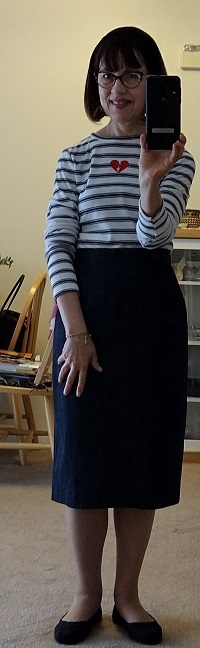
The skirt had several parts of the construction done by hand. The blouse was purchased online.

Fit is Everything!

To give the skirt more style ease I had to add extra width at waist, hip and hemline. Some sewing books say extra width can be added at the side seam. I found that it is better to open the pattern between the second dart and the side seam. You measure the mid-way point between the dart and the side seam. Draw a vertical line from waist to hem. Then open 1/4 of the total amount of style ease needed. This alteration is the same for front and back of the basic sheath skirt pattern.

In the photo of the back pattern piece for the skirt you can see the place where the cut was made and extra paper added to the pattern between the second dart and the side seam.

Note: The pattern for the skirt was made using Precision Draping by Nellie Weymouth Link. I gained weight since the time the original drape and pattern was made. This necessitated the need for the alteration.

Dressmaker Finishes for a Refined Look

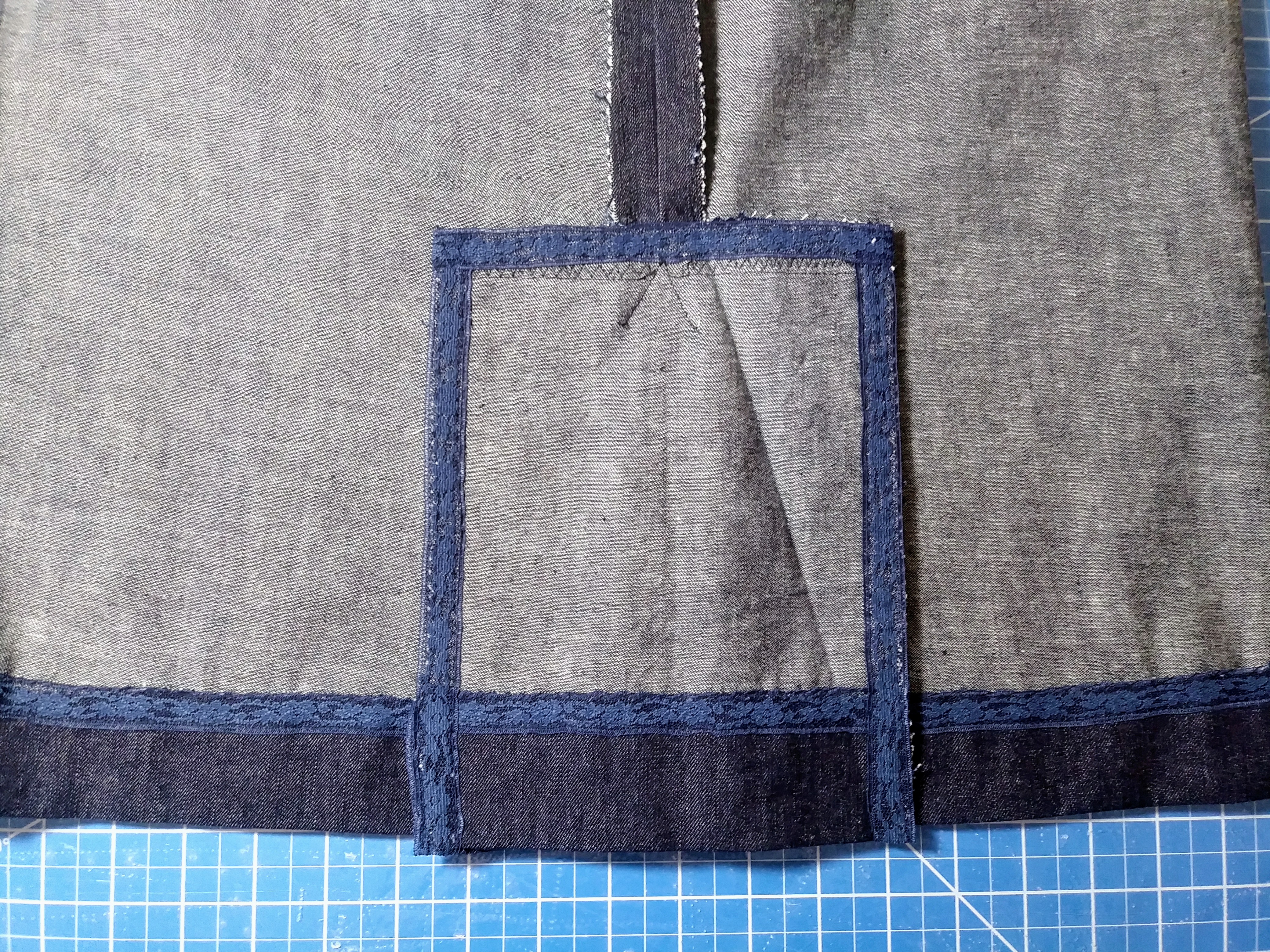
A slot zipper application was used. I followed the hand sewing technique detailed in Couture Sewing by Claire Schaeffer. Instead of using a prick stitch or back stitch, the zipper is sewed into the seam using tiny running stitches. To further secure the zipper in place, the zipper tape is fell stitched only to the side seams, at the edges. The zipper stop is covered by a lightweight piece of lining fabric. I used a small piece of lace hem tape instead.

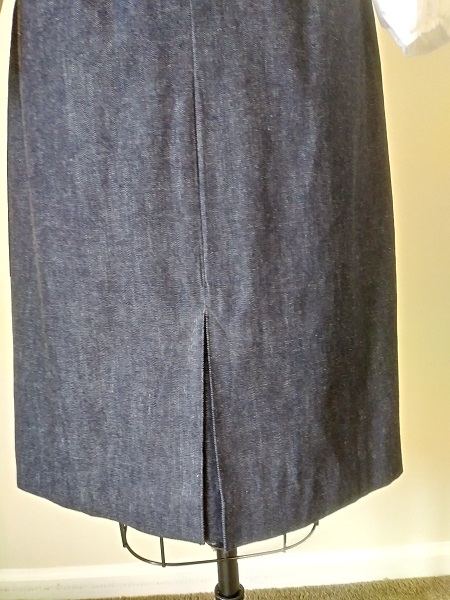
A kick pleat with insert was made in.center back seam. It provides ease of movement as well as a finishing touch. The top of the kick pleat is stitched into place using a triangular shape. A kick pleat is more refined than a high slit at center back of the skirt. That is why this skirt works well for casual dress days at work or an outside meeting with business associates.

All seams were pinked and then edge stitched. Wrights Flexi-Lace tape provided a finish for the hem and kickpleat.

How to draft a Sheath Skirt Sloper

These pattern drafting instructions were given to me by a student who attended the Traphagen School of Design in the 1980s. It was a private design school in New York City. The instructions are very simple when you take the time to read them through before you start drafting your pattern. Make a muslin to test the fit before using this as the basis pattern for any pencil skirts or other designs based on the basic skirt sloper. The basic sheath skirt (a/k/a pencil skirt, slim skirt, wiggle skirt) has not changed. This pattern can serve as a sloper for vintage or modern skirt designs.

Measurements Needed

Center Back Length (from center back waist to desired length of skirt)
Center Front Length (from center front waist to desired length of skirt)
Back waist measure (from side to side seam at back)
Front Waist Measure (from side to side seam at front)
Hip Measurement – 7 to 9 inches below waist-use widest circumference.  Add 2″ of ease to measurement.
Lower Edge of Skirt (this measurement is determined by the hip circumference plus 2″ ease

Important Note:  Look at the complete diagram.  The rectangle runs from point A back to point A front at waistline.  Point B back runs to point B front.  Point A to B in the back and Point A to B in the front is the skirt length.  I found it easier to start with a large rectangle where A-A and B-B equals the complete hip measurement plus 2 inches of ease.  So draw A-A for the waist.  The draw A to B for center back.  Draw B to B for lower edge.  Then from B in lower edge of front draw a straight line up to A front.

Then proceed to step 2.

1.   Draw a line from A to B equal to desired length of skirt measurement.

2.   Square a line up from A and B equal to 1/2 ofequal to 1/2 of B (lower edge) and mark center C.

3.   A to D is 7 to 9 inches below waistline.  This is the hipline level.  Connect D on center back to D on center front.  Mark Center E. 

4.   Measure from point A at center back to 1/2 of back wait measurement plus 1 1/2 inches for two waistline darts.  Mark point F.

5.   Measure from point A at center front to 1/2 of front waist measurement plus 1 1/2 inches for two waistline darts.  Mark point F.

6..   Square a line up 1/2 inch from point F to G on both front and back.  Mark point G. 

7.   Shape curve of hip from point E to G on back and front.

8.   Shape front waistline from A to G.  Shape back waistline from A to G.

9.   Plan the position for a 3/4″ wide dart to correspond with the waistline dart position of the back bodice*.  Make dart 6 inches long.

10.   Plan the position for the second dart 3/4″ wide and 5 inches long.  This dart should be the center from the end of the first dart and the side seam at the waistline.

11.   Plan the position for a 3/4 inch wide dart to correspnd with the waistline dart position of the front bodice*.  Make dart 4 1/2″ long.

12.  Plan the position for the second dart 3/4 wide and 4 inches lont.  This dart should be the center from the end of the first dart and the side seam at the front waistline.

13.   Cut out sloper.  This sloper must have 1/2″ seam allowances added at waistline, side seams and center back.  Add hem allowance at bottom of skirt.  The hem for the basic skirt is usually 2″

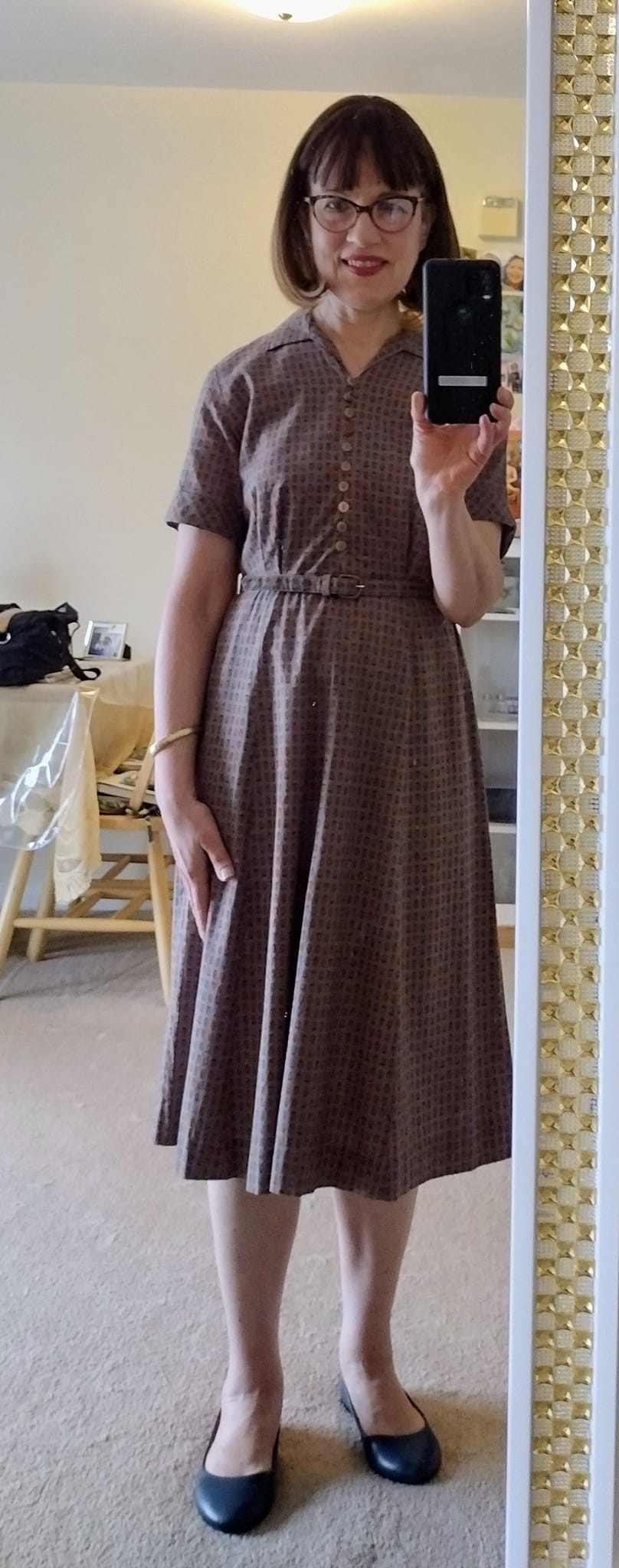
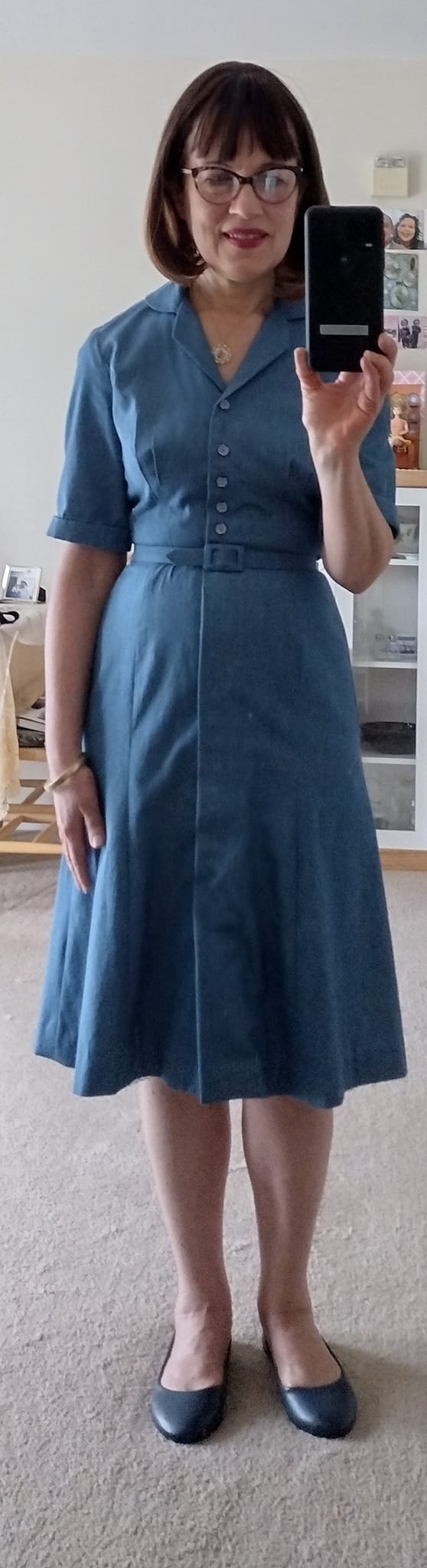
Photos of me wearing the Pat Perkins 1950s dress and my 2021 version

Please note: I forgot to button the second button on the Alice Elizabeth dress when putting it on for the photo. Also my version of the dress was created for a Misses Size 8. I did not alter the pattern or the dress because this is part of my portfolio, not my personal wardrobe.

The Pat Perkins dress is a little short in the waist for me. otherwise the fit is very good. There is a 2″ style ease at the waistlisne which makes putting on the dress very easy. I wore the dress all morning and found the side zipper did not bother me at all. Going forward, I will use a lapped zipper in he side seam for my next 1950s style dress. I think I made too much work for myself going with snaps from waist to knee.

The side seam zipper lies flat. It does not affect the hip line or bodice side seam. I think this is because the fabric is a lightweight cotton. This was an amazing purchase, The dress is in such good condition. I feel so fortunate to have it both to wear and use as a study piece for learning more about vintage garment construction.

Free Pat Perkins 1950s inspired Repro Dress Pattern

Introduction

Left: First sketch. Right: Finished dress.

I am releasing my pattern for the Alice Elizabeth dress into the public domain. You are free to download and size it up or down in a graphics program. You can alter the design. I also give permission to use it privately or commercially.

This is a basic pattern that you can use as the basis of your own rendition of the style.

Please refer to the following posting for further details and as a guide to whether or not you want to make the dress with closures like I used or that are on the original 1950s dress.

Pat Perkins Everyday/House Dress Circa 1950s – Analysis

Alice Elizabeth dress – Construction details on my interpretation of the Pat Perkins dress

This pattern was created using a combination of draping and flat pattern making based on the 1947 technique, Precision Draping. A Wolf Form in Misses 8 was used. The resulting dress can be labelled a Misses 6/8.

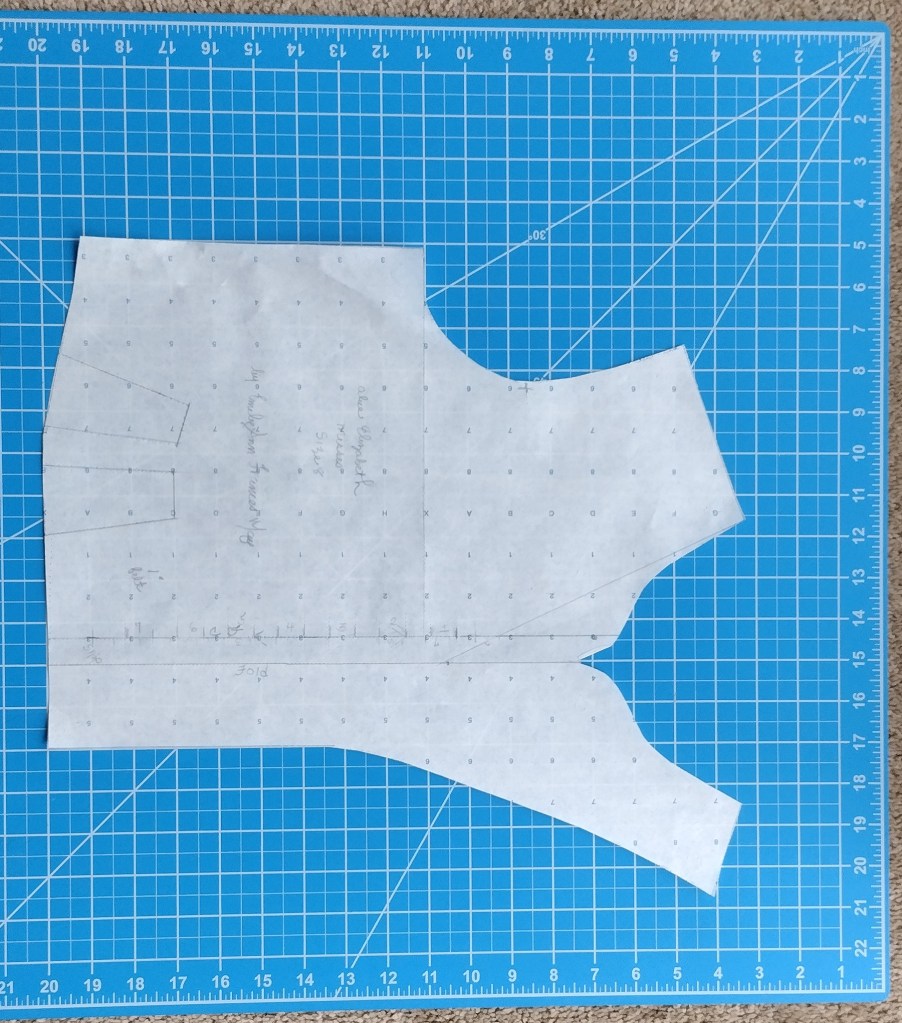
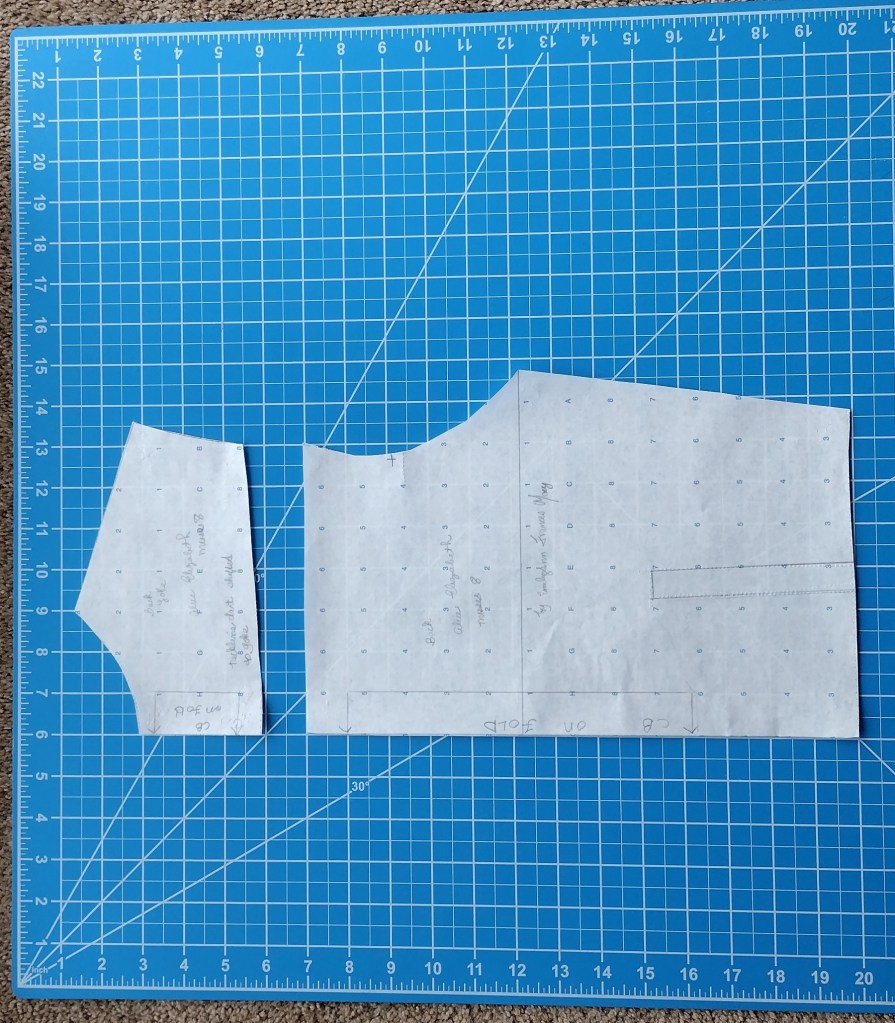
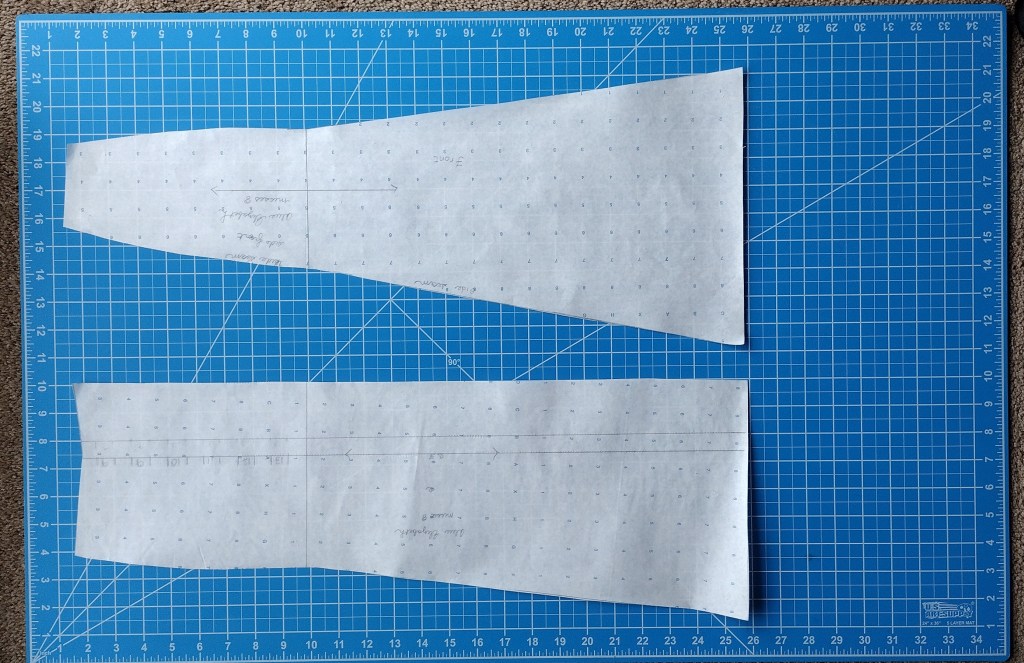
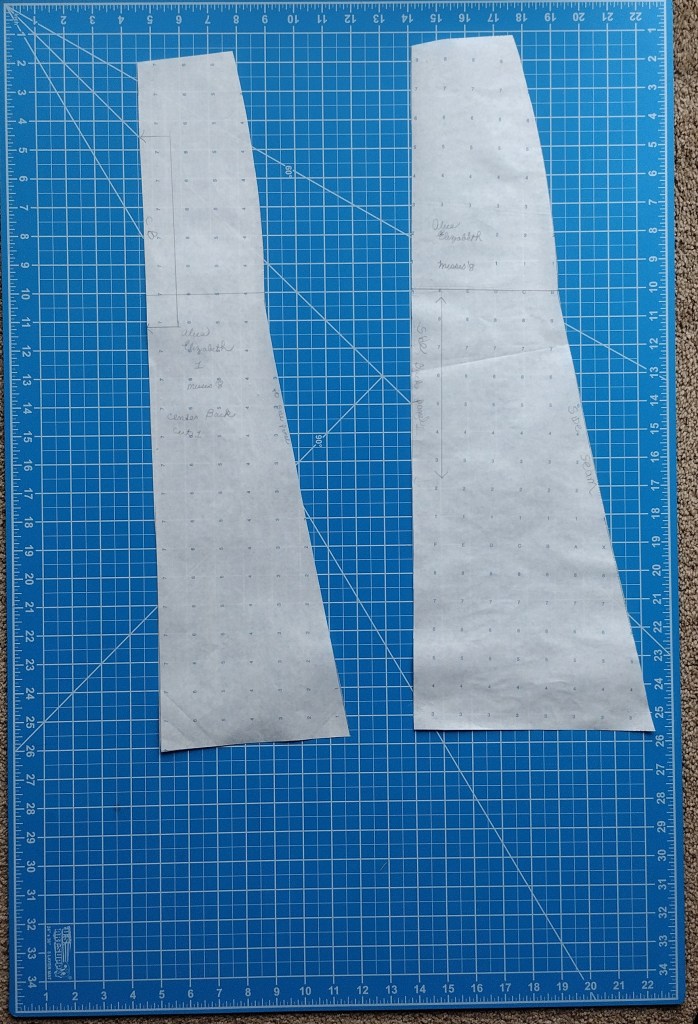
The pattern is showed on a cutting mat using inches. All pattern pieces do not have seam allowances.

Bodices

Front Bodice
Back Yoke and Bodic

Six-gore Skirt

Frong of six-gore skirt.
Back of six-gore skirt

All-in-one sleeve

All-in-one sleeve

Top collar, under collar, front interfacing

Top collar and bottom collar.
Interfacing front bodice and skirt.

Alice Elizabeth: My version of a 1950s House Dress by Pat Perkins

Introduction

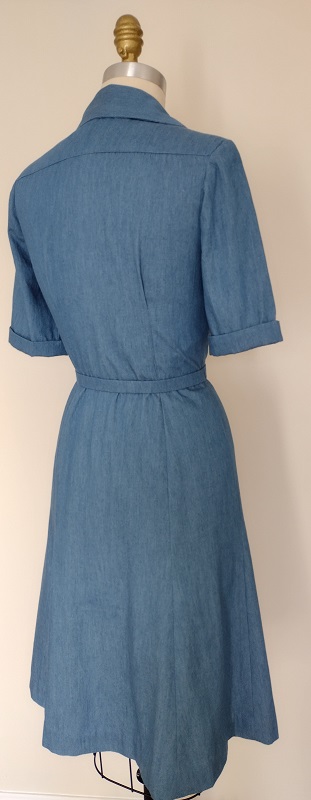
The dress pattern and design is based on a 1950s house dress by Pat Perkins that I bought during Lockdown 2020. I wanted to create a basic pattern to dervice this and future retro inspired clothes I make. I bought the dress from a vintage seller on Etsy and posted a detailed style analysis . I had plenty of time during lockdown to learn about different vintage draping and patternmaking systems. I chose to teach myself Precision Draping from the book of the same title by Nellie Weymouth Link.

After draping the basic toile on a 2019 Misses Size 8 Wolf Form, I created a sloper on oaktag. I released this sloper into the public domain for anyone to use and improve on. This sloper is the basis of the pattern for the Alice Elizabeth dress.

Dress and Pattern Details

The dress consists of a fitted bodice with two vertical dart tucks on each side of the bodice in front. The skirt is six gores with a very moderate flare at the bottom. The Pat Perkins dress has buttons and loop closure down center front. A metal zipper was sewn into the left seam from 2″ under the arm until the hip line using a lapped application.

I do not like side seam zippers for two reasons. First they can be uncomfortable. Second they interfere with the flow of the underarm seam and skirt side seam. Since fitted clothing often falls on the bias at the side seams the potential for distortion exists. I hand sewed six button holes in the front of the bodice.

My reasons for avoiding buttonholes on the entire dress is that it would spoil the look of simplicity and efficiency the house dress is supposed to convey. I had not thought about using a hidden zipper when the dress was in progress. Now that it is finished I have a hidden zipper in mind for the future. It is a simple application I will detail when it is in progress. I used snaps because the front portion of the skirt looks better. The eye is drawn upwards to focus on the striped buttons and self-fabric belt. I do not care for metal eyelets and prongs in a belt so I used snaps to fasten the belt.

The edge of the front facing, the waistline stay and hem were finished with navy blue Flexi-Lace by Wrights. Seams were pinked. I chose these finishes because they are similar to home based seamstresses used in the 1950s. The Flexi-Lace tape was completely stitched by hand to the waistline seam using a running stitch at the waist and edge for flexibility. I used a cross-hatch stitch to join the stay to side seams and dart tucks.

The dress is made from 100% cotton chambray. It is very soft with a good drape. To support the dart tucks more a small edge stitching was used.

A back yoke was used to eliminate the neckline dart on the basic back bodice pattern. That too was edge stitch. On the inside, the yoke is interfaced and lined. The dart tucks in the back are also top stitched.

The collar is a basic collar pattern with a high stand. The undercollar and interfacing are cut on the bias. The sleeves have all-in-one cuffs.

Accessories

I chose understated accessories in sterling silver to keep to the everyday quality I want this outfit to have. The earrings have a pretty filigree. A small silver necklace, about 16″ long, with tiny beads would also look good with this dress.

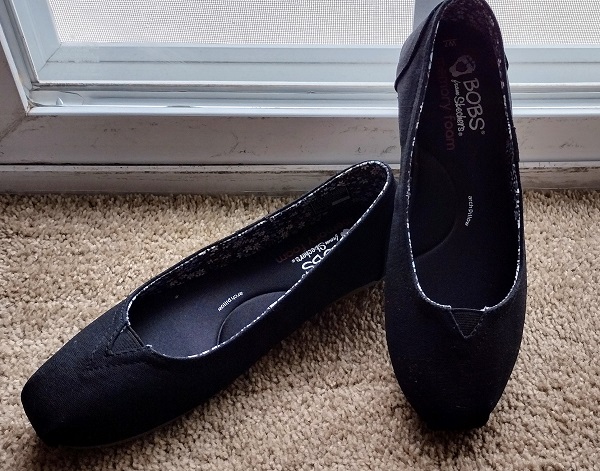
Ballerina flats in navy blue complete the outfit. They pick up on the color of the stripes on the buttons. The overall impression of this outfit is meant to make the wearer attractive in a modest, understated fashion just as house dresses were intended in the 1950s.

Misses Size 8 Slopers you may copy and use

I am releasing my Misses size 8 slopers into the commons. I grant permission to anyone who wants to use them commercially or personally. You can copy, download and size in your graphics program. My reason for making these available is to help others get a head start on their patternmaking and dressmaking business or hobby. The slopers were developed through draping on a Misses size 8 Wolf form. The grid used for the photos is in inches.

Note: The Precision Draping Method developed by Nellie Weymouth Link in 1947 is the system used. There are a few differences in the skirt from the skirt draped in a modern system. The Pencil Skirt which is used today was developed in the 1950s. It is tubular in shape and not given to much flow or movement unless slits or kickpleats are added. The skirt developed with Precision Draping is similar to the skirts you see in the 1940s: slightly A-lined, fitting smoothly over the hip and then flowing past. The result is a slight flare and movement when walking. It is more comfortable and figure flattering, too.

Basic Fitted Bodice Front and Back

Basic Fitted Bodice Front Misses Size 8
Fitted Bodice Back Missies Size 8

Basic Unfitted Sleeve

Basic Unfitted Sleeve Misses Size 8

Basic Skirt Front and Back

Basic Skirt Front Misses Size 8
Basic Skirt Back Misses Size 8

New Dress “Alice”: Progress Photos 2-6-21

Introduction

In this posting I share progress photos of a new dress developed through a combo of flat patternmaking and draping. The photos featured are of the half-toile to test the fit.

Combination Technique: Draping and flat patternmaking

95% of this toile was made using a flat pattern. I used the Misses Size 8 sloper to create the fitted bodice, semi-fitted skirt and basic unfitted sleeve.

3/4 view of half-toile.

The flat pattern for the bodice front had the horizontal side dart closed and vertical dart opened. The construction of the bodice shoulder, back yoke, back tuck and side seams were completed. After steam pressing the bodice was pinned to the form. The excess dart intake below the bust was draped into two vertical tucks each 3 1/8″ high and about 1 1/2″ wide. I like the softer look of the tucks over the dressmaker dart under the bust.

Front view of half-toile..

I am very pleased so far with the 6 gore skirt. It was created by closing the darts of the basic semi-fitted skirt. The skirt front and back were cut along the lines of the dart and below the dart. Each piece then had extra width added at the hemline along front and back princess lines and side seams. I find the fit of this kind of gored skirt even more flattering than that of the 6 or 8 gore skirt created through flat patternmaking.

The collar was simple, easy flat patternmaking as was the sleeve. The next posting will be published once the fitting toile is complete.

Giving a Name to the Dress

As I work on a new project and gather the notions and fabric, I develop an image of who the dress will be for. I choose a name to create a sense of space between my self and what is coming to expression. This permits me to think whether or not improvements are needed. When I am too close personally and emotionally to a project become too attached. That is not good because it prevents perception of where the fit or creative result is lacking. This dress is called Alice. I will add a middle name once I feel more of the character of the dress emerging.