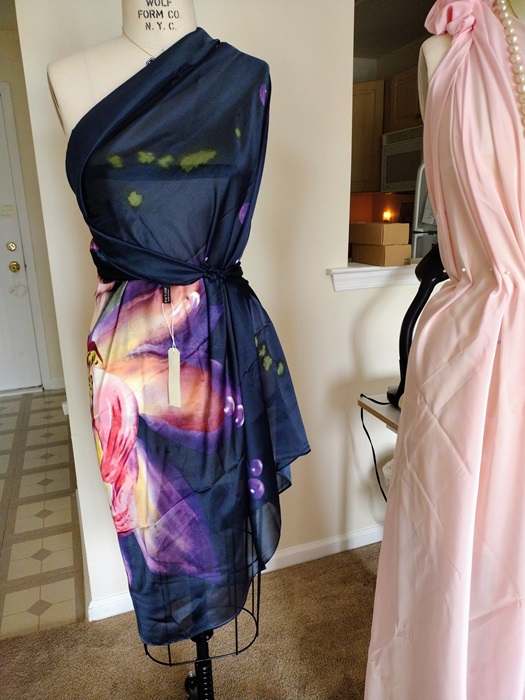
One way to develop your creative visualization and draping skills is to play with fabric! That is what I did during a break from my housework this morning.
To enter into the spirit of fantasy draping, buy large lightweight scarves and a yard or two of lightweight, soft fabric. These can be a poly charmeuse, poly crepe back satin, a light weight cotton chambray or batiste–or if you can afford it–a 1-2 yard length of a silk blend or a few very large silk scarves.
I have not tried heavier weight fabrics as I am not feeling very inspired by denim or tweeds at the moment.
Hold the fabric in different positions over the dress form. Try to have a conversation with the fabric to learn what it wants to do. You may discover that the cross grain looks better than the lengthwise grain, or a bias cut really takes your vision to a new high point.
Here are the results of letting my imagination take wing for a few minutes. These are not meant to become a finished evening gown or cocktail dress. Rather, this exercise is meant to help me develop a feel for handling the fabrics and learning what they want to tell me.
I recommend this activity as a way to heighten your abilities and expand your understanding. I describe this as fantasy draping because I can get as outrageous as I want and not worry about final results. This is all a way to see how far the fabric will let me go and how it will look.
I am ready to begin draping a sleeve pattern for my 1950s style sloper in Misses Size 8, and a 1930s style sloper in Misses Size 4.
My Decision to use a different Draping Technique
The instructions in Precision Draping by Nellie Weymouth Link are for creating a fitted sleeve with elbow dart. I prefer making the basic unfitted sleeve without elbow dart since that is the starting point for other sleeves. The basic unfitted sleeve, meaning one without elbow dart, is used as a sloper. From the resulting basic sleeve further pattern development will create a sleeve with elbow dart for my 1950s style sloper. For the 1930s style sloper the sleeve will have a long vertical dart from wrist to elbow.
By having the basic sleeve without elbow dart as my sloper I will save time in developing other variations of sleeves. I have found the easiest and clearest YouTube video after a week of reviewing about 10 videos. Susan Elias’ video shows a precise, detailed and simple combination method for creating your sleeve. The lower part is drafted right on the muslin using just a few measurements. Susan shows how to take the measurements and do the calculations. She also shares tips for making measuring easier and for pinning the lower half of the pattern.
Draping takes place for the sleeve cap. Susan shows this on a toile she has pin fitted and marked up. By seeing her perform the entire process from beginning to end you will get a good idea of what will happen when you start draping your own sleeve. I highly recommend this video for the technique, the clarity and the orderly presentation. I’m off now to start my own first attempt!
I am preparing two slopers this summer. I already created one that I use for 1940s to early 1950s inspired styles. I used that for the Alice Elizabeth dress and the Linda skirt and blouse. I am now in the progress of creating a more structured sloper that I think will work well with the more detailed and fitted styles of the mid-1950s. As a challenge and contrast, I am also researching slopers from the 1930s. The look of the 1930s was very flowing and not fitted the way 1950s clothing was.
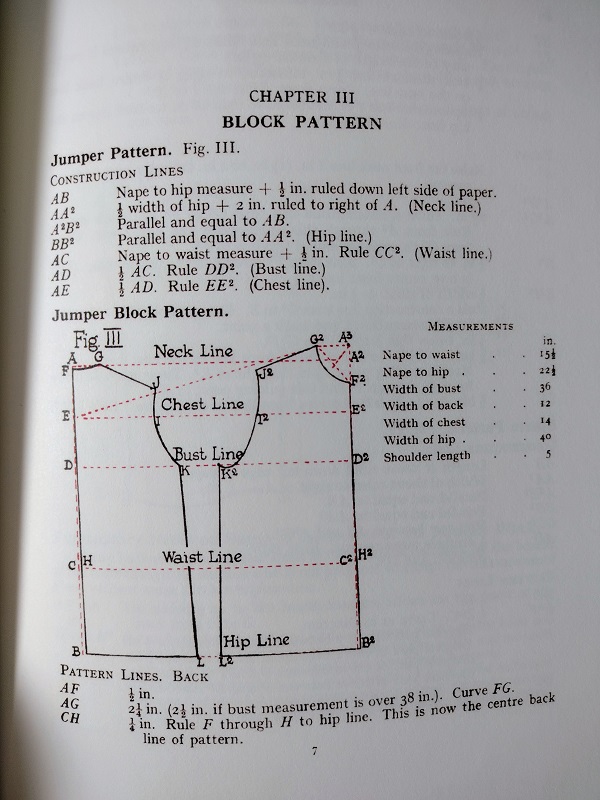
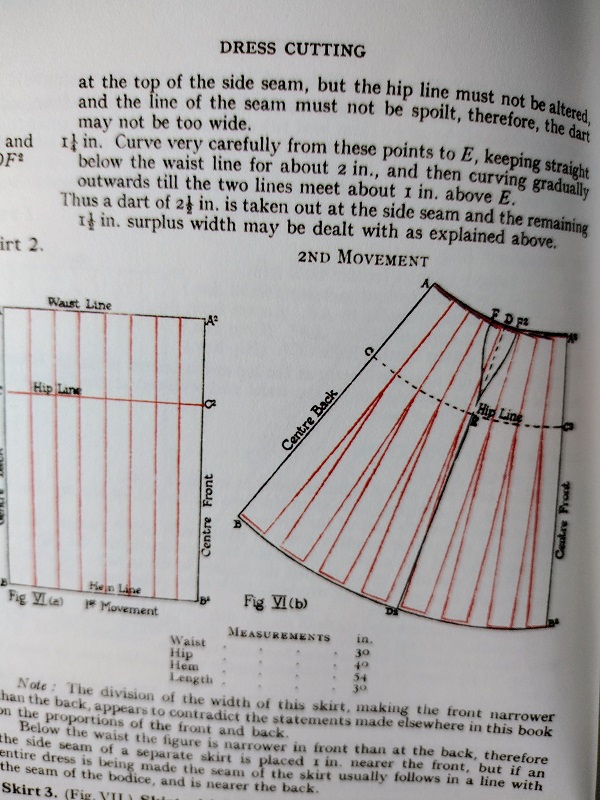
My 1940s sloper is available for copying and sizing here. It is a standard Misses 8. The sloper for the 1950s structured fashions is also in a size 8. However, I think the 1930s look is very flattering to smaller sizes so that sloper will be in a standard Misses 4. I do not intend to use drafting systems from the 1930s. Instead, I will drape a basic unfitted bodice and skirt that approximate the look of a set of pattern blocks I located in a small paperback book called Dress Cutting by Margaret C. Ralston. I will draft a fitted sleeve with vertical dart to complete the sloper.
Here are the screen shots showing the basic block Margaret created from her drafting system. I find it a bit confusing to follow. I am also not sure the fit will be comfortable for the modern women. The sleeve looks very fitted and the sleeve seam is 3/4″ to the front of the bodice side seam. While I love vintage styles I do not think it is essential to go so far to recreate or be inspired by the look. The key for me is inspired interpretation.
Pattern Block from Dress Cutting by Margaret Ralston
The bodice front and back appear to be completely unfitted. In some directions for pattern transformations one dart above the bodice is shown. It might also be a tuck. I assume the bodice block had enough width for this dart-tuck to be created.
The skirt is a rectangle equal to half the hip circumference. It is then slashed and overlapped and the top edge so that the waistline measurement results. I plan to drape a basic sheath skirt. Once that fits, I will distribute the dart ease across skirt front and back waistline. Then slightly overlap the sections. That will produce a slightly flared, straight skirt which is the starting point for the skirt styles in this book. For the bodice I will drape an unfitted bodice. It will go straight to the hip and have the waistline marked off as well. There will be one vertical dart above the bust in front and a neckline dart or two in the back. I’m basing the dart positions on the fitting dress or toile shown in the previous posting.
I think developing different bodice and skirt slopers gives one a more extensive collection of shapes to work from. As I research the 1930s, I’m understanding that for the 1960s an unfitted dress sloper works well. So would an A-Line skirt sloper. Those are the two key shapes for dresses and skirts of the 1960s.
Here are the snap shots of the pattern blocks from Dress Cutting. The last snap shot is a dress that can be made using he pattern blocks and transformation instructions in the book.
Cover of Dress Cutting by Margaret Ralston.
Bodice front and back.
Basic skirt front and back.
Basic sleeve.
Fitted sleeves.
One of the styles that can be created using the block and instructions in Dress Cutting by Margaret Ralston.
This posting initiates a series on my adventure into creating a 1930s type sloper in a modern day Misses size 4. I think modern sewistas and patternmakers can get a similar look without the expense of a vintage pattern purchase. Nor will there be the many fitting challenges that come with using a vintage pattern. My goal is to simplify a process of creation, not complicate it or make it overly time consuming. I think if enough research is done, it will be possible to come close to the shapes of a basic sloper for the 1930s.
Draping Technique I will use
I am going to use the 1940s draping system called Precision Draping which was developed by Nellie Weymouth Link. The book has been reprinted and is available at booksellers online new or used. While this is not a 1930s draping technique, it is a vintage one. It is easy to learn and provides a good foundation for exploration into the styles of other decades.
Beginning point
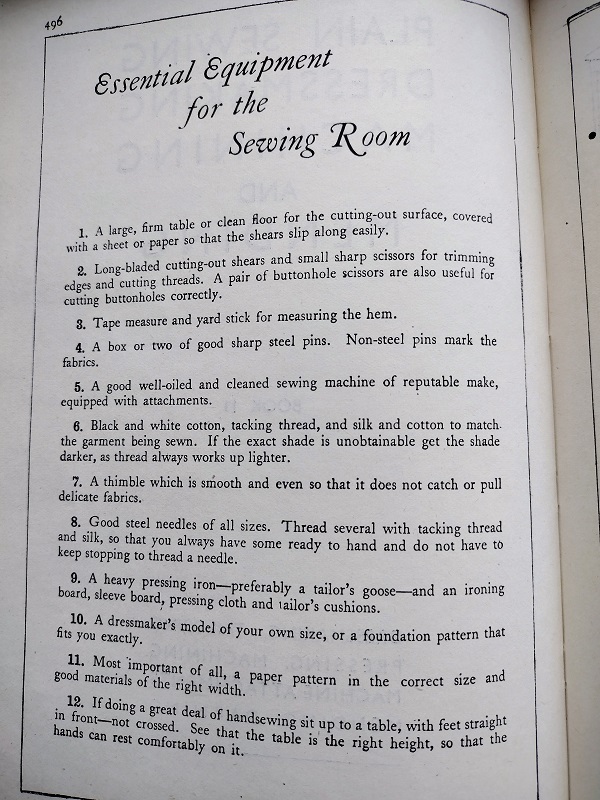
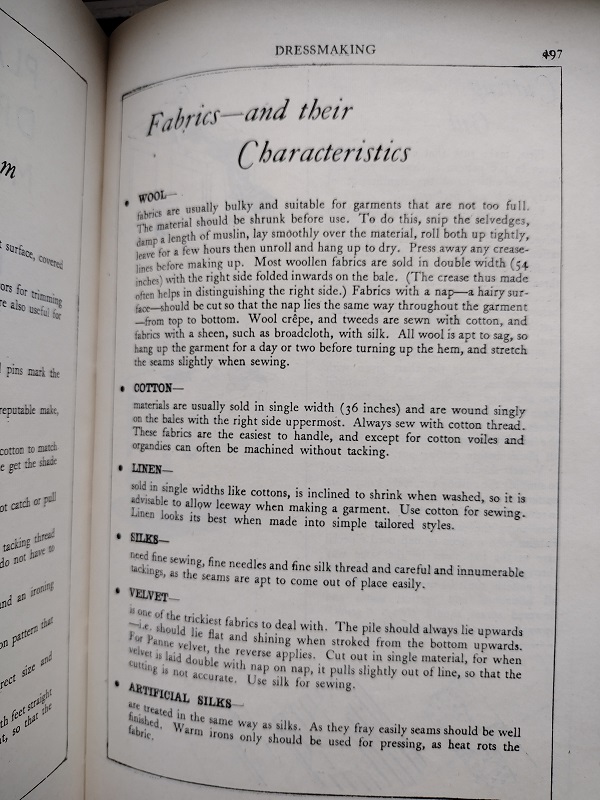
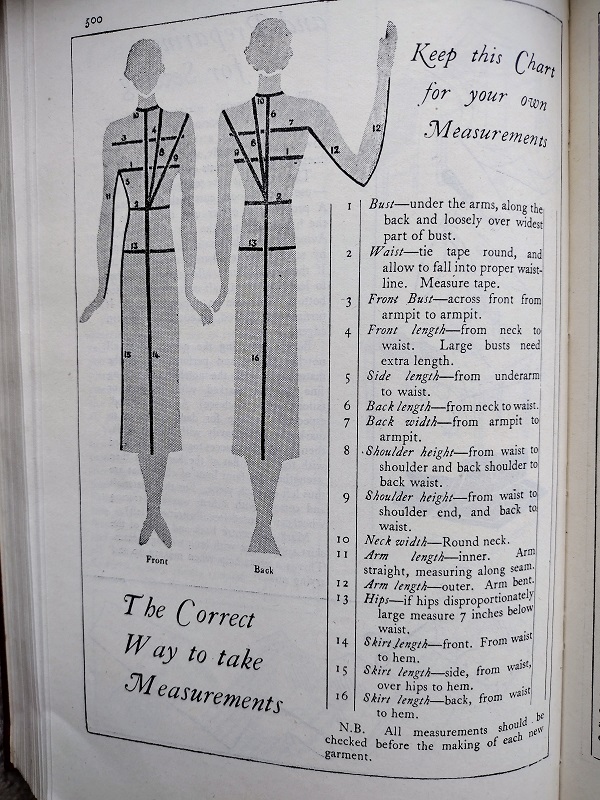
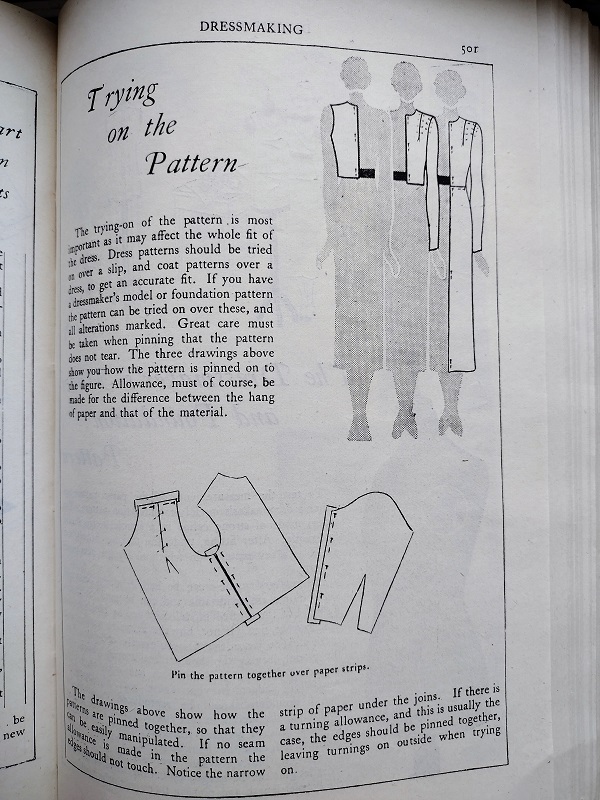
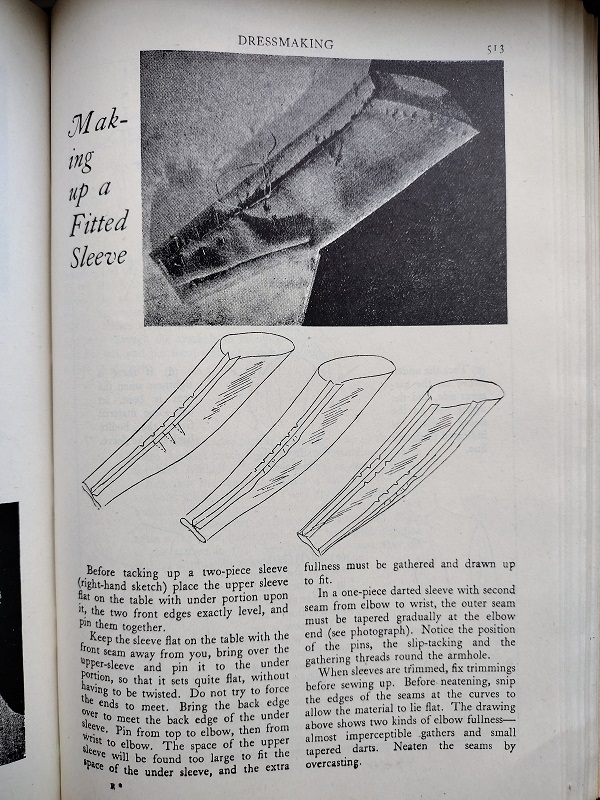
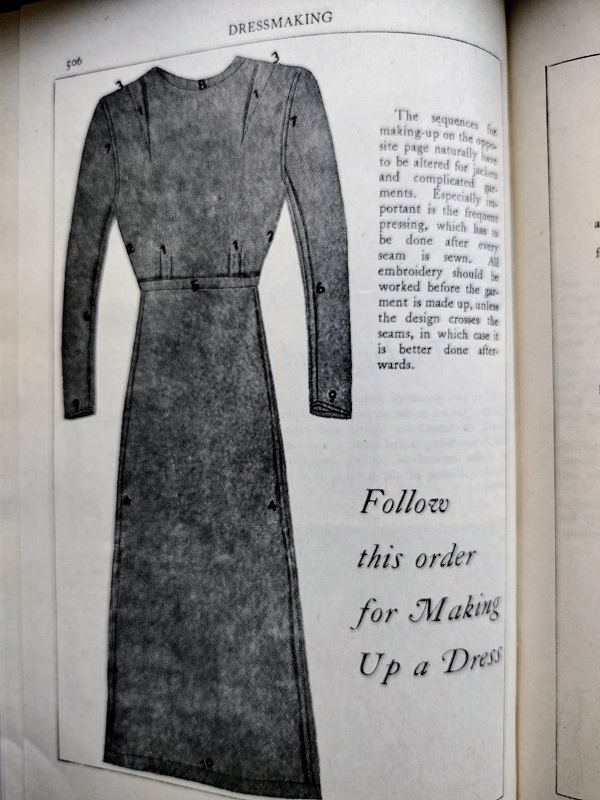
As always, research and reading provide insights and ideas. I begin this journey by making available for you a section of Weldons Encyclopedia of Needlework from my very small collection of vintage sewing books. It was published by The Waverley Book Col, Ltd. of Farringdon Street, London, E.C. 4, but no date of publication exists in the book! I estimate that the edition I have was published in the 1930s. As you can see in the illustrations that follow, the silhouette is close to 1930s fashions with longer hemlines and flowing skirts. The fashion figure is also slender and soft. The boxier fashions with emphasis on the shoulder line of the 1940s is not present in the chapter I post here.
We will continue this exploration into the elements of a 1930 sloper and the key takeaways for creating a sloper that can approximate the look in the next posting. For now I hope you enjoy this look into what a sloper and dress form from the 1930s looked like. What is shown here may or may not be typical but it has elements that appear in another flat pattern drafting system from the 1930s that appear in another book I have and will use in this series.
“The Dressmaker’s Model and Fitting Pattern” from Weldon’s Encyclopedia of Needlework
Last Spring I began development of a walking skirt and short dolman sleeve blouse based on two vintage pattern illustrations. I studied the wardrobe basics of 1940s everyday women’s wear. Clothing in the early to mid-1940s had to be functional. Fabrics, threads and notions were not easily available due to rationing. All resources, including textiles, were prioritized for the use by the troops and initiatives to move the American people towards victory in the war. This meant great sacrifice and rationing of many necessities.
Americans received ration coupons for clothing, food, shoes and other items needed for daily life. To get a new blouse, for example, so many ration book coupons had to be used for the purchase. One had to be very careful with how they used their allotment of coupons. When they were gone, there was a wait until the government issued new ration books.
This is why many everday clothes of the WWII period and shortly thereafter had a minimum of details. Everything had to be functional. Because of this simplicity, it was important to buy clothes that fit well and were well made. They had to last for a long time.
Development of the outfit
I took inspiration from two 1940s pattern envelope illustrations. The pattern was developed using a Misses Size 8 sloper developed through Precision Draping. Further draping was done on the basic blouse to develop the dolman sleeves.
The blouse features a shoulder dart, short dolman sleeves and a round neckline. As I developed the pattern and tested the toile, I learned that I needed a shoulder pad to support the shape of the sleeve on the shoulder line. Omitting the shoulder pad caused the sleeve to droop and the entire blouse looked tired. My solution was to purchase very thin, regular set-in sleeve shoulder pads and use them for the blouse. I had to experiment with the placement until they looked just right. In the end, the shoulder pad extended about 1/4″ past the shoulder line. The shoulder pads are about 1/4″ thick.
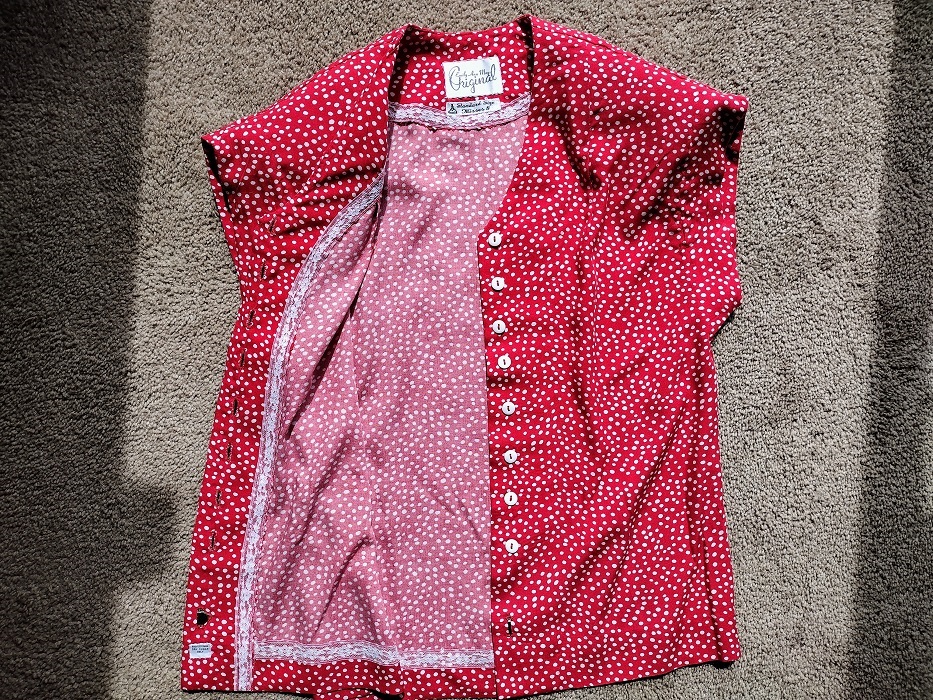
I lowered the neckline of the blouse so I could wear a locket or chocker with the blouse if I wanted to. I selected a very silky, dotted print. To create some visual interest I used 1/2 wide white buttons sewn on with red thread. The contrast worked with the red background and the white dots on the fabric.
I think that 1940 walking skirts are much more figure flattering than pencil skirts. Most 1940s skirts curve over the hip and slightly extend out from there to the hemline. This is not the cookie-cutter A-Line skirt of the 1960s. This is more a slim skirt with a nice built in movement. The skirt moves very nicely when walking. I added kick pleats in front and back to get the most movement out of my skirt.
Fabrics, sewing and finishing details
The front facing of the blouse is in one with the blouse front. A separate facing piece is used for the back. The fabric is very slippery and needed gentle shaping for the neckline and blouse front. I cut the cotton batiste used for the interfacing on the true bias. This worked well with the fluid properties of the fabric. Seams were stitched together, pinked and then stitched again away from the edge. All seams were pressed to the back. Wrights Flexi-Lace was used to finish facing, sleeve hem and blouse hem. The entire facing was slant stitched by hand to the blouse using a fine hand sewing needle and small stitches that were not too tight.
The bias cut batiste interfacing has 1/2″ extra past center front. This creates a soft roll on the front of the blouse. The sleeve edges have a 3/8″ bias cut interfacing that extends past the hemline to create a soft fold when hemmed. The sleeves also are finished with Wrights Flexi-Lace.
The skirtis a lightweight blend that needed body to support the kick pleats. For this reason I choose to underline the skirt. Seams were pinked and straight stitched 1/8″ from the edge. The edges around each kick pleat and the hem are finished with Wrights Flexi-Lace. To add some visual interest I backed the kick pleat insert with the blouse fabric. On the back of the skirt I placed the size and designer labels on the kick pleat. The kick pleat is catched stitched to the underlining at the top.
The skirt has a side lapped zipper application that is hand stitched into place. The waistband uses Banroll to maintain the shape.
The dolman sleeve has a low armhole opening. This blouse is very comfortable but the bra shows just a little if the arm is raised. If this is a problem a camisole or slip can offer some more coverage. Personally this does not matter to me, as I do not think that many people are going to be looking under my arms and into my blouse.
Since the fabric was very slippery, easing the facing into the proper position created problems. I had to place the blouse inside out on the dress form. Then I pinned and basted the facing into place and after that the hem.
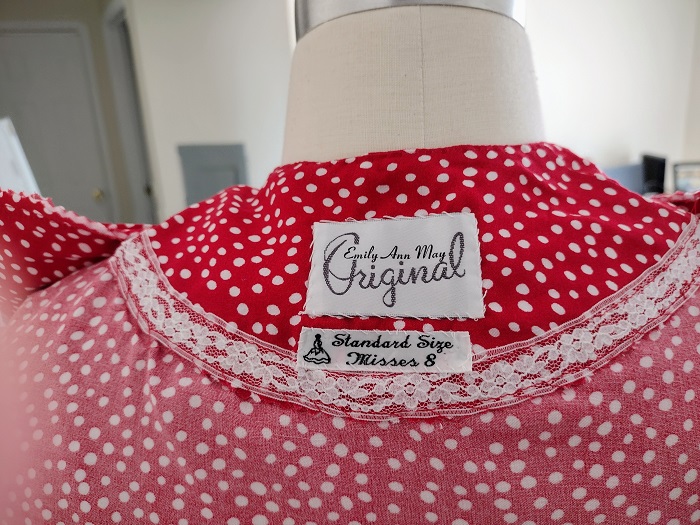
The finishing touch is a custom made label and size label. This always gives me a great sense of accomplishment. I recommend getting your own custom labels for your own creations.
Photos of me wearing the Linda skirt and blouse
Linda was a popular name for girls in the 1940s. I chose this name because it conveys a sense of the everyday which this outfit is meant to do. The emphasis is on fit and a flattering result. I am delighted with this vintage inspired outfit because it can work today and any day in any year.
The finished pattern diagram is available in this posting. It may be copied and sized in your graphics program. I release the pattern into the commons for anyone to use. Always test the pattern and make adjustments where needed.
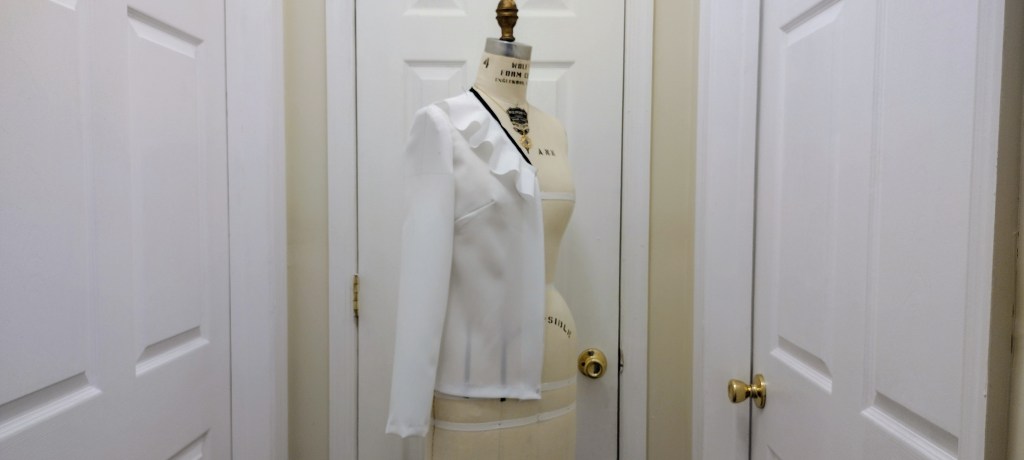
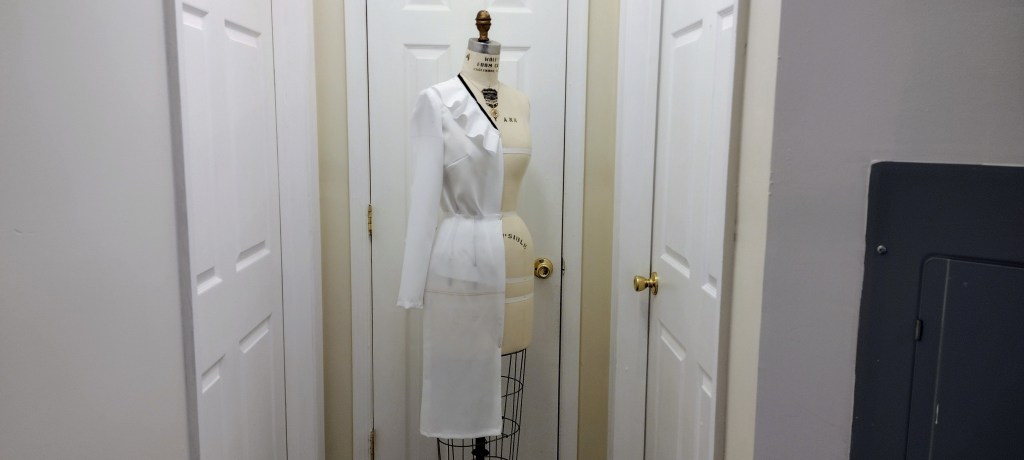
More practice in Precision Draping. Half-toile of pattern made from tissue paper drape. First fitting. Sleeve made through flat patternmaking. Ruffled collar made off of the drape through flat patternmaking. Facing and buttonhole extension to be added. To be paired with a pencil skirt drafted from a pattern created with instructions from the 60s.
Style influences are from the clothes my Mom and the neighborhood women wore when I was growing up in Dyker Heights, Brooklyn.
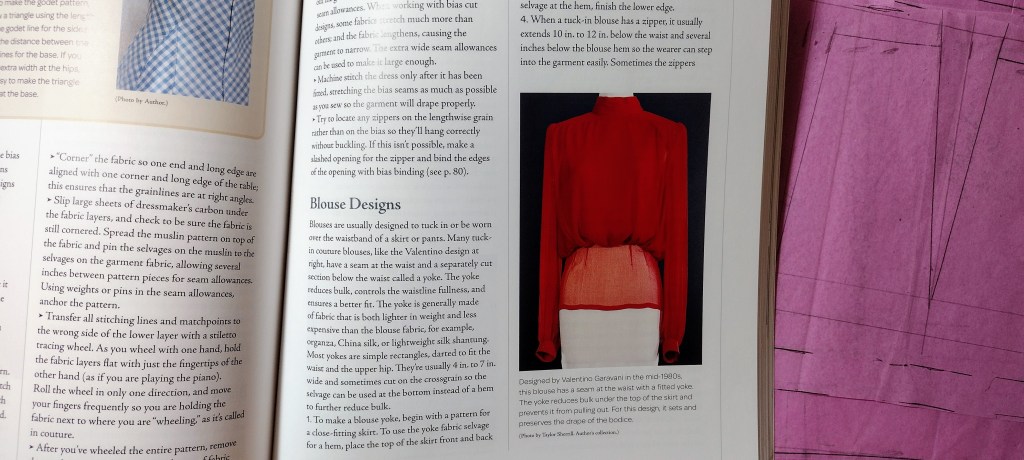
New work in progress…I am taking up the challenge to drape in tissue paper. During WWII there was rationing of consumer goods including fabrics like cotton and silk. To conserve resources for the war effort, fashion schools and books about patternmaking taught students how to drape in tissue paper instead of muslin. The technique was used by author Nellie Weymouth Links in her 1947 book “Precision Draping”. I taught myself the method during Lockdown 2020 except at the time I used muslin. I think it is time I learned how to do it in tissue paper. If I am successful, I will save a lot of money! The new project is a blouse with a blouse yoke. The kind of blouse yoke I will make is for the lower part of the blouse. It is described in Claire Schaeffer’s “Couture Sewing Techniques”. The pattern is derived from a skirt pattern. The yoke holds the upper part of the blouse neatly in place and fits smoothly under the skirt. I will post a screen shot of the sketch and half toile when completed..
Photos of work in progress
First pattern of bodice and blouse yoke draped in tissue paper.
“Preccision Draping” by Nellie Weymouth Link
Photo of blouse with blouse yoke. From “Couture Sewing Techniques” by Claire Schaeffer.
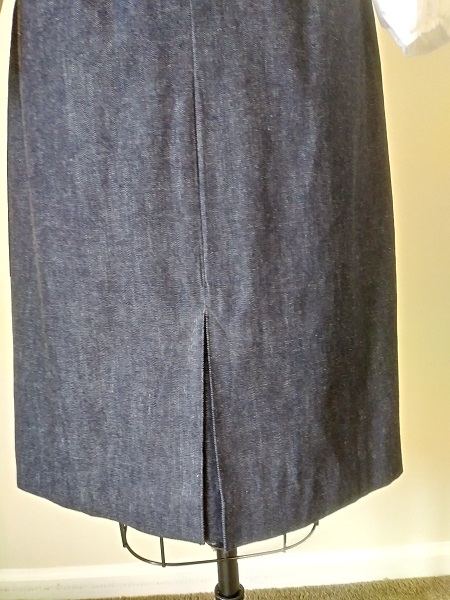
In this posting I share some of the fitting and sewing techniques I used to refine my favorite denim sheath skirt. The skirt is made with a bottom weight 100% cotton denim by Kauffman. The fabric was laundered and dried prior to marking, cutting and sewing.
The pattern was developed entirely through draping in cotton muslin.
The skirt had several parts of the construction done by hand. The blouse was purchased online.
Fit is Everything!
To give the skirt more style ease I had to add extra width at waist, hip and hemline. Some sewing books say extra width can be added at the side seam. I found that it is better to open the pattern between the second dart and the side seam. You measure the mid-way point between the dart and the side seam. Draw a vertical line from waist to hem. Then open 1/4 of the total amount of style ease needed. This alteration is the same for front and back of the basic sheath skirt pattern.
In the photo of the back pattern piece for the skirt you can see the place where the cut was made and extra paper added to the pattern between the second dart and the side seam.
Note: The pattern for the skirt was made using Precision Draping by Nellie Weymouth Link. I gained weight since the time the original drape and pattern was made. This necessitated the need for the alteration.
Dressmaker Finishes for a Refined Look
A slot zipper application was used. I followed the hand sewing technique detailed in Couture Sewing by Claire Schaeffer. Instead of using a prick stitch or back stitch, the zipper is sewed into the seam using tiny running stitches. To further secure the zipper in place, the zipper tape is fell stitched only to the side seams, at the edges. The zipper stop is covered by a lightweight piece of lining fabric. I used a small piece of lace hem tape instead.
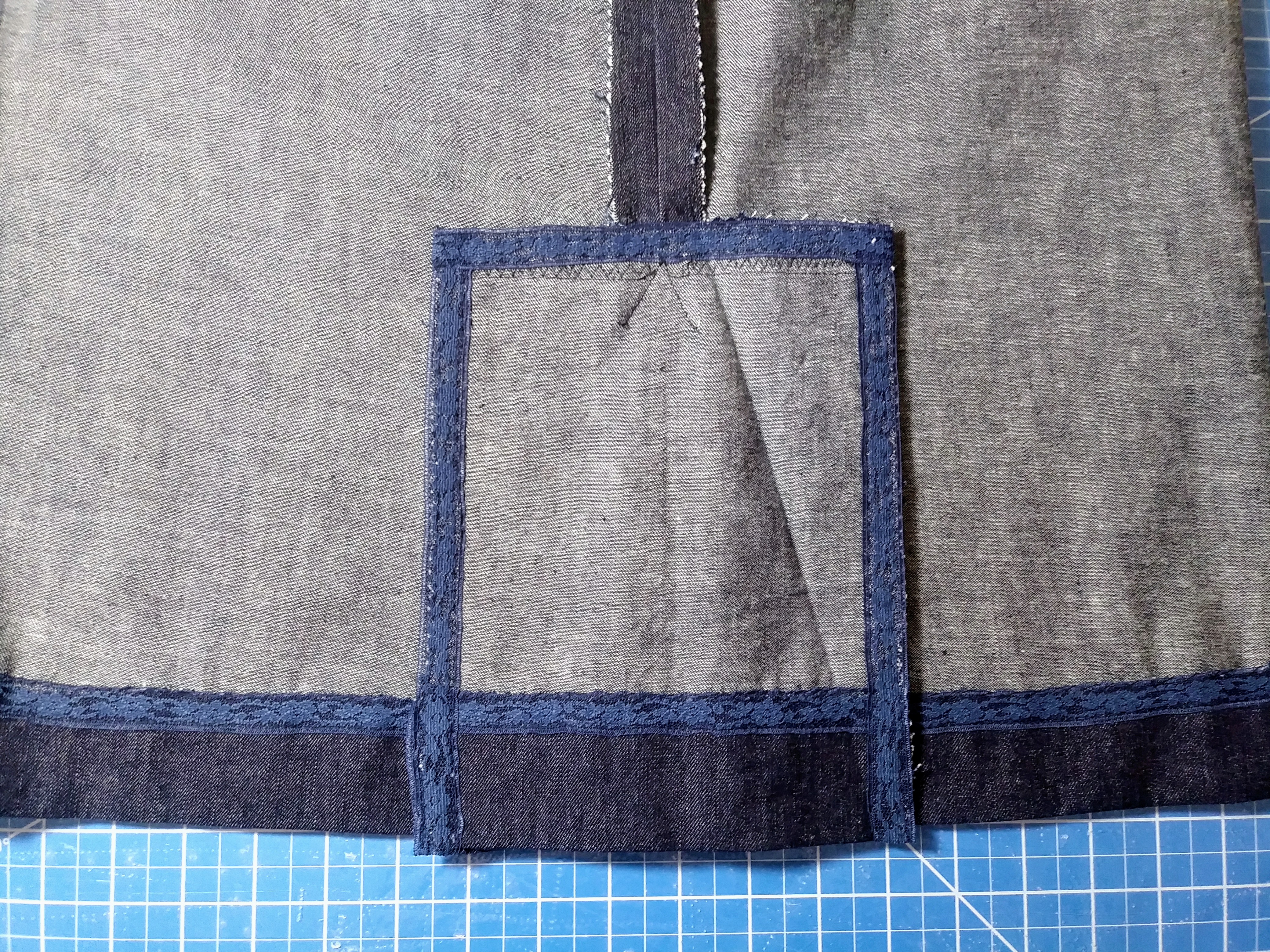
A kick pleat with insert was made in.center back seam. It provides ease of movement as well as a finishing touch. The top of the kick pleat is stitched into place using a triangular shape. A kick pleat is more refined than a high slit at center back of the skirt. That is why this skirt works well for casual dress days at work or an outside meeting with business associates.
All seams were pinked and then edge stitched. Wrights Flexi-Lace tape provided a finish for the hem and kickpleat.
In this posting I share progress photos of a new dress developed through a combo of flat patternmaking and draping. The photos featured are of the half-toile to test the fit.
Combination Technique: Draping and flat patternmaking
95% of this toile was made using a flat pattern. I used the Misses Size 8 sloper to create the fitted bodice, semi-fitted skirt and basic unfitted sleeve.
3/4 view of half-toile.
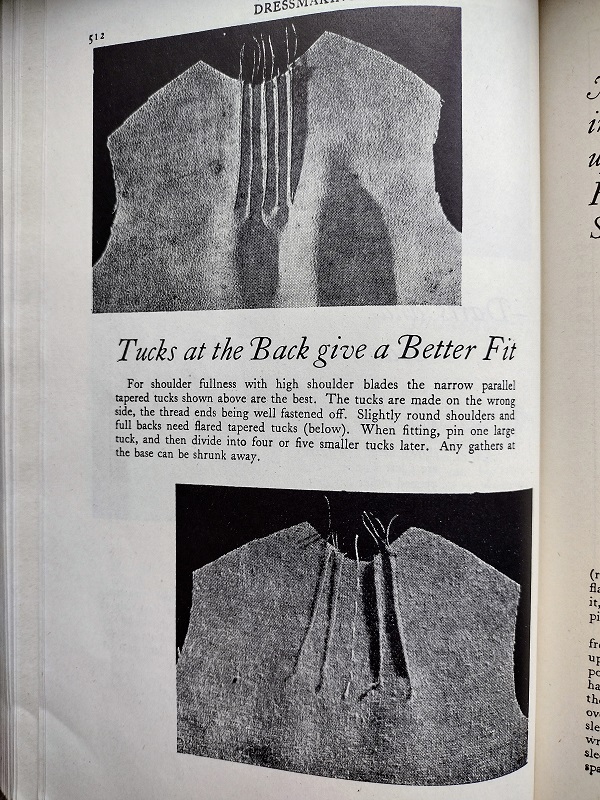
The flat pattern for the bodice front had the horizontal side dart closed and vertical dart opened. The construction of the bodice shoulder, back yoke, back tuck and side seams were completed. After steam pressing the bodice was pinned to the form. The excess dart intake below the bust was draped into two vertical tucks each 3 1/8″ high and about 1 1/2″ wide. I like the softer look of the tucks over the dressmaker dart under the bust.
Front view of half-toile..
I am very pleased so far with the 6 gore skirt. It was created by closing the darts of the basic semi-fitted skirt. The skirt front and back were cut along the lines of the dart and below the dart. Each piece then had extra width added at the hemline along front and back princess lines and side seams. I find the fit of this kind of gored skirt even more flattering than that of the 6 or 8 gore skirt created through flat patternmaking.
The collar was simple, easy flat patternmaking as was the sleeve. The next posting will be published once the fitting toile is complete.
Giving a Name to the Dress
As I work on a new project and gather the notions and fabric, I develop an image of who the dress will be for. I choose a name to create a sense of space between my self and what is coming to expression. This permits me to think whether or not improvements are needed. When I am too close personally and emotionally to a project become too attached. That is not good because it prevents perception of where the fit or creative result is lacking. This dress is called Alice. I will add a middle name once I feel more of the character of the dress emerging.
The basic fitting shell for the Misses Size 8 was draped. A toile was made twice each time refining the fit. When the basic Size 8 was turned into a sloper I then went on to customize it for myself.
Why not draft a custom made pattern?
I have been drafting patterns to my own measurements and have become very comfortable with the system I use. During the COVID-19 related furlough from my job this past Spring I decided it was time to take on a few challenges.
I am weak in the making of alterations. Since my dress form is a standard Misses 8, I decided to take on the challenges of draping and altering a Misses 8 for myself. I am between a Misses 6 and 8 for the bodice. For a skirt I am between a Misses 8 and 10.
I also have fitting challenges resulting from a small bustline, concave chestline and sloping shoulders. There were a few challenges I wanted to take up on the time I had to stay home from March until June 2020.
Working with Oaktag
The goal of using sloper was on my To Do list since 2018. The large roll of oaktag I bought from Steinlauf & Stoller moved with me from Brooklyn, NY to Linden, NJ waiting to be used. Being tightly rolled up for 2 years made it difficult to get into a workable state for making a sloper.
I had to roll the oaktag out on the floor and keep it in place with heavy books. I then cut the oak tag into length and width suitable to each pattern piece. To stop the curling I pressed each piece of oak tag by covering them with a thick towel. Then I used a steam iron to press flat.
The ends still curled so I laid the pressed oaktag pieces on top of each other onto the floor. The I piled heavy books evenly across them.
After two days the oak tag was flat enough. The pattern pieces were laid on top and the markings transferred. I cut out the darts because I want to try pivoting the pattern pieces to change the dart intake when working on transformations.
Finished Slopers
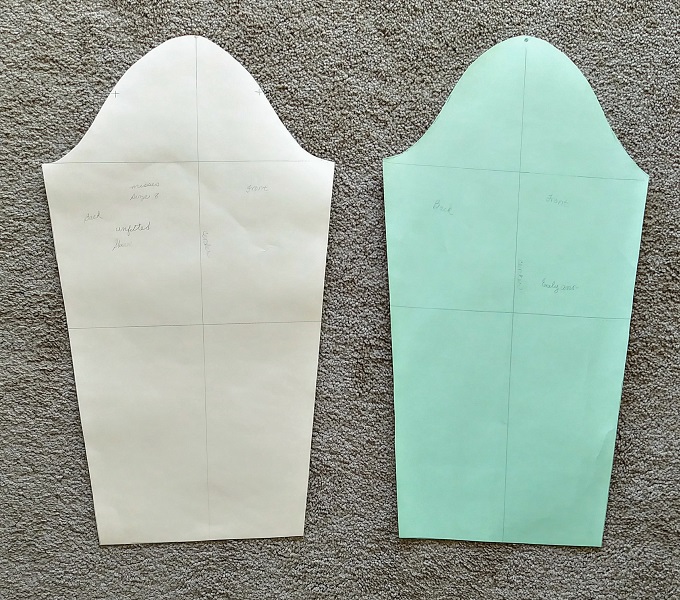
The white slopers are for the standard Misses Size 8. The green are mine. You can immediately see where my figure differs from the standard. I have to get a hole puncher. Then the hooks from which to hang the sloper pieces.
Bodice and Skirt Slopers. Misses Size 8 left. Size 8 altered to my figure on right.
Misses Size 8 unfitted sleeve on left. Sleeve adjusted to my figure on right.




















 Pour Moi
You must be logged in to post a comment.