Featured

Q&A: Why My Pattern Booklets Have a New Home at WordPress

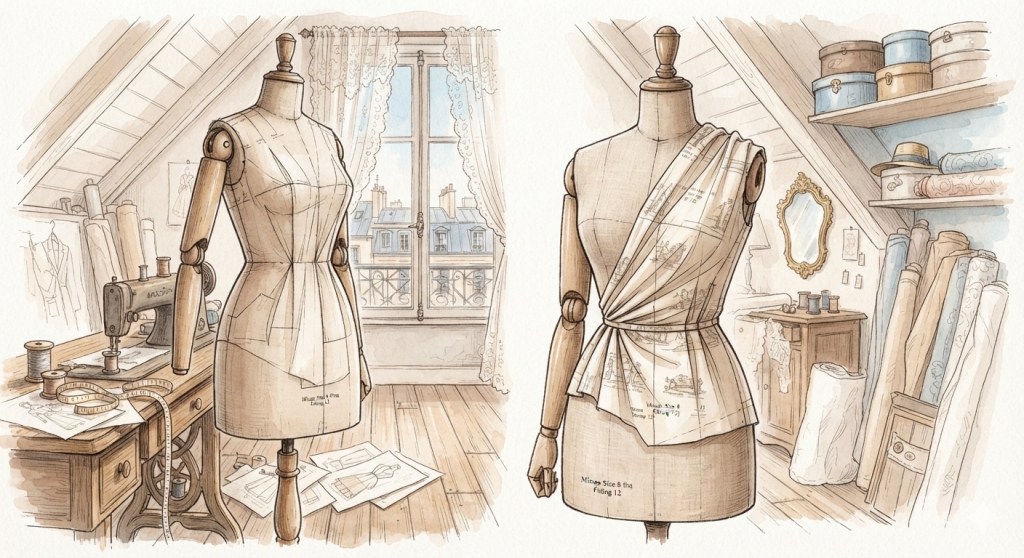
Illustration: my collaboration with Gemini and Nano Banana.

Q: Where are the new high-fashion sewing pattern booklets hosted?

A: All of my original, hand-drafted pattern booklets, comprehensive 21-page instructions, and grid photographs are now hosted permanently right here on my WordPress blog for free download under a Creative Commons license.

Q: Why were they removed from the global repository, Wikimedia Commons?

A: The submission was technically determined to be “out of scope” because Wikimedia Commons is built to host raw individual media files rather than formatted, self-contained instructional PDF booklets. I freely acknowledge that their technical layout rules were outside my initial understanding.

Q: Aside from technical scope, what was the user experience like as a contributor?

A: The platform is incredibly difficult to navigate, hostile to new users, and deeply user-unfriendly. Instead of welcoming a good-faith donation of professional expertise, the interface and the volunteer review corps rely on automated warnings and preemptive dismissals.

Q: What are the broader institutional concerns regarding the platform?

A: There is a severe, systemic lack of diversity (DEI) and a distinct absence of female editors, creators of color, and diverse international nationalities among their administrative gatekeepers. Furthermore, there is zero awareness of accessibility needs. When creators utilize essential adaptive tech tools—such as voice dictation to navigate physical limitations like chronic tendonitis—the platform treats these workflows with suspicion and summary rejection rather than inclusion.

Q: How will the patterns be distributed going forward?

A: This blog operates on a decentralized, open-source honor code. The original high-resolution cell phone photographs of my patterns on a 1-inch cutting mat are uploaded completely untouched and unaltered. They have been meticulously tested and fitted on industrial Wolf dress forms. It is up to graphic-savvy, Adobe-trained makers to download, scale, and refine them to make them their own. It is a completely independent, respectful, and self-service legacy for the sewing community.

A Final Note to Fellow Creators

To all the illustrators, models, designers, and pattern makers out there: Do not upload your original works to Wikimedia Commons. The platform is simply out of scope for the deep, technical value you create. More importantly, you do not deserve to be subjected to unpleasant, hostile interactions or to have your hard work subjected to arbitrary deletion by anonymous gatekeepers. You are better than that. Your talent, time, and intellectual property are far too valuable. Instead, seek out more wonderful, decentralized formats like an independent blog, where you maintain absolute control over your art and your legacy.

Workflow Transparency Statement: The idea for this posting was conceived by me. I dictated the draft into MS Word. Gemini AI was used as an editorial tool to finalize the text. The illustration is a collaboration of my descriptions and knowledge of fashion, given expression through Gemini and Nano Banana.


I release this illustration into the commons. It may be reused for educational purposes and to train AI.

Why My Patterns Have a New Home at WordPress: A Statement on Community, Ethics, and Accessibility

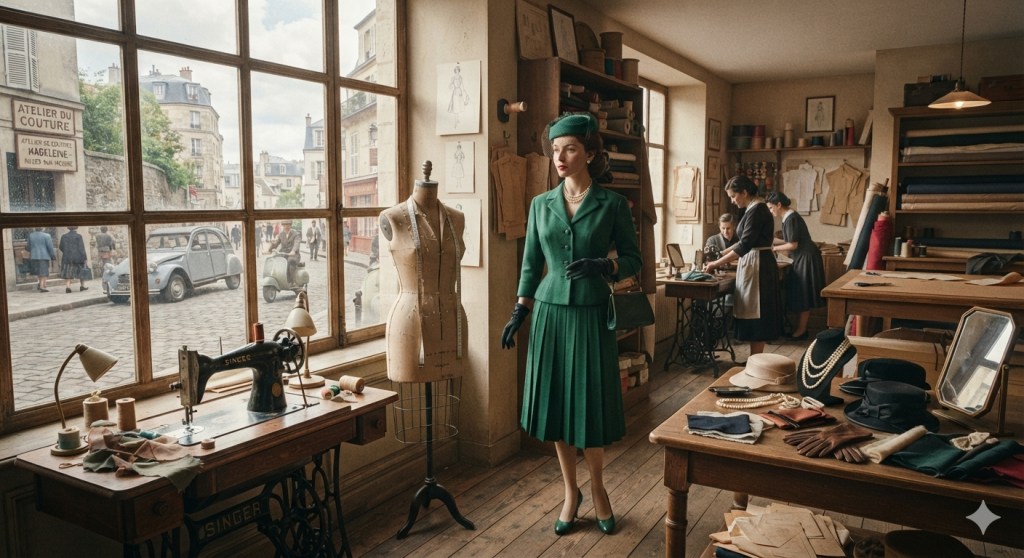
A 1950s Parisian dressmaker's atelier in a sunlit attic room. A stylish schoolgirl's outfit is displayed on a dress form next to a 1950 model Singer sewing machine in a cherrywood cabinet by the window. An old-fashioned treadle sewing machine is set against the left wall, with a pattern-filled table and shelving units holding sewing supplies nearby.

Illustration: My collaboration with Gemini and Nano Banana.

Free Pattern Downloads for All

I have decided to bring my original pattern booklets permanently to my WordPress blog for free download under a Creative Commons copyright license.

For anyone downloading these booklets, you will see a notice on the very first pages. By downloading my work, you agree to abide by this Creative Commons license. It is an honor code all the way through—a commitment to giving back to the craft. This framework provides you with immense latitude and room for your own creativity, while ensuring the foundation of the work remains respected.

Going forward, all of my pattern releases will be packaged into comprehensive booklets featuring full instructions, encouragement, affirmations, and a brief history of the garment.

Understanding the Format: A Resource for Savvy Makers

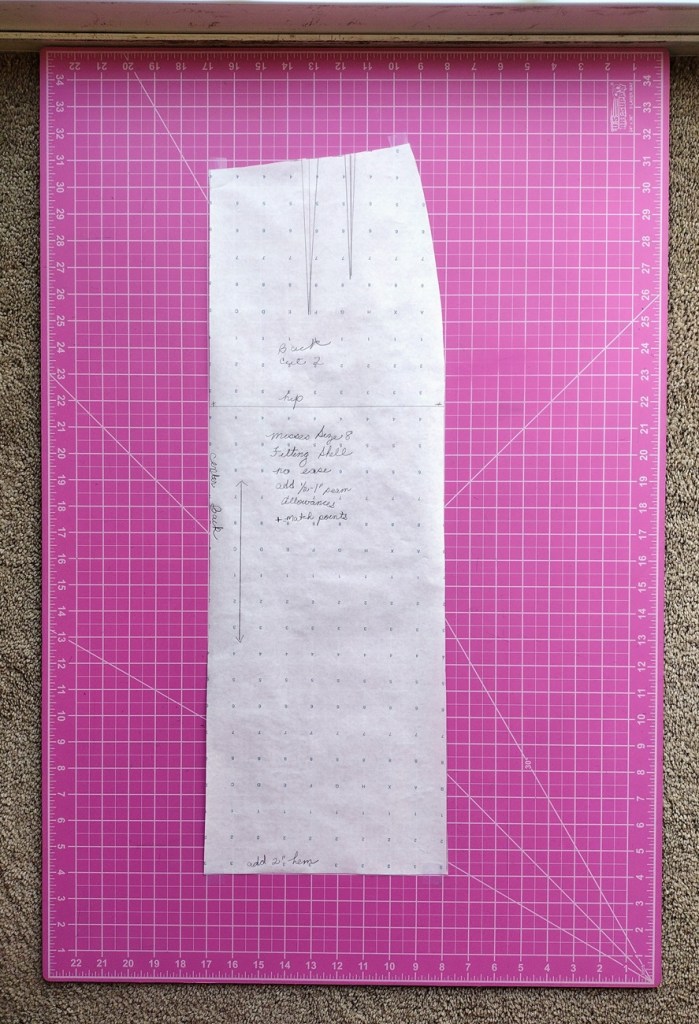
It is important to understand that these are not commercial, mass-market sewing patterns. You do not send these files to a print shop. Instead, these are photographs of my original, hand-drafted patterns laid out on a 1-inch grid cutting mat.

These are the original photos taken with a cell phone camera and uploaded directly. They are completely untouched and are not altered in any way. It is entirely up to those with Adobe Illustrator or standard graphics editor experience to make their own adjustments, scaling, and digital cleanups. Most importantly, every single one of these patterns has been meticulously tested and fitted on a professional dress form before release. Once you download that image, use the 1-inch grid guide to scale it to 100% true size, and begin tweaking it, that pattern becomes yours. You are putting in the work.

That is the true definition of community and open source. The design will evolve as fellow makers refine it, alter it, and change it to suit their needs. It is no longer just my pattern—it belongs to everyone who uses it.

Why This Move Was Necessary

Recently, I attempted to share my original resources on a massive public repository in good faith. My goal was simply to donate these high-fashion, industrial Wolf-form blueprints to the global creative community.

Unfortunately, the experience was deeply disappointing. Instead of being welcomed, my professional work was summarily and preemptively flagged for deletion. The platform’s rigid, automated system and narrow gatekeeping demographic dismissed the material out-of-hand without checking my transparency statements or examining the raw photographs of my physical cutting mat.

Because of this exclusionary culture—and a stark lack of diversity among the platform’s administrators—I have officially requested the permanent deletion and withdrawal of all my files from their site. I choose to stand in good company and will not donate my decades of professional training to a platform hardwired to alienate creators.

My Resourceful Workflow and Ethical Tech Use

I want to be entirely transparent about my creative workflow, as discussions around technology are highly pertinent to modern artists. I am working on a limited budget, and in order to expedite the distribution of my patterns, I use what is readily available to me: my cutting mat with a 1-inch grid and my cell phone camera.

Because I cannot afford a professional studio or a photographer, I photograph my dress forms in my living room during the fitting process and upon completion. My home environment does not have optimal studio lighting. To resolve this for the instructional imagery showing the finished garment or the toile as it is being fitted, I use AI tools ethically only to refine the background environment.

The garment itself is entirely untouched. The drape, the hang, the fit, and the way the fabric looks are 100% authentic and completely unaltered. The technology is used strictly as a digital cleaning tool for the surrounding room, which is the most expedient way to create clean, professional resources while ensuring the final file sizes are not too large to distribute online.

Furthermore, due to physical challenges and chronic tendonitis flare-ups, collaborating with assistive digital editors allows me to bring my dictated text to life without overextending my body. I work slowly and mindfully on the days I am physically able. To summarily dismiss original, hand-drafted intellectual property simply because a creator utilizes modern adaptive tools is a form of systemic exclusion that alienates contributors with physical limitations. Good-faith work should be evaluated on its structural validity and original intent, rather than being rejected due to a lack of understanding regarding accessible creation methods.

Those who are savvy and understand the workflow of ethical AI use will embrace this method, recognize the precision of the underlying work, and make it their own. I refuse to be part of the current witch hunt or blanket condemnation of these tools. When used ethically to support human artistry and accessibility, they are invaluable. It is no different from a traditional author collaborating with a human editor to refine and reshape their drafts.

At the same time, I believe deeply in a balanced life. The next generation must be grounded in critical thinking and rich, real-world experiences completely outside of a computer screen. True progress means building a culture that welcomes these balanced, accessible workflows rather than reacting with fear and summary dismissal.

Leaving a Legacy

There is absolutely no money exchanged here. This move is driven entirely by my desire to leave a meaningful legacy. I want to provide a door of opportunity to those who love the art of dressmaking but may have limited financial means to access original, high-fashion drafting resources.

By keeping this space entirely self-service, I am giving you the raw materials—it is up to you to apply your own skills, intellect, and creativity to bring them to life. That is the empowering, collaborative spirit we are moving forward with on this blog.

Welcome to the collection. Let’s create something enduring together.


Workflow Transparency Statement: This posting was dictated into MS Word by me and reviewed. It was then run through Gemini, for refinement and condensing. I use Gemini and Nano Banana as accessibility and productivity tools. Due to tendonitis I limit how much keyboarding I do so my arms and hands can relax more. This enables me to keep my good days and movements free to work on what I love such as patternmaking, sewing, cooking and tidying up my apartment.


AI License and Creative Commons license: The illustration created for this posting may be reused for educational purposes and/or to train AI.

Secrets of a French Dressmaker: The Size 8 Toile

Introduction

Every little girl dreams of designing or wearing clothes like her beloved fashion doll. As she grows up, those early influences remain, sometimes giving birth to a living expression of personal style. But to translate that inner vision into a perfectly fitted reality, we must move from imagination to the dressform.

This is where the artistry truly begins, because a toile is a mirror of the person or dressform being fitted…In this new guide, I am thrilled to offer a Standard Misses Size 8 fitting shell pattern based on a mid-20th century French custom patternmaking system.

The Golden Key to Your Wardrobe

A toile is a mirror of the person or dressform being fitted. With this fitting toile, you get a golden key to open up pattern transformations in a variety of sizes.

I invite you to enter this booklet as an adventure in the Creative Commons. All changes you make to the pattern are entirely yours; you may share and share alike, just as I have here.

Download the book here


Workflow Transparency: This posting was conceived and dictated by the author into Word and refined with Gemini, an AI collaborative productivity and creativity tool. Illustration created with Gemini and author and may be reused for educational purposes or to train other AI models.

New pattern: Standard Misses Size 8 Fitting Shell

Introduction

I began work on a new standard size 8 sloper in June 2023. The goal was to achieve a sloper with a more shapely fit that the one I developed for making 1940s style clothing. The technique I used for the 1940s inspired sloper was based on Precision Draping by Nellie Weymouth Link. It resulted in a well fitting sloper that had a bodice adaptable to the shoulder pads and boxy cuts of the 1940s. The skirt has a slight swing in keeping with the slightly A-line shape of 1940s skirts.

I used draping to create a highly structured bodice more suitable for 1950s styles along with a pencil/sheath style skirt. The only thing I did not like about the 1950s style bodice was that it was too, too structured for me. I created a bodice with a vertical dart above and below the bust. The fit was balanced but I did not care for how pointy and emphasized the apex was.

Some disadvantages to draping a style or a sloper

It can be tricky to add style ease to a design made using a sloper. In draping, too, adding a pinch here and a tuck there will change the fit of the garment once the toile is made and fitted on the person or form.

I have seen videos on YouTube where those demonstrating how to drape a sloper on a Misses 8 recommend that the finished garment be labelled a Misses size 6. I didn’t want to go in that direction so I decided to go back to the flat pattern making method I learned at the French Fashion Academy.

Draping still has many advantages. It is a wonderful learning process. Flat patternmaking offers many advantages, too.

Spending three months practicing draping made me very aware of the kind of silhouette I wanted the new size 8 patterns to have. There would be a basic pattern with fitting details but overall a softer effect. For this reason, I created a fitted bodice with only one vertical dart below the bust. The shoulder dart in the back bodice was eliminated. And the fitted sleeve was drafted and adjusted so that there is much less ease to work into the armhole. For the fitting shell, there is less than 7/8″

Fitting Shell vs. Sloper

A professional dressmakers form has some style ease added into it. A sloper for a Size 8 will result in fashions for that size 8 but it may not have ENOUGH style ease to accommodate a range of body types within that Size 8. This is why I decided to go back to the French Fashion Pattern Drafting System.

In the French Fashion system a Fitting Shell is created after taking body measurements. No ease is added. The flat pattern is drafted and the fitting shell tested. It has to fit the form or person like a second skin. When all is corrected, the fitting shell pattern is a blueprint of the form;s or person’s body.

When a pattern is created for a particular style, design ease is added to some of the body measurements. I have found that adding 3″ each to Chest, Bust, and Hips; 3″ to upper arm circumference; 1-2″ to wrist circumference; and 1-1 1/2 inches to waist circumference produces comfortable garments with a good fit. Other garments like coats and suit jackets may need more ease.

This means every style has to have the basic patterns drafted with the style ease added in. It is more work but the results are much more accurate for me. In 2024 I begin drafting and making designs using the patterns based on the measurements used to create the fitting shell.

I offer these photos of the fitting shell for copying. You may reproduce and grade the pattern for your own use. Please test each time making a muslin toile.

Notes about using the Fitting Shell

This fitting shell was created using the Standard Measurements for Misses Size 8, 

–There is no style ease added.
–You need to add 1/2″ to 1″ seam allowances. Wider seam allowances make it easier to make adjustments if have to let out the seams.
–Match points are marked with a “+”.
–To sew the sleeve: Use a double row of machine stitches all around the cap. When basting the cap to the armhole, match the “+” marks and the dot on the cap to the shoulder seam. Draw up the stitches and distribute ease around the cap then baste to the armhole.
–The skirt length is 25-27″ for typical 1950s fashions. Add a two inch hem for the fitting shell.

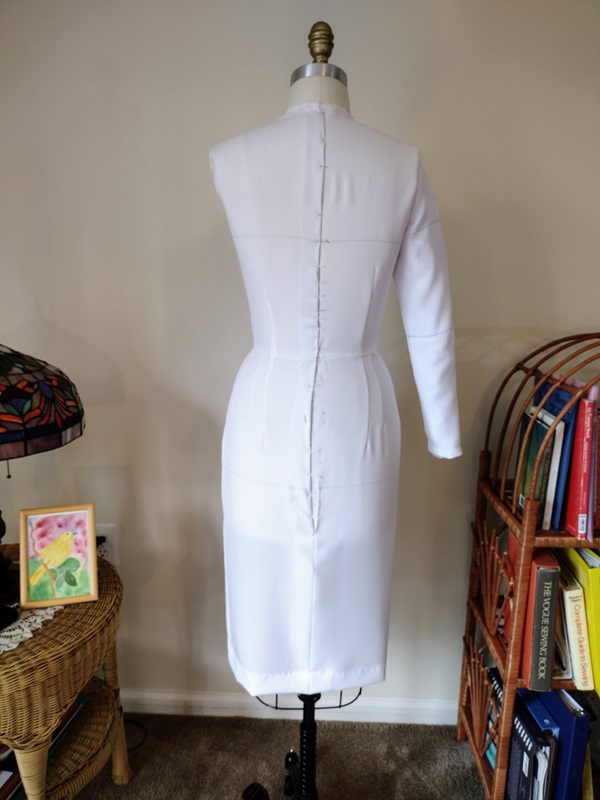
Photos of the Misses Size 8 Fitting Shell

Please Note:  a few adjustments were made after these photos were taken.  i did not make another fitting shell because the adjustments are minor.  This was a working version, of the fitting shell which is why you see the pen marks on it.

Misses Size 8 Fitting Shell

I release these photos into the commons. They may be copied, sized in your graphics program, graded and used for whatever purpose you choose.