Draping the Basic Sleeve

Introduction

I am ready to begin draping a sleeve pattern for my 1950s style sloper in Misses Size 8, and a 1930s style sloper in Misses Size 4.

My Decision to use a different Draping Technique

The instructions in Precision Draping by Nellie Weymouth Link are for creating a fitted sleeve with elbow dart. I prefer making the basic unfitted sleeve without elbow dart since that is the starting point for other sleeves. The basic unfitted sleeve, meaning one without elbow dart, is used as a sloper. From the resulting basic sleeve further pattern development will create a sleeve with elbow dart for my 1950s style sloper. For the 1930s style sloper the sleeve will have a long vertical dart from wrist to elbow.

By having the basic sleeve without elbow dart as my sloper I will save time in developing other variations of sleeves. I have found the easiest and clearest YouTube video after a week of reviewing about 10 videos. Susan Elias’ video shows a precise, detailed and simple combination method for creating your sleeve. The lower part is drafted right on the muslin using just a few measurements. Susan shows how to take the measurements and do the calculations. She also shares tips for making measuring easier and for pinning the lower half of the pattern.

Draping takes place for the sleeve cap. Susan shows this on a toile she has pin fitted and marked up. By seeing her perform the entire process from beginning to end you will get a good idea of what will happen when you start draping your own sleeve. I highly recommend this video for the technique, the clarity and the orderly presentation. I’m off now to start my own first attempt!

Researching and preparing a 1930s inspired pattern sloper

Introduction

I am preparing two slopers this summer. I already created one that I use for 1940s to early 1950s inspired styles. I used that for the Alice Elizabeth dress and the Linda skirt and blouse. I am now in the progress of creating a more structured sloper that I think will work well with the more detailed and fitted styles of the mid-1950s. As a challenge and contrast, I am also researching slopers from the 1930s. The look of the 1930s was very flowing and not fitted the way 1950s clothing was.

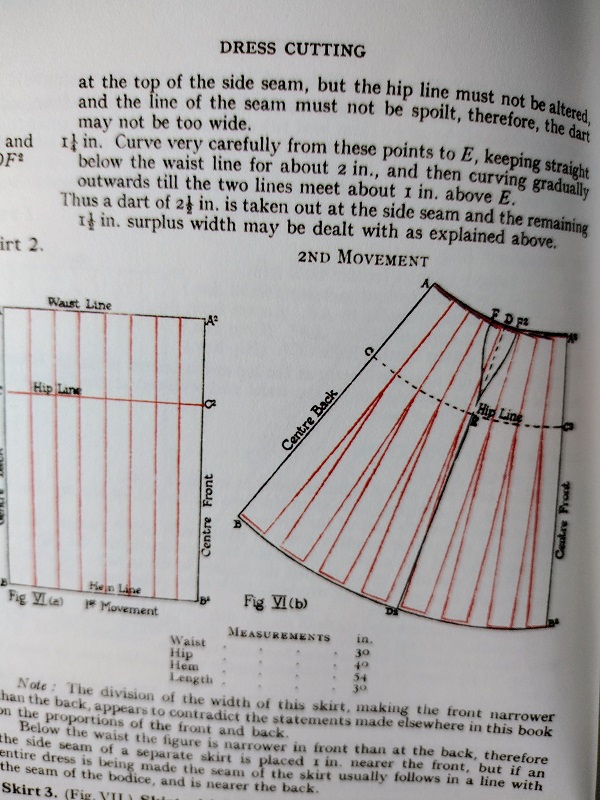
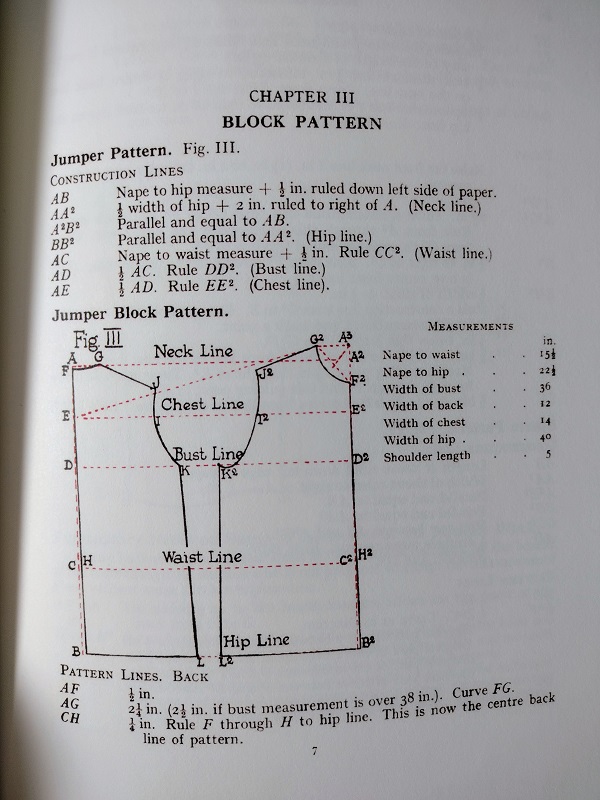
My 1940s sloper is available for copying and sizing here. It is a standard Misses 8. The sloper for the 1950s structured fashions is also in a size 8. However, I think the 1930s look is very flattering to smaller sizes so that sloper will be in a standard Misses 4. I do not intend to use drafting systems from the 1930s. Instead, I will drape a basic unfitted bodice and skirt that approximate the look of a set of pattern blocks I located in a small paperback book called Dress Cutting by Margaret C. Ralston. I will draft a fitted sleeve with vertical dart to complete the sloper.

Here are the screen shots showing the basic block Margaret created from her drafting system. I find it a bit confusing to follow. I am also not sure the fit will be comfortable for the modern women. The sleeve looks very fitted and the sleeve seam is 3/4″ to the front of the bodice side seam. While I love vintage styles I do not think it is essential to go so far to recreate or be inspired by the look. The key for me is inspired interpretation.

Pattern Block from Dress Cutting by Margaret Ralston

The bodice front and back appear to be completely unfitted. In some directions for pattern transformations one dart above the bodice is shown. It might also be a tuck. I assume the bodice block had enough width for this dart-tuck to be created.

The skirt is a rectangle equal to half the hip circumference. It is then slashed and overlapped and the top edge so that the waistline measurement results. I plan to drape a basic sheath skirt. Once that fits, I will distribute the dart ease across skirt front and back waistline. Then slightly overlap the sections. That will produce a slightly flared, straight skirt which is the starting point for the skirt styles in this book. For the bodice I will drape an unfitted bodice. It will go straight to the hip and have the waistline marked off as well. There will be one vertical dart above the bust in front and a neckline dart or two in the back. I’m basing the dart positions on the fitting dress or toile shown in the previous posting.

I think developing different bodice and skirt slopers gives one a more extensive collection of shapes to work from. As I research the 1930s, I’m understanding that for the 1960s an unfitted dress sloper works well. So would an A-Line skirt sloper. Those are the two key shapes for dresses and skirts of the 1960s.

Here are the snap shots of the pattern blocks from Dress Cutting. The last snap shot is a dress that can be made using he pattern blocks and transformation instructions in the book.

Cover of Dress Cutting by Margaret Ralston.

Bodice front and back.

Basic skirt front and back.

Basic sleeve.

Fitted sleeves.

One of the styles that can be created using the block and instructions in Dress Cutting by Margaret Ralston.

The Dressmaker’s Model and Fitting Pattern in the 1930s, Part 1

Introduction

This posting initiates a series on my adventure into creating a 1930s type sloper in a modern day Misses size 4. I think modern sewistas and patternmakers can get a similar look without the expense of a vintage pattern purchase. Nor will there be the many fitting challenges that come with using a vintage pattern. My goal is to simplify a process of creation, not complicate it or make it overly time consuming. I think if enough research is done, it will be possible to come close to the shapes of a basic sloper for the 1930s.

Draping Technique I will use

I am going to use the 1940s draping system called Precision Draping which was developed by Nellie Weymouth Link. The book has been reprinted and is available at booksellers online new or used. While this is not a 1930s draping technique, it is a vintage one. It is easy to learn and provides a good foundation for exploration into the styles of other decades.

Beginning point

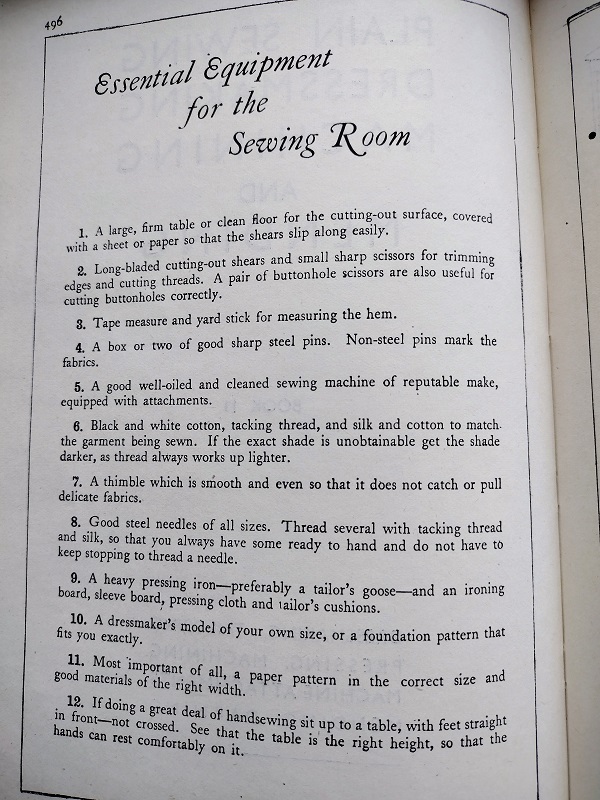
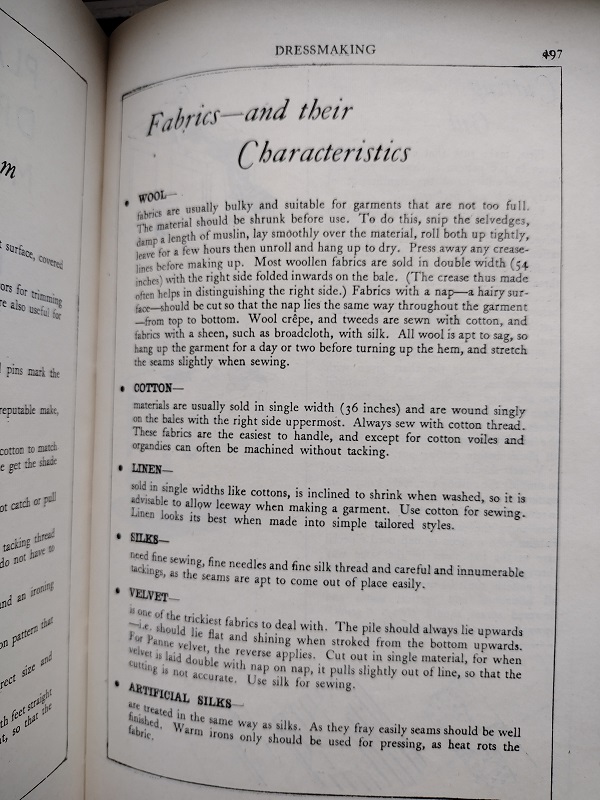
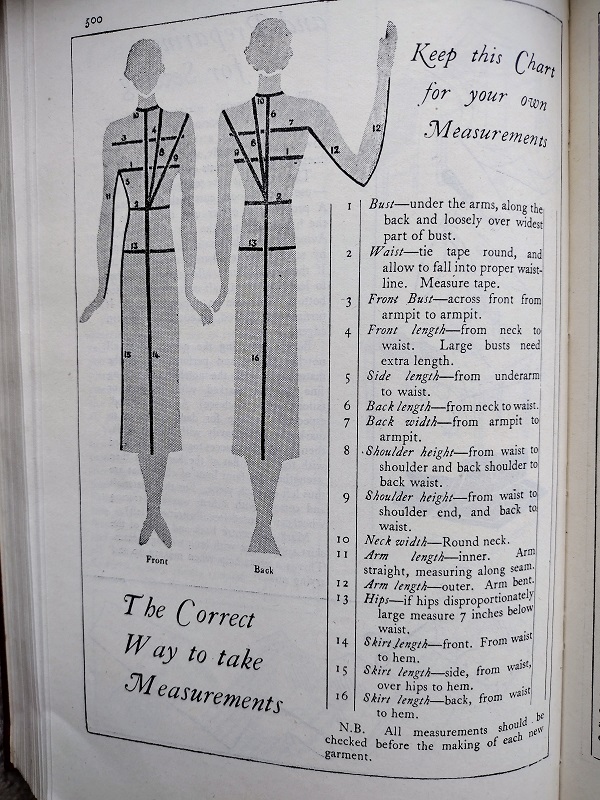
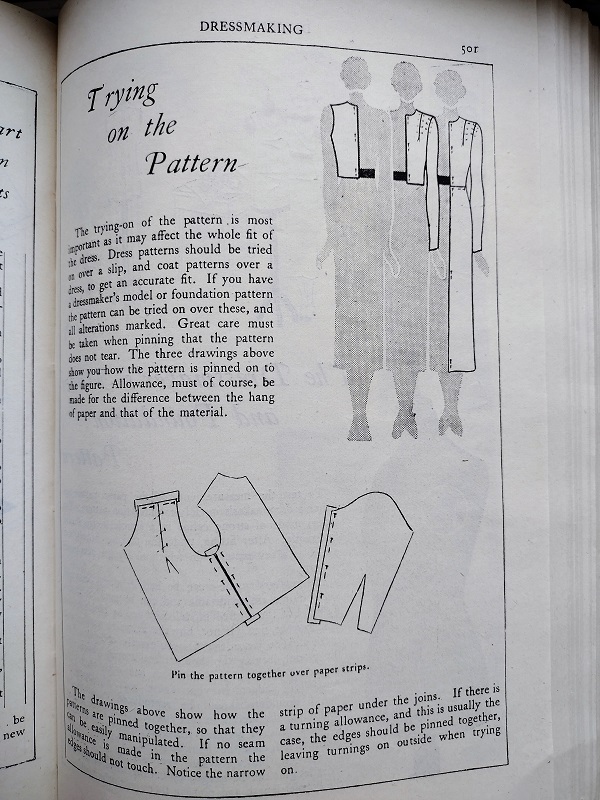
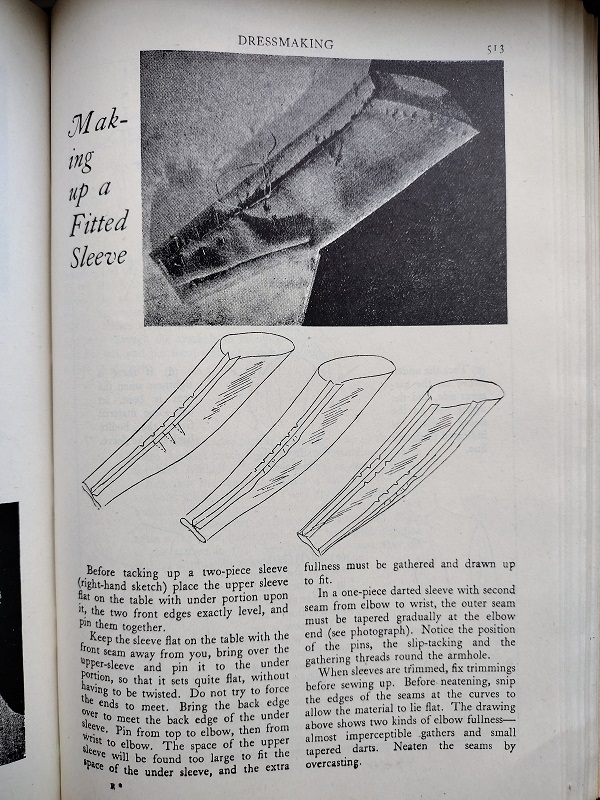
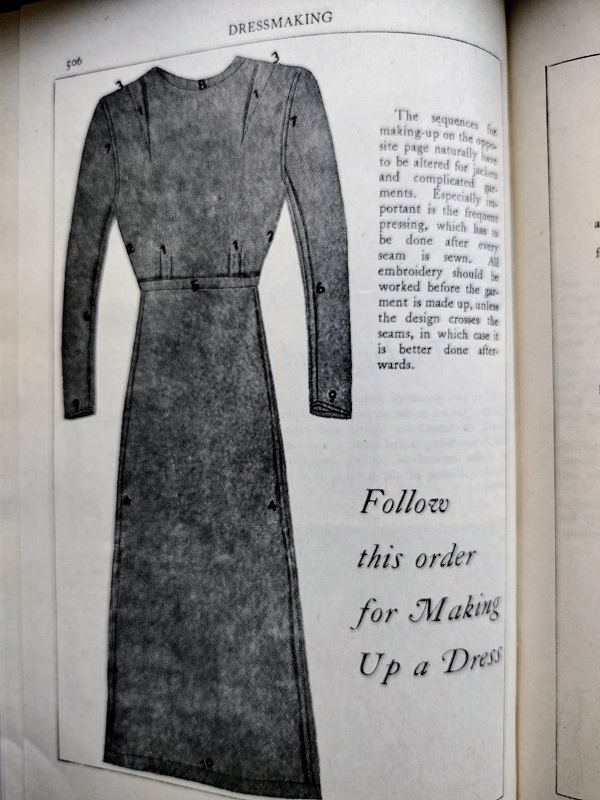
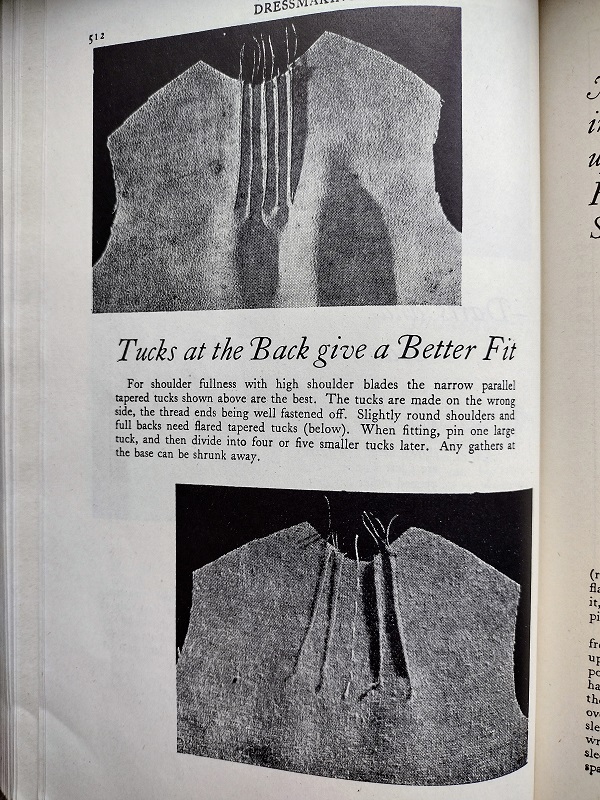
As always, research and reading provide insights and ideas. I begin this journey by making available for you a section of Weldons Encyclopedia of Needlework from my very small collection of vintage sewing books. It was published by The Waverley Book Col, Ltd. of Farringdon Street, London, E.C. 4, but no date of publication exists in the book! I estimate that the edition I have was published in the 1930s. As you can see in the illustrations that follow, the silhouette is close to 1930s fashions with longer hemlines and flowing skirts. The fashion figure is also slender and soft. The boxier fashions with emphasis on the shoulder line of the 1940s is not present in the chapter I post here.

We will continue this exploration into the elements of a 1930 sloper and the key takeaways for creating a sloper that can approximate the look in the next posting. For now I hope you enjoy this look into what a sloper and dress form from the 1930s looked like. What is shown here may or may not be typical but it has elements that appear in another flat pattern drafting system from the 1930s that appear in another book I have and will use in this series.

“The Dressmaker’s Model and Fitting Pattern” from Weldon’s Encyclopedia of Needlework

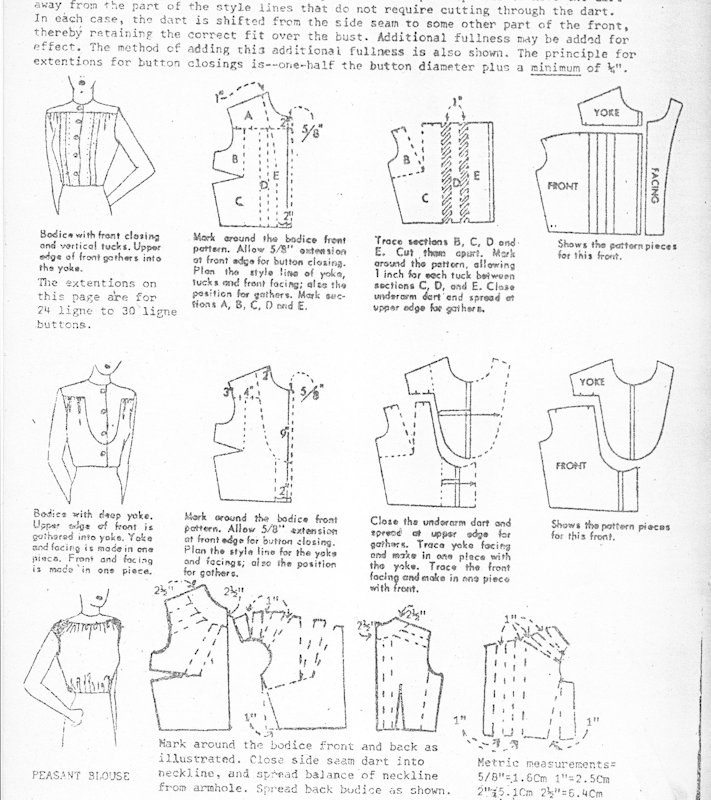
Style lines from a vintage patternmaking handout

In my previous posting, “What are style lines?” I explained what style lines are. I showed how a few style lines can be used to transform a basic skirt and bodice into a vintage inspired fashion from a 1964 magazine photograph.

Today, I’m sharing classroom handouts from a vintage patternmaking book. The style lines used are easy to understand and clearly illustrated on the basic bodice. Based on my knowledge of patternmaking it looks like the “slash and spread” method was used. This means, the pattern was created by tracing the basic sloper. The style lines were then drawn. After that, the pattern was slashed and spread when tucks or gathers had to be created. Other patterns were simply cut along the style lines, like the one for the princess line bodice.

I estimate that these pattern transformations are from the 1940s.

How to refine a Denim Sheath Skirt look

Introduction

In this posting I share some of the fitting and sewing techniques I used to refine my favorite denim sheath skirt. The skirt is made with a bottom weight 100% cotton denim by Kauffman. The fabric was laundered and dried prior to marking, cutting and sewing.

The pattern was developed entirely through draping in cotton muslin.

The skirt had several parts of the construction done by hand. The blouse was purchased online.

Fit is Everything!

To give the skirt more style ease I had to add extra width at waist, hip and hemline. Some sewing books say extra width can be added at the side seam. I found that it is better to open the pattern between the second dart and the side seam. You measure the mid-way point between the dart and the side seam. Draw a vertical line from waist to hem. Then open 1/4 of the total amount of style ease needed. This alteration is the same for front and back of the basic sheath skirt pattern.

In the photo of the back pattern piece for the skirt you can see the place where the cut was made and extra paper added to the pattern between the second dart and the side seam.

Note: The pattern for the skirt was made using Precision Draping by Nellie Weymouth Link. I gained weight since the time the original drape and pattern was made. This necessitated the need for the alteration.

Dressmaker Finishes for a Refined Look

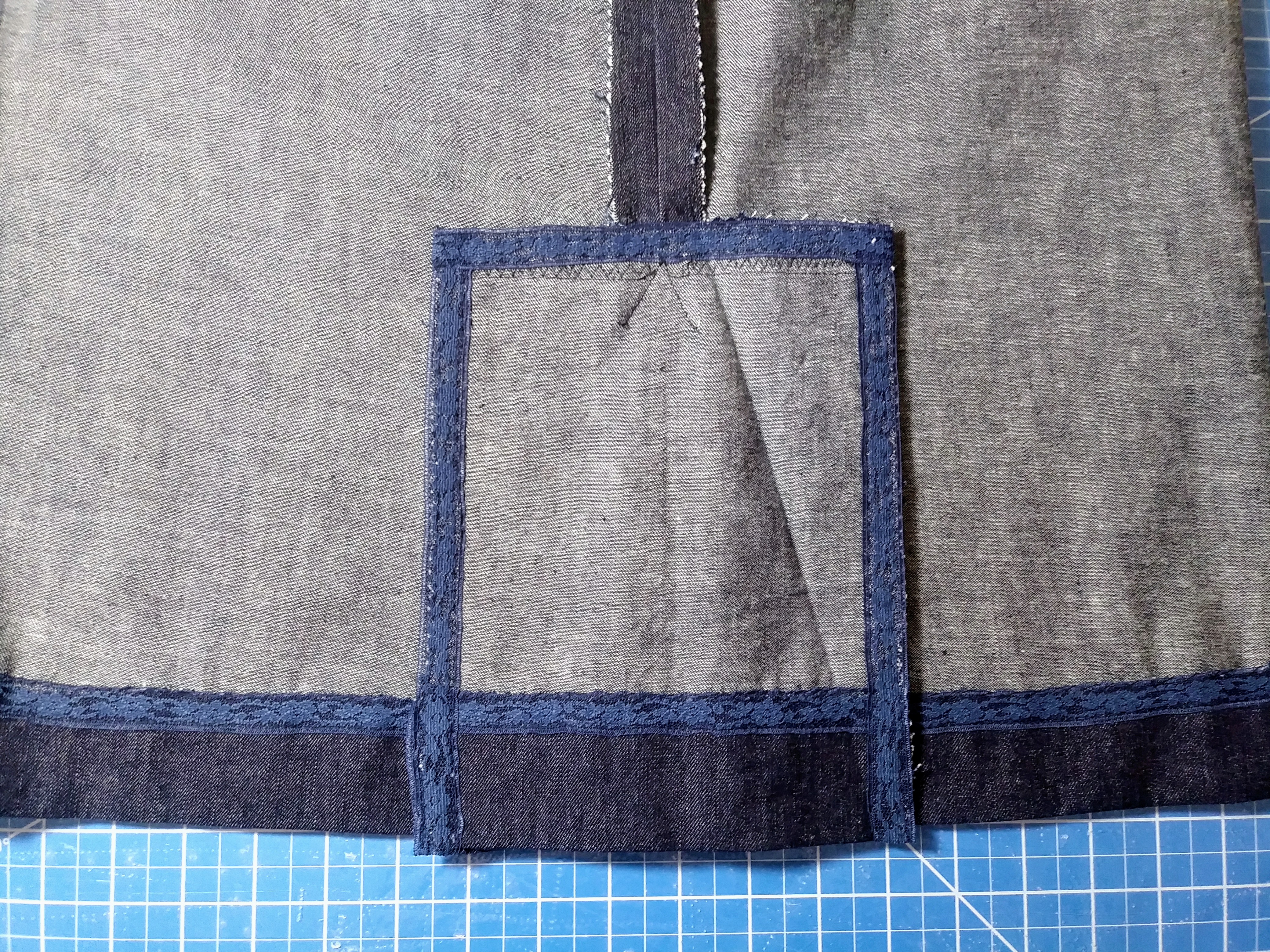
A slot zipper application was used. I followed the hand sewing technique detailed in Couture Sewing by Claire Schaeffer. Instead of using a prick stitch or back stitch, the zipper is sewed into the seam using tiny running stitches. To further secure the zipper in place, the zipper tape is fell stitched only to the side seams, at the edges. The zipper stop is covered by a lightweight piece of lining fabric. I used a small piece of lace hem tape instead.

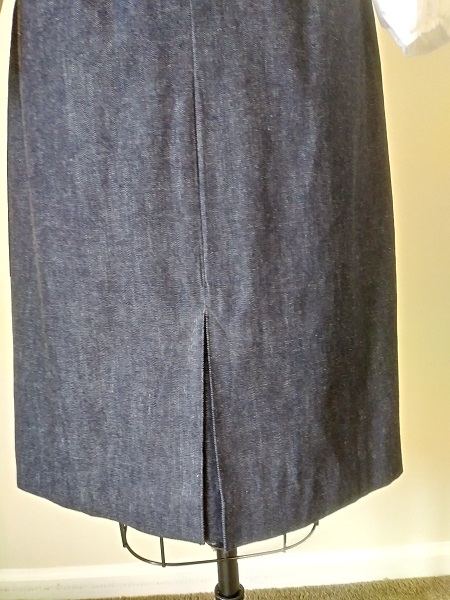
A kick pleat with insert was made in.center back seam. It provides ease of movement as well as a finishing touch. The top of the kick pleat is stitched into place using a triangular shape. A kick pleat is more refined than a high slit at center back of the skirt. That is why this skirt works well for casual dress days at work or an outside meeting with business associates.

All seams were pinked and then edge stitched. Wrights Flexi-Lace tape provided a finish for the hem and kickpleat.

How to draft a Sheath Skirt Sloper

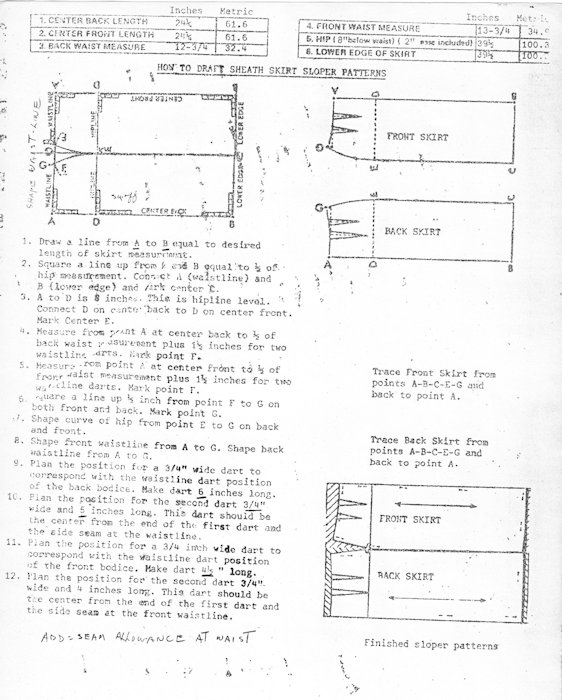
These pattern drafting instructions were given to me by a student who attended the Traphagen School of Design in the 1980s. It was a private design school in New York City. The instructions are very simple when you take the time to read them through before you start drafting your pattern. Make a muslin to test the fit before using this as the basis pattern for any pencil skirts or other designs based on the basic skirt sloper. The basic sheath skirt (a/k/a pencil skirt, slim skirt, wiggle skirt) has not changed. This pattern can serve as a sloper for vintage or modern skirt designs.

Measurements Needed

Center Back Length (from center back waist to desired length of skirt)
Center Front Length (from center front waist to desired length of skirt)
Back waist measure (from side to side seam at back)
Front Waist Measure (from side to side seam at front)
Hip Measurement – 7 to 9 inches below waist-use widest circumference.  Add 2″ of ease to measurement.
Lower Edge of Skirt (this measurement is determined by the hip circumference plus 2″ ease

Important Note:  Look at the complete diagram.  The rectangle runs from point A back to point A front at waistline.  Point B back runs to point B front.  Point A to B in the back and Point A to B in the front is the skirt length.  I found it easier to start with a large rectangle where A-A and B-B equals the complete hip measurement plus 2 inches of ease.  So draw A-A for the waist.  The draw A to B for center back.  Draw B to B for lower edge.  Then from B in lower edge of front draw a straight line up to A front.

Then proceed to step 2.

1.   Draw a line from A to B equal to desired length of skirt measurement.

2.   Square a line up from A and B equal to 1/2 ofequal to 1/2 of B (lower edge) and mark center C.

3.   A to D is 7 to 9 inches below waistline.  This is the hipline level.  Connect D on center back to D on center front.  Mark Center E. 

4.   Measure from point A at center back to 1/2 of back wait measurement plus 1 1/2 inches for two waistline darts.  Mark point F.

5.   Measure from point A at center front to 1/2 of front waist measurement plus 1 1/2 inches for two waistline darts.  Mark point F.

6..   Square a line up 1/2 inch from point F to G on both front and back.  Mark point G. 

7.   Shape curve of hip from point E to G on back and front.

8.   Shape front waistline from A to G.  Shape back waistline from A to G.

9.   Plan the position for a 3/4″ wide dart to correspond with the waistline dart position of the back bodice*.  Make dart 6 inches long.

10.   Plan the position for the second dart 3/4″ wide and 5 inches long.  This dart should be the center from the end of the first dart and the side seam at the waistline.

11.   Plan the position for a 3/4 inch wide dart to correspnd with the waistline dart position of the front bodice*.  Make dart 4 1/2″ long.

12.  Plan the position for the second dart 3/4 wide and 4 inches lont.  This dart should be the center from the end of the first dart and the side seam at the front waistline.

13.   Cut out sloper.  This sloper must have 1/2″ seam allowances added at waistline, side seams and center back.  Add hem allowance at bottom of skirt.  The hem for the basic skirt is usually 2″

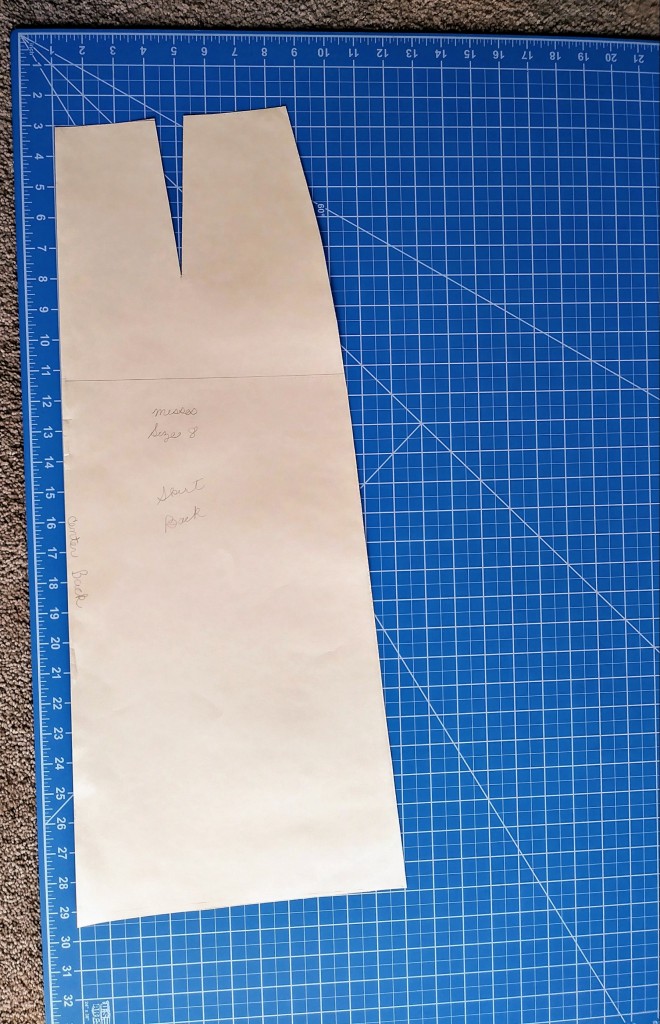
Misses Size 8 Slopers you may copy and use

I am releasing my Misses size 8 slopers into the commons. I grant permission to anyone who wants to use them commercially or personally. You can copy, download and size in your graphics program. My reason for making these available is to help others get a head start on their patternmaking and dressmaking business or hobby. The slopers were developed through draping on a Misses size 8 Wolf form. The grid used for the photos is in inches.

Note: The Precision Draping Method developed by Nellie Weymouth Link in 1947 is the system used. There are a few differences in the skirt from the skirt draped in a modern system. The Pencil Skirt which is used today was developed in the 1950s. It is tubular in shape and not given to much flow or movement unless slits or kickpleats are added. The skirt developed with Precision Draping is similar to the skirts you see in the 1940s: slightly A-lined, fitting smoothly over the hip and then flowing past. The result is a slight flare and movement when walking. It is more comfortable and figure flattering, too.

Basic Fitted Bodice Front and Back

Basic Fitted Bodice Front Misses Size 8
Fitted Bodice Back Missies Size 8

Basic Unfitted Sleeve

Basic Unfitted Sleeve Misses Size 8

Basic Skirt Front and Back

Basic Skirt Front Misses Size 8
Basic Skirt Back Misses Size 8