
Introduction
I have begun draping a new Misses Size 8 Sloper that is slightly different than the sloper previously completed and now available for your use to size in a graphics program. The earlier sloper has worked well but I want to create another one to check the differences in fit.
This project got its start with the pencil skirt pattern. The skirt currently available is slightly flared and more suitable to 1940s styles. For many 1950s styles a slim pencil skirt is needed. So that is what I draped. I then went on to drape a fitted bodice with darts above and below the bust. I also draped a fitted sleeve with elbow dart.
The curve on the pencil skirt breaks at the abdomen instead of the hipline. I want to see if this results in a better fit for the skirt. A fit that is attractive but not too tight. I’m hoping that the skirt will have more comfort and room to move. Not everyone has a smaller abodomen-larger hip measurement. It can also be the other way around! I look forward to seeing if this small difference results in a more flattering fit.
I drape in tissue paper using the Precision Draping technique created by author Nellie Weymouth Link. The tehcnique can be learned through her book of the same name. I will post photos of the progress and look forward to sharing the finished sloper when completed.
Photos of the pattern in progress
Original tissue paper drape is copied again to tissue paper. I call this the second pattern and it will be used to cut a full toile.

Tissue paper drape after marking. Next step is to press the paper. Then trace to a clean sheet of tracing paper.
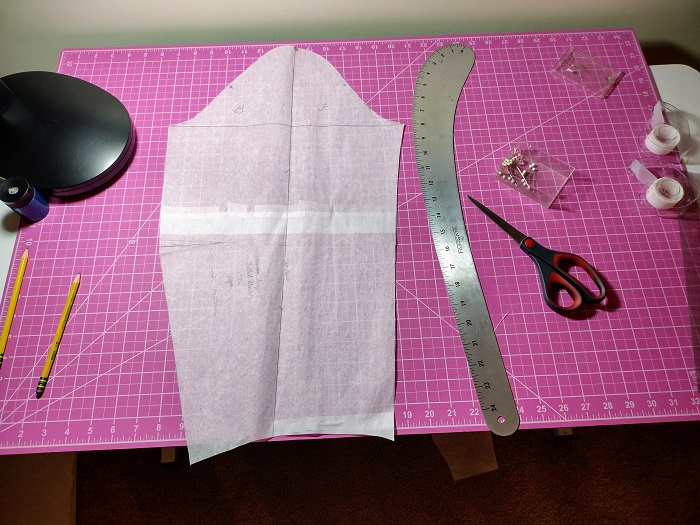
A tracing of the drape was made to clean tracing paper. The fitted sleeve pattern needs a light pressing. Next step: cut the sleeve on fabric and add to the bodice.

This pattern is the result of testing the fit using the second tissue pattern paper. The results were good so the tissue was copied to dotted pattern paper.

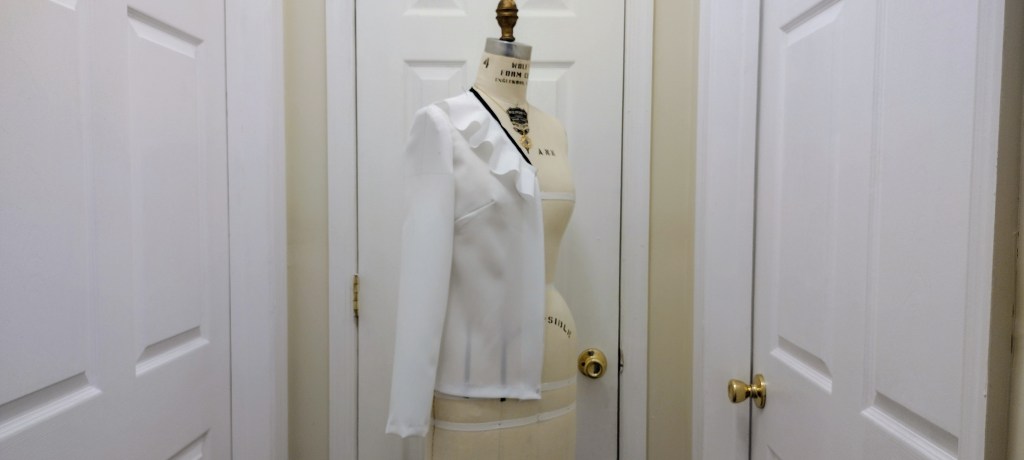
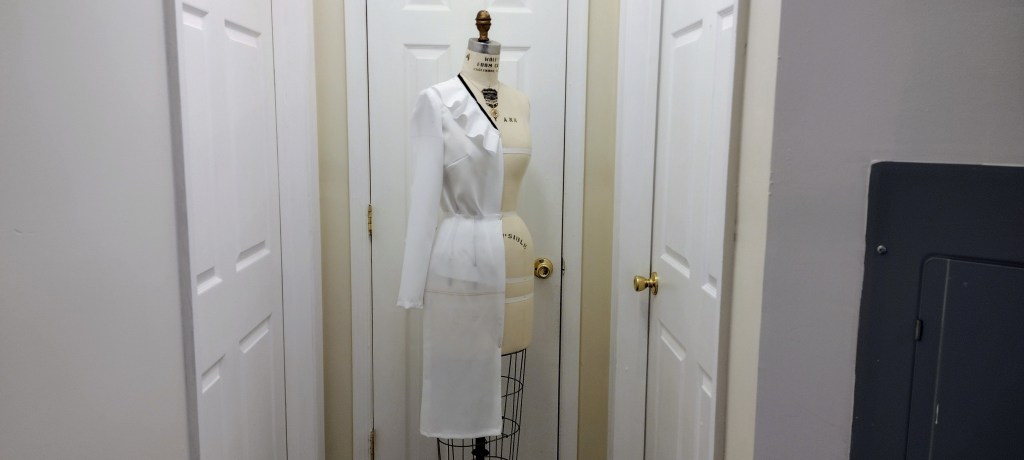



 Pour Moi
You must be logged in to post a comment.