1930s Skirt and Blouse: Finding the Focal Point

Introduction

This week I reviewed the first sketch made for my next project, a 1930s inspired skirt and blouse. I do not have much experience working with styles of this decade, so it is a big challenge for me. I have only made one dress using design elements from a 1930s book, Paris Frocks at Home. That dress was designed as what I envisioned a woman would have as a special occasion dress during the Great Depression. It was pretty enough for a semi-formal occasion and yet could be worn for more everyday events such as a Sunday visit.

With my new project I am envisioning how a woman would dress for work during the 1930s. I want the skirt and blouse to be pretty and attractive enough to be wearable for today. For this reason I am taking only certain elements from the 1930s, not all of them.

I re-thought the first sketch and was not satisfied with it. I will detail the reasons here while sharing the importance of maintaining a clear focal point for any design.

What is a focal point?

A focal point is that part of the outfit where you want to:

–direct the gaze of the viewer
–emphasize a feature and make it attractive
–express an idea about the outfit, i.e. what is the message

Importance of integrating a focal point into the flow of the design

A focal point must be in harmony with the overall appearance and purpose of the outfit. It has to have pleasing proportions and add to the wearers attractiveness. Learning how to balance focal points takes experience. You want at least one, perhaps two. But never so many that the eye does not rest on any particular area and then move to what feature you are emphasizing. For example, in Version 1 of the 1930s outfit there are, I think, conflicting focal points. The scalloped yoke of the skirt competes with the bow of the blouse.

Version no. 2 of the skirt and blouse appears more calm and pleasing to the eye. The flounce at the bottom of the skirt emphasizes the movement when the wearer walks. A second focal point is the v-neckline of the Peter Pan flat collar. A small, marcasite Art Deco broach can be pinned at the neckline to create a second focal point. Or, very pretty but small buttons may be used to create the second focal point. Here there is a more sublte play between the focal points that Version no. 1 lacks.

How to compare focal points and choose the right combinations

One way to choose the right combination of focal points, or choose to have just one focal point, is to make separate sketches of the parts of the outfit. Then make a complete sketch of the outfit put together.

1930s skirt and blouse sketches and notes, Version no. 1
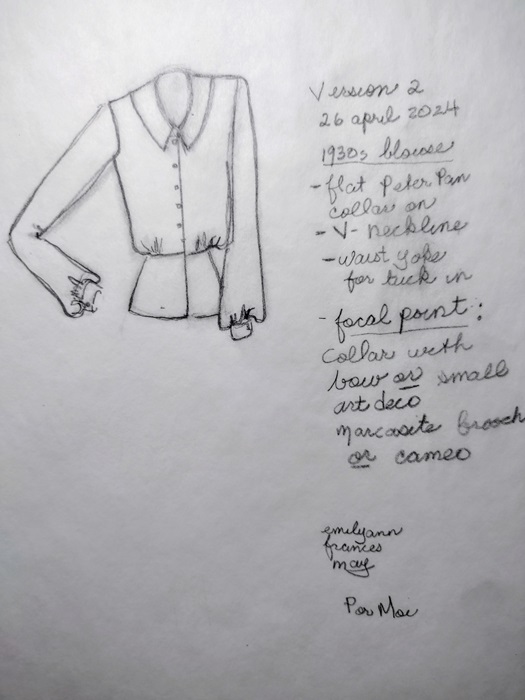
1930s skirt and blouse sketches and notes, Version no. 2.

If doubts remain about the current pairing of separate parts of the outfit, the sketches of the garment pieces can be mixed and matched. This gives some idea on how the elements might or might not work together in a different combination.

Blouse Ver. no. 2 is paired with Skirt Ver. no. 1 on the left. On the right Blouse Ver. no 1 is paired with Skirt Ver. no. 2.

It helps if the sketches are put aside for a day or two. Then they can be reviewed again with a fresh point of view. When performing this review, be aware of what first captures your attention. Then consider how that first focal point works with other elements in the design.

Through this process of sketching, considering, studying and planning you will come up with an important and clear definition of how to proceed in the next steps of your design plans.

My final choice: Version no. 2

Additional Resources

To learn more about focal points in fashion please visit:

UEN Utah Education Network
Emphasis_the_Focal_Point_of_Fashion_1_.pdf
Scroll down and on the right side of the screen are free course materials you can download that will help you understand what the focal point is about.

Purfe: Fashion, design and perfect fit
“Basic Principles of an Outfit Layout: Focal Point”
October 14, 2012
by Olga

New project: 1930s Inspired Skirt and Blouse

Introduction

Here are some ideas for my next patternmaking and sewing project. I will use the 1930s inspired sloper I just finished.

Complete outfit

Blouse made with white crepe or dull, silky fabric in white.

Bias cut bow in pale pink.

Skirt in mid-weight fabric like gabardine or linen-like wrinkle free fabric.

Accessories: The bow and pearl earrings.

The Blouse

Blouse has waistline yoke. This is not a peplum. It is a feature that was common in blouses of the 1930s through 1940s. The lower portion is tucked into the blouse. The yoke creates a smooth look under the skirt.
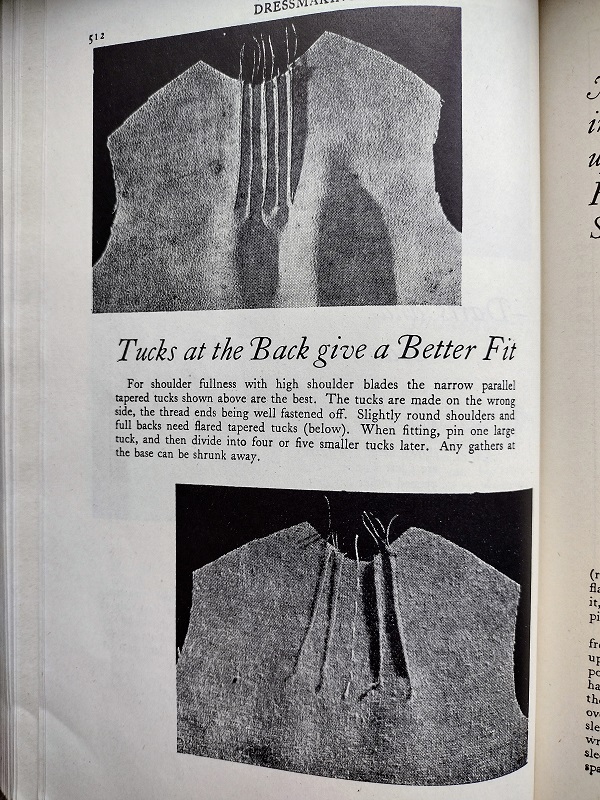
All dart intake and style ease will be gathered into the waist of the yoke.

Flat Peter Pan Collar of Peter Pan Collar with a slight stand.

Bow is bias cut and goes under the collar. Tied into a bow at center front.

1/2″ buttons. Maybe mother of pearl. Depends on the fabric.

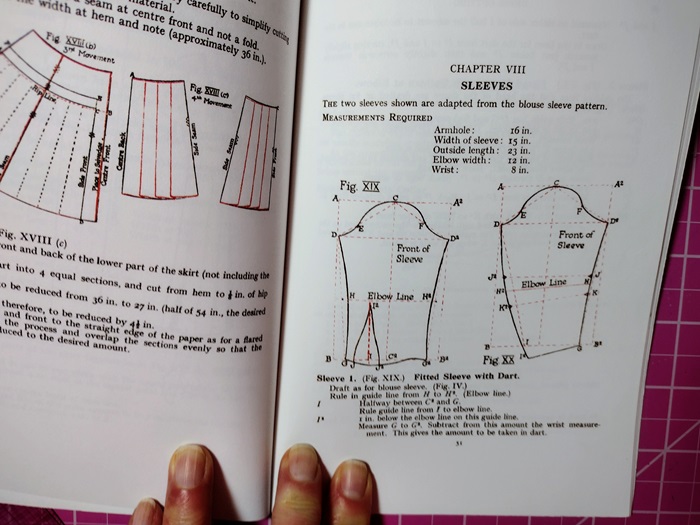
Slightly puffed Bishops Sleeves at cuff. 1″ cuffs. Use the fitted sleeve with vertical dart as the basis.

Yoke length from waist to a point between abdomen and hip.

The Skirt

Skirt length: 28-30″ from waist

Hem to be finished with 2″ wide hem lace.

8″ zipper at center back.

Underline yoke of skirt so that a hidden zipper can be sewn by hand at center back.

Flounce is cut in the bias at center front and back.

Skirt yoke is placed on top of flounce and top stitched into place.

1930s Inspired Pattern Sloper and Toiles

Introduction

I am happy to share with you my hand drafted slopers that can be used to create styles with a 1930s feeling. The slopers are in a Standard Misses Size 4. The patterns were drafted with 3″ of style ease added to upper arm, chest, bust, and hips. The waist has 1 1/4″ ease added.

I did not use a period drafting system to save time. Instead I used the French Fashion Academy drafting technique which I learned in school. I think the results come close to capturing the pattern shapes in the 1930s drafting and sewing books I used for reference.

I release the slopers into the commons. The photos may be downloaded and used in a graphics program like Adobe to refine, grade, print and use as you please.

Research used: 1930s Pattern Cutting and Sewing Books

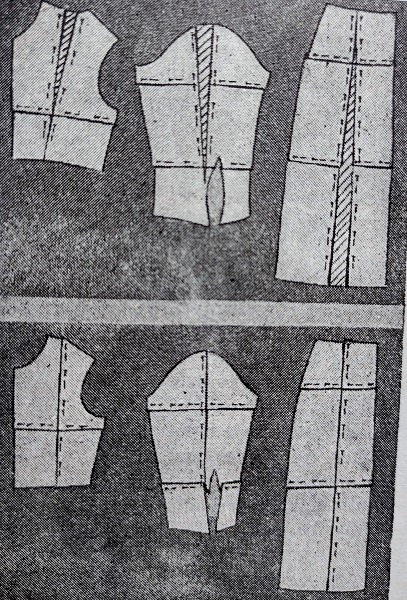
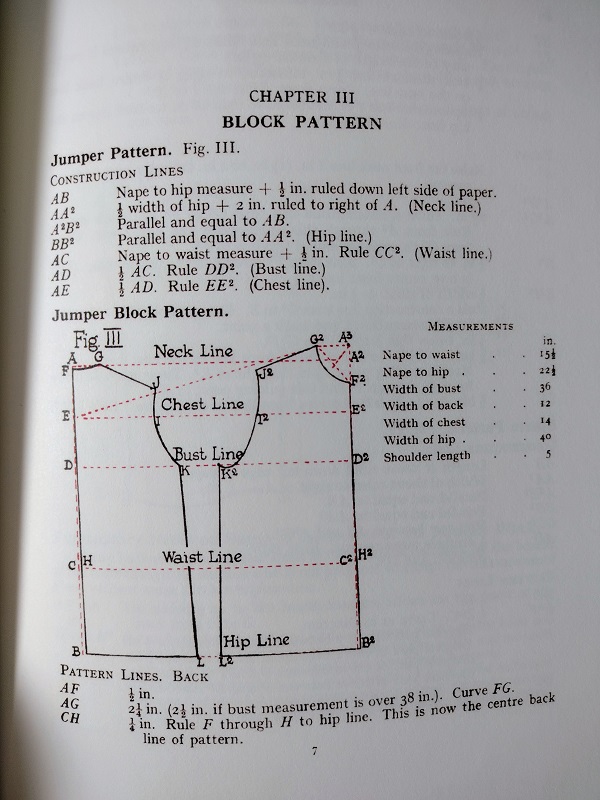
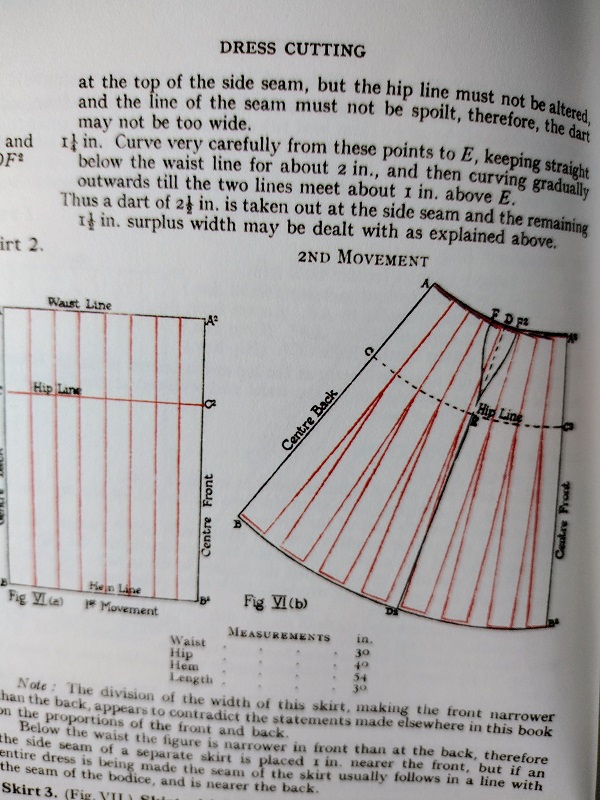
For the pattern shapes I used Dress Cutting by Margaret Ralston. Here are diagrams from the book for the bodice, sleeve and one of the basic skirts.

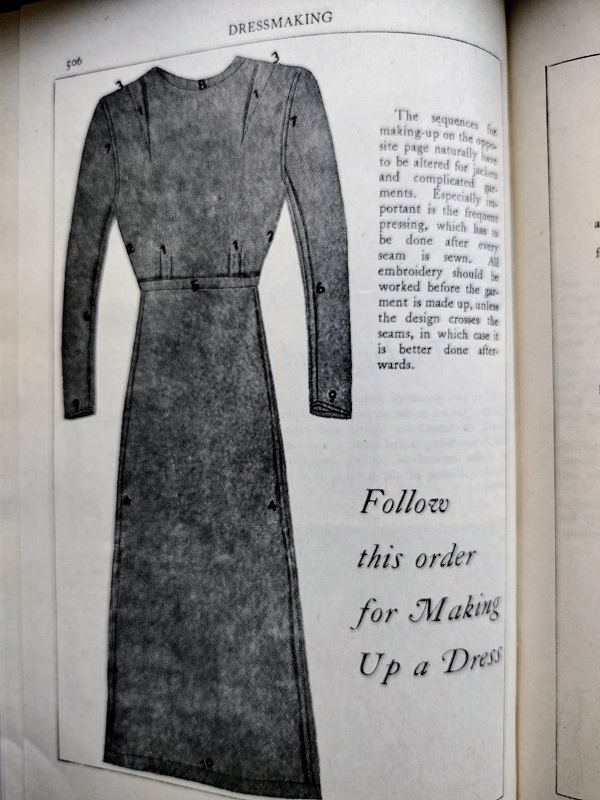
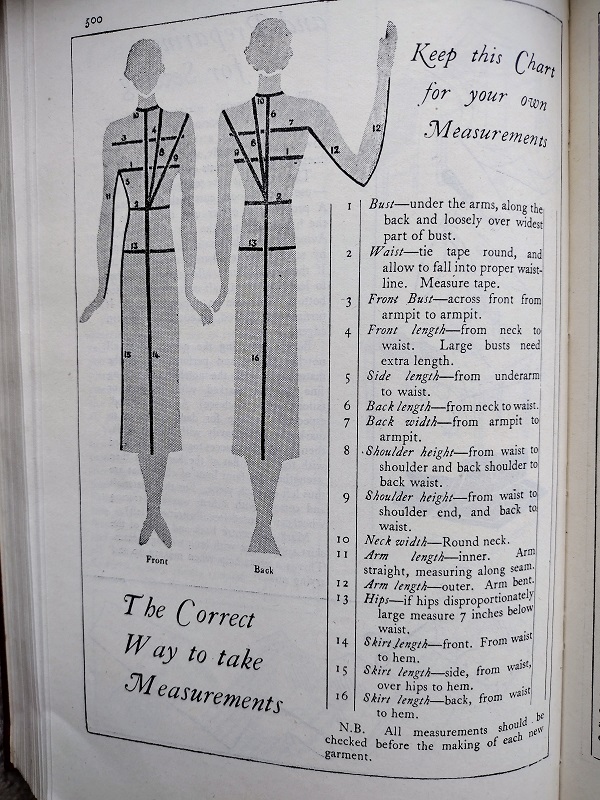
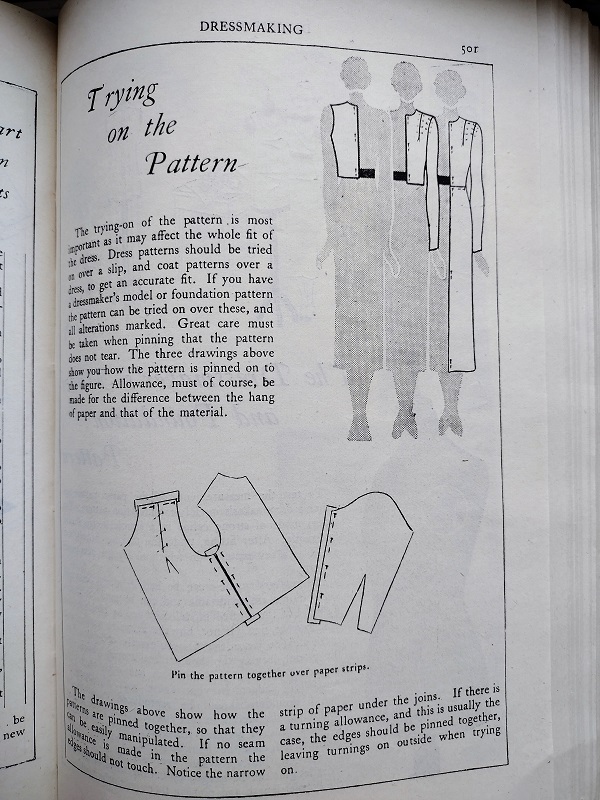
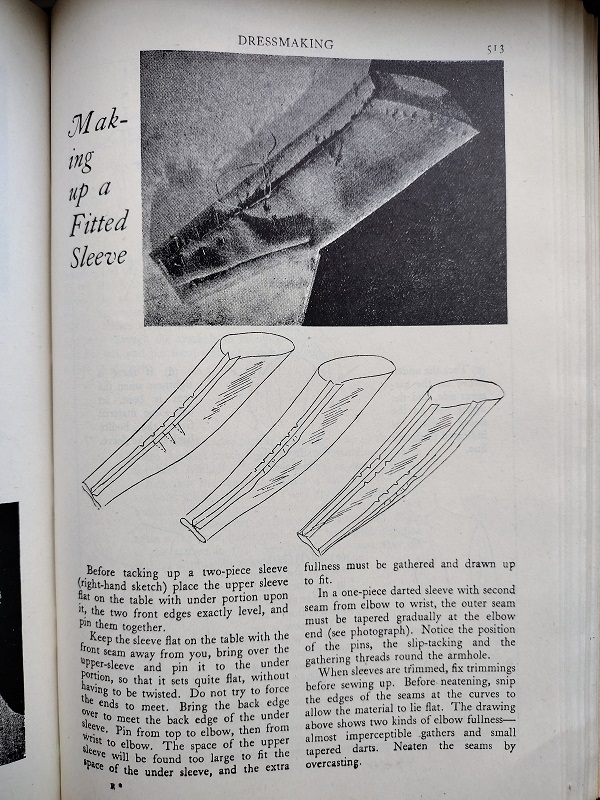
I referred to illustrations in Weldon’s Encyclopedia of Needlework as an additional step in learning about the shapes of basic patterns during the 1930s. Here are some illustrations from the chapter about fitting:

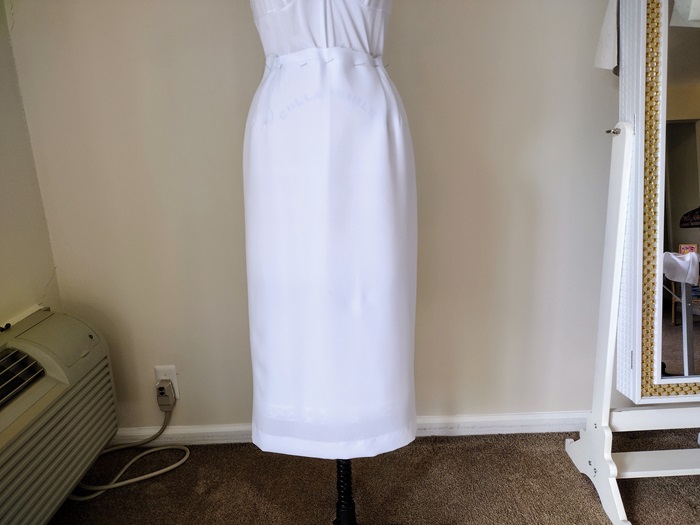
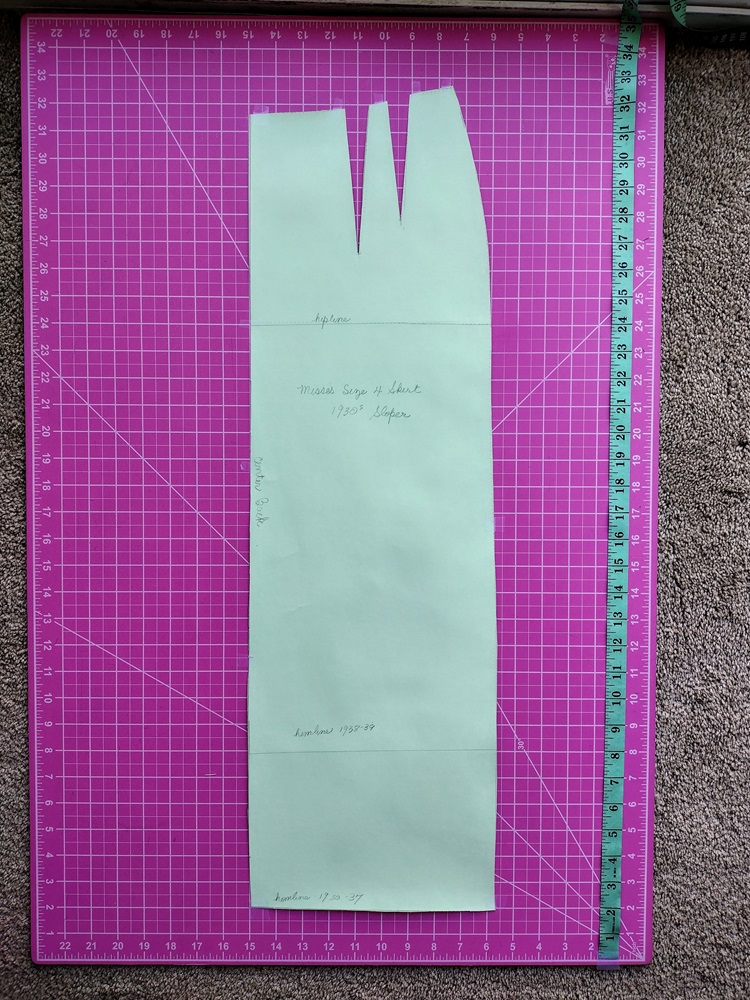
The results I obtained differ from the illustrations. The straight skirt is not as form fitting as a modern pencil skirt. The curve over the hip is softer and the skirt falls straight from the abodomen down. This is why I call it a “slim skirt”. I like the fit as it is not tight and it is not that form fitting in front or back.

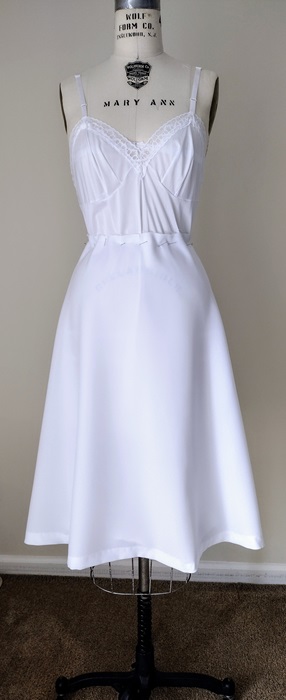
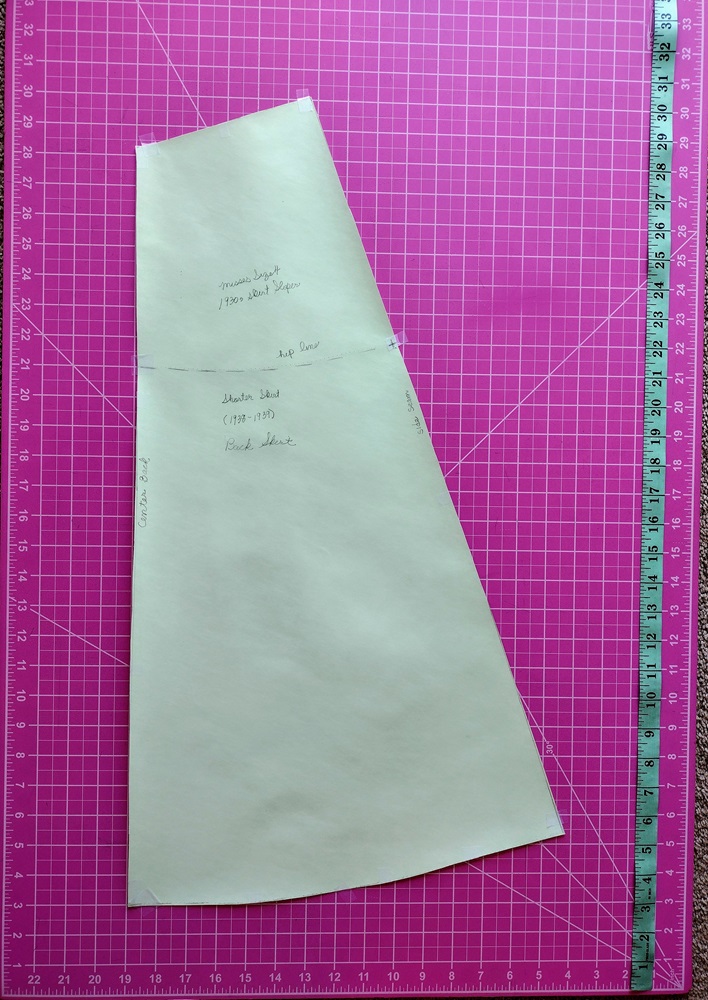
The slightly A-line and flared skirts do not fall as straight as the illustrations in Ralston’s book would have you think. I was surprised and pleased with the degree of flares each had. They are flattering and permit easy movement.

Hemline lengths differ during the 1930s

I bought scans of fashion illustrations from Etsy. These came from various sources and compiled by RetroKatDigital From the scans I saw that skirt lengths went to mid-calf length or lower from 1930 to about 1937. From 1938 to the end of 1939 hemlines went above mid-calf. The silhouette that became iconic during the 1940s was already evolving during 1938 and 1939. The shoulder line was more defined. The waistline was neatly nipped in and skirts had a more A-line shape that was less fluid, at least for everyday wear.

For this reason I marked two different hemlines on the slim skirt sloper. The shorter hemiline is for 1938-1939 inspired styles. The longer hemline is for styles influenced by fashions from 1930-1937.

I made a mid-calf flared skirt for 1930-1937 influenced styles. The sweep at the hemline is greater than that of the shorter flared skirt to be used for 1938-1939 influenced styles. The shorter skirt also has less flares.

The Bodice-Blouse Sloper and Fitted Vertical Dart Sleeve

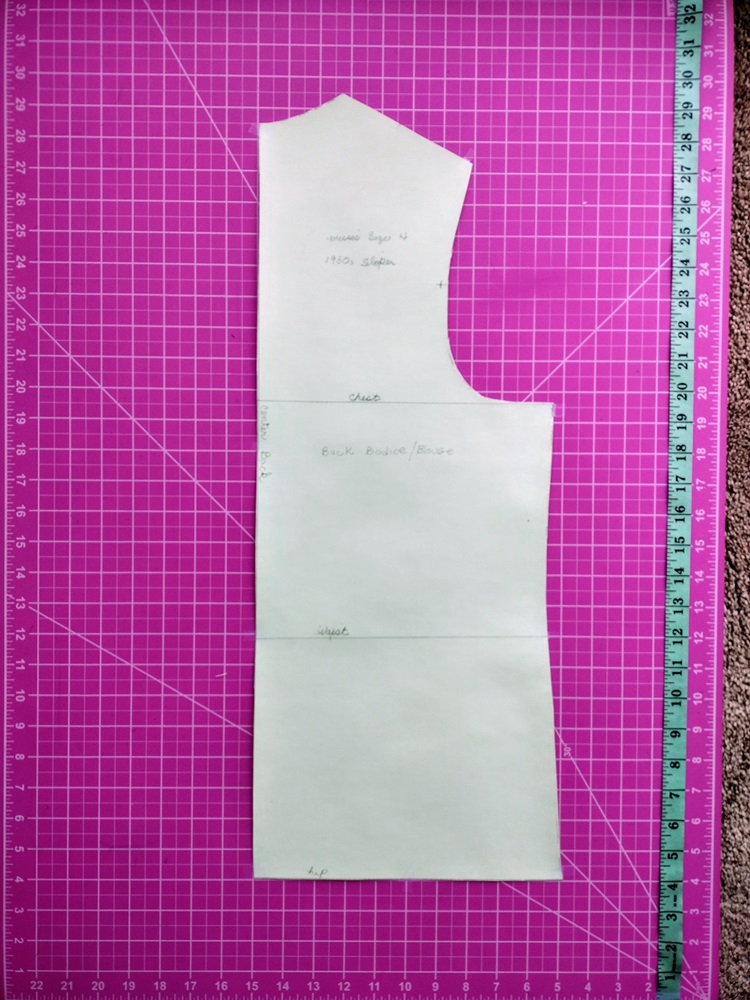
The sloper for the bodice-blouse ends at the hipline (8″ below the waist). The waistline is also marked. This way the sloper can be used for a blouse or the bodice of a dress. I chose an unfitted sloper because this shape agrees with what Ralston shows in her book. When used for a dress, the extra style ease can be gathered into the waist. Another approach is to make a toile, and then drape in tucks or small darts.

The vertical dart in the sleeve can be transformed into gathers that fit into a cuff. The effect is a very modified Bishop Sleeve. The sleeve can also be transformed into a sleeve with a point at the wrist. It can be cut above the elbow to make short sleeves, flared sleeves, bell sleeves and other kinds of sleeves.

Special Notes

–The measurements used for the sloper are the Basic Misses Size 4 plus 3″ ease to chest, bust, hips, and upper arm. The waist has 1 1/4″ ease.

–Always make a muslin to customize the fit or check that it is in line with the size 4 you use.

–Seam allowances of 1/2″ to 5/8″ must be added when cutting.

–The French Fashion pattern making system moves side seams of tops, bottoms and slaeves 1/2″ to the back of where the side seam is on the form or where it would be in mass manufactured clothing. This is done to create a better fit.

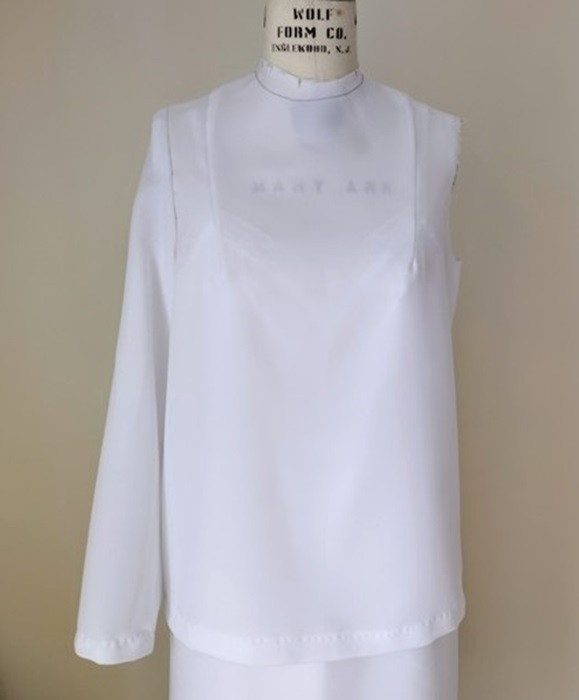
–The toiles are fitted over a one piece slip. This enables me to determine if the final fit has enough ease. It also improves the look of how the garment will drape over the form.

The Sloper: Unfitted Bodice with Fitted Sleeve (vertical dart)

Bodice-Blouse Front

Bodice-Blouse Front

Bodice-Blouse Back

Fitted sleeve with vertical dart

The Sloper: Slim Skirt

Slim skirt front

Slim skirt front

Slim skirt back

The Sloper: Flared Skirt, longer length

Long flared skirt front

Long flared skirt back

Long flared skirt front

The Sloper: Flared Skirt, shorter length

Short flared skirt front

Short flared skirt back

Short flared skirt front

1930s Slopers Update: Flared Skirt

Introduction

I am making a series of slopers based on basic patterns created in the 1930s by Margaret C. Ralston. Her drafting system and pattern transformations were published in a book entitled Dress Cutting. 

I am using the pattern drafting system that was taught at the French Fashion Academy. I find this system more suited to making retro inspired clothing., rather than using a vintage pattern drafting system. This route saves me time and makes the process more enjoyable. Ralston’s instructions sometimes make no sense to me. For example the sleeve seam is 3/4″ to the front of the bodice, meaning the sleeve seam will not match the side seam of the bodice. In the instructions for transforming a skirt pattern, she writes that sometimes a skirt side seam can be moved towards the back. I am sure this all made sense to her students and target audience at the time. However, I am not sure of how the results will look now and I do not have the time to go into that kind of nitty gritty effort to be authentic. So long as I can create a pattern and garment with a feeling and a little touch from a selected time period I’m quite satisfied. My goal is always to create a little bit of the look of retro combined with ease and movement of modern clothing.

The patterns for the 1930s sloper are drafted using the measurements for a Standard Misses Size 4. My vision is to create the building blocks of 1930s inspired styles that will look flattering on a smaller range of sizes. When completed the slopers will be put up at my blog. They can be best graded down to Misses sizes 0 -2 and upward to Misses sizes 6-8.

Three inches of ease at the hips and 1 1/2 inches of ease at the waist was added to the basic straight skirt drafted as the basis for this flared skirt.

Creating the flared skirt pattern and fitting toile

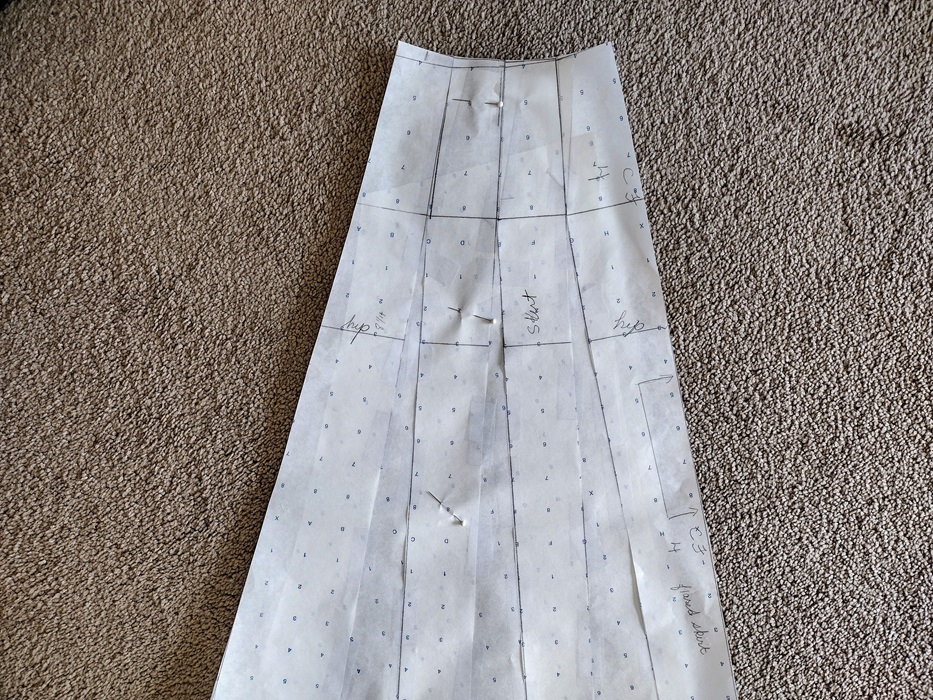
Cover of Dress Cutting (left) and pattern diagram for basic flared skirt. Notice how the flares begin at the hipline with overlapping of the pattern from waist to hip.

On the straight skirt pattern, the first dart by the side seam was closed halfway to give the skirt more ease and add a slight flare. The remainder of that dart was taken off from hip to waist.

Front of flared skirt pattern.

To create the flares the dart intake closer to center front was divided in half. I then drew two new darts equidisant with each having half of the intake. Then I added another slash line. The darts were closed and the third slash line opened. This reduced how high the flares would form. I repeated the same steps for the back skirt pattern.

Fitting toile of flared skirt.

As you can see from the fitting toile this is a very softly flared skirt. The flares begin below the abdomen and the sides fall straight. It feels true to the spirit of the 1930s when dresses were soft and there was lots of flare and movement created by insets, godets and the way in which the grain was used for a blouse, skirt or dress.

As of the date of this posting the skirt has been pinned to the form or 48 hours. I take this step to let the grain settle prior to marking and then putting up the hem. Sometimes I leave it hanging 72 hours. I highly recommend taking this step. Your finished toile will then reflect the way the flares look when hemmed. You will also know if you lose any length due to the way the grain settles. This skirt when finished and hemmed should have a center front length of 27-29 inches, in keeping with the longer skirt lengths of the 1930s.

In the works for 2024: 1930s inspired pattern sloper

In the works for 2024: a1930s style sloper inspired by Margaret Ralston’s book “Dress Cutting”. I added 3″ style ease and base is size Misses 4 because I want to do somethingvfor smaller sizes as a challenge. This sloper is based on the French Fashion Academy. That is why it looks different. there will be a skirt sloper, too. The intention is that one can make 1930s inspired styles like some of the skirts, blouses and drop waist dresses in this or other 1930s books. Test muslin is next.

For background information on this project please see my posting: Researching and preparing a 1930s inspired pattern sloper

#sloper #1930sinspiredsloper #1930s

Researching and preparing a 1930s inspired pattern sloper

Introduction

I am preparing two slopers this summer. I already created one that I use for 1940s to early 1950s inspired styles. I used that for the Alice Elizabeth dress and the Linda skirt and blouse. I am now in the progress of creating a more structured sloper that I think will work well with the more detailed and fitted styles of the mid-1950s. As a challenge and contrast, I am also researching slopers from the 1930s. The look of the 1930s was very flowing and not fitted the way 1950s clothing was.

My 1940s sloper is available for copying and sizing here. It is a standard Misses 8. The sloper for the 1950s structured fashions is also in a size 8. However, I think the 1930s look is very flattering to smaller sizes so that sloper will be in a standard Misses 4. I do not intend to use drafting systems from the 1930s. Instead, I will drape a basic unfitted bodice and skirt that approximate the look of a set of pattern blocks I located in a small paperback book called Dress Cutting by Margaret C. Ralston. I will draft a fitted sleeve with vertical dart to complete the sloper.

Here are the screen shots showing the basic block Margaret created from her drafting system. I find it a bit confusing to follow. I am also not sure the fit will be comfortable for the modern women. The sleeve looks very fitted and the sleeve seam is 3/4″ to the front of the bodice side seam. While I love vintage styles I do not think it is essential to go so far to recreate or be inspired by the look. The key for me is inspired interpretation.

Pattern Block from Dress Cutting by Margaret Ralston

The bodice front and back appear to be completely unfitted. In some directions for pattern transformations one dart above the bodice is shown. It might also be a tuck. I assume the bodice block had enough width for this dart-tuck to be created.

The skirt is a rectangle equal to half the hip circumference. It is then slashed and overlapped and the top edge so that the waistline measurement results. I plan to drape a basic sheath skirt. Once that fits, I will distribute the dart ease across skirt front and back waistline. Then slightly overlap the sections. That will produce a slightly flared, straight skirt which is the starting point for the skirt styles in this book. For the bodice I will drape an unfitted bodice. It will go straight to the hip and have the waistline marked off as well. There will be one vertical dart above the bust in front and a neckline dart or two in the back. I’m basing the dart positions on the fitting dress or toile shown in the previous posting.

I think developing different bodice and skirt slopers gives one a more extensive collection of shapes to work from. As I research the 1930s, I’m understanding that for the 1960s an unfitted dress sloper works well. So would an A-Line skirt sloper. Those are the two key shapes for dresses and skirts of the 1960s.

Here are the snap shots of the pattern blocks from Dress Cutting. The last snap shot is a dress that can be made using he pattern blocks and transformation instructions in the book.

Cover of Dress Cutting by Margaret Ralston.

Bodice front and back.

Basic skirt front and back.

Basic sleeve.

Fitted sleeves.

One of the styles that can be created using the block and instructions in Dress Cutting by Margaret Ralston.

The Dressmaker’s Model and Fitting Pattern in the 1930s, Part 1

Introduction

This posting initiates a series on my adventure into creating a 1930s type sloper in a modern day Misses size 4. I think modern sewistas and patternmakers can get a similar look without the expense of a vintage pattern purchase. Nor will there be the many fitting challenges that come with using a vintage pattern. My goal is to simplify a process of creation, not complicate it or make it overly time consuming. I think if enough research is done, it will be possible to come close to the shapes of a basic sloper for the 1930s.

Draping Technique I will use

I am going to use the 1940s draping system called Precision Draping which was developed by Nellie Weymouth Link. The book has been reprinted and is available at booksellers online new or used. While this is not a 1930s draping technique, it is a vintage one. It is easy to learn and provides a good foundation for exploration into the styles of other decades.

Beginning point

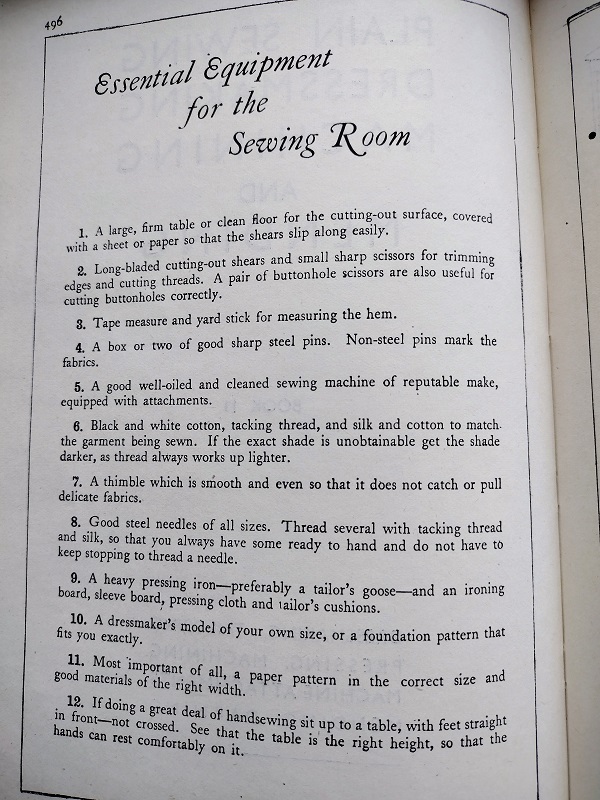
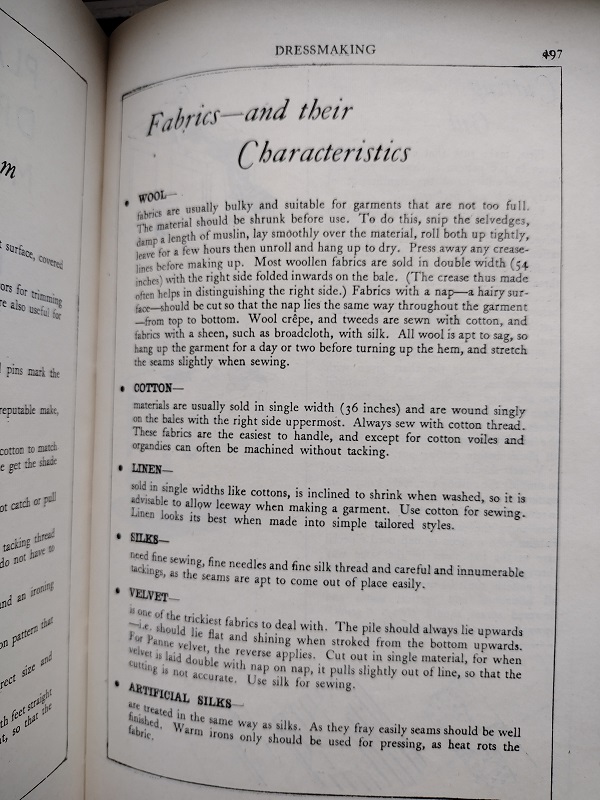
As always, research and reading provide insights and ideas. I begin this journey by making available for you a section of Weldons Encyclopedia of Needlework from my very small collection of vintage sewing books. It was published by The Waverley Book Col, Ltd. of Farringdon Street, London, E.C. 4, but no date of publication exists in the book! I estimate that the edition I have was published in the 1930s. As you can see in the illustrations that follow, the silhouette is close to 1930s fashions with longer hemlines and flowing skirts. The fashion figure is also slender and soft. The boxier fashions with emphasis on the shoulder line of the 1940s is not present in the chapter I post here.

We will continue this exploration into the elements of a 1930 sloper and the key takeaways for creating a sloper that can approximate the look in the next posting. For now I hope you enjoy this look into what a sloper and dress form from the 1930s looked like. What is shown here may or may not be typical but it has elements that appear in another flat pattern drafting system from the 1930s that appear in another book I have and will use in this series.

“The Dressmaker’s Model and Fitting Pattern” from Weldon’s Encyclopedia of Needlework