Draping: Pin fitting the First Pattern

Introduction

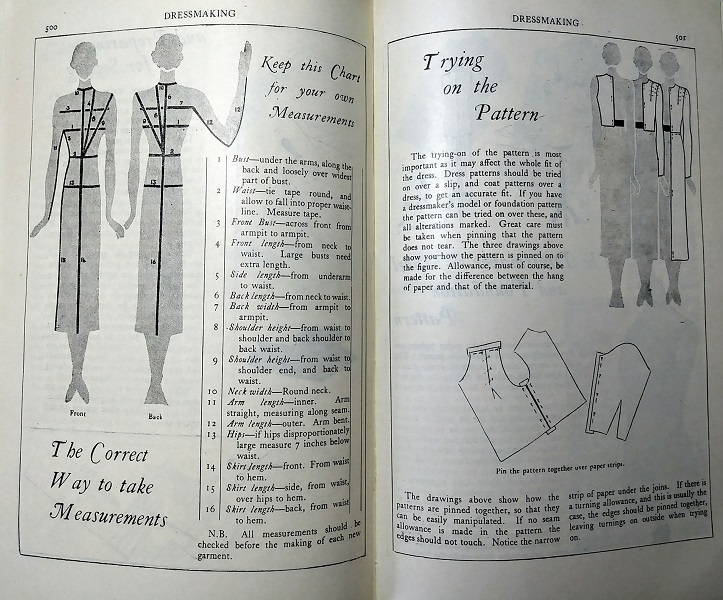
Pin fitting as illustrated in the 1931 Butterick book, “Paris Frocks at Home”. Published in New York.

I use the modern draping system created by Hilda Jaffe and Nurie Relis in their book “Draping for Fashion Design”. It is one of the better books on the subject for me. I am always satisfied with the fit that results from their technique. I also add in some vintage fitting and sewing techniques to my design and sewing repetoire when they enhance efficiency. Pin fitting is one of these techniques.

Pin fitting is not presented in the modern sewing and design books in my Dressmaker’s Library. It is, however, commonly featured in the vintage sewing and pattern drafting books that are also in my library at home.

Pin fitting from “Weldons Encyclopedia of Needlework”, published in London. No date given.

While it is not a substitute for sewing and fitting a completed muslin toile, it is a quick and efficient way to test the accuracy of darts, seam placements and other pattern details. I find the pin fitting process a great way to spot check the development of a completed drape and subsequent transfer to a first paper pattern.

The Initial Drape

The photos used in this section are those of the basic fitting toile after the dots and Xs of each draped piece have been connected using pencils and rulers.

Update 10-4-20: Please see my posting Draping: Placement and Length of Darts concerning corrections made to the darts shown in the photos of the first toile you see here.

Initial drape of the basic fitted front and back bodice.

A half toile of the basic muslin fitting toile is draped on the dress form. Markings are made lightly in pencil. Once all pieces have been pinned and marked the drape is removed and pressed. Draping is not always precise in the way flat patternmaking is. Th vertical dart on the front bodice needed straightening and redrawing.

The basic fitted sleeve is first drafted as a flat pattern to save time as draping a sleeve is only for those with advanced skills and experience. The resulting sleeve is cut in muslin and the dart or darts are draped in place on an arm fitted to the dress form.

The dots and X’s used to mark the drape are then connected using French Curve, L-Square and straight rulers. An Armhole/Hip Curve ruler is also used. Pattern pieces are measured to ensure back and front side seams are the same length. Armhole curves and hip curves are also checked for a smooth flowing line in each piece.

Basic fitting toile skirt, front and back. Hips lines and hemlines are matched to check placement.

Each piece of the muslin drape is now pinned to the pattern paper. A special tracing wheel is used to transfer the markings to pattern paper. The tracing wheel is very sharp and leaves a discernible outline after the muslin is removed. Rulers and pencils are used again to connect and make the markings more easy to see.

Pin Fitting the First Pattern

The photos used here are those of the paper pattern created by transferring the muslin pattern to pattern paper.

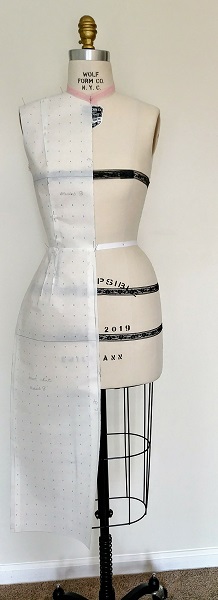
Initial pin fitting of the basic fitting toile front bodice and skirt. The dart lines and seams are checked.

This is the point where I use pin fitting to do a quick spot check for darts and side seams. Each pattern piece is pinned along the darts and then pinned to the form. I check to make sure the darts line up and end where they are supposed to.

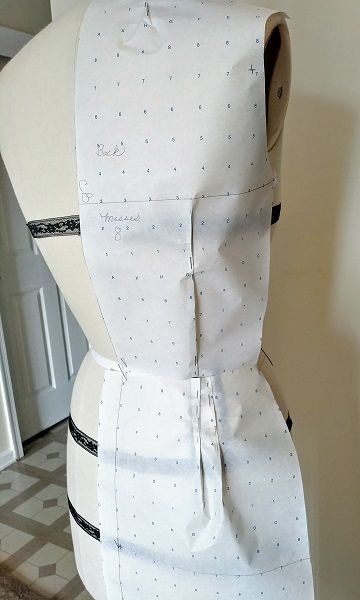
Pin fitting of the basic fitting toile bodice back and skirt back.

Sometimes even a quick check through pin fitting will show that there is a need to add a fraction of an inch (or slightly more) to side seams. At other times, an adjustment to the dart apex line might be needed. This happens because sometimes during draping the muslin may have been pinned a little too tightly. At other times it may have had too much ease added. In which case the paper pattern may go beyond the side seam or place it is supposed to be.

It is good to check the pin fitted pattern from a distance to make sure the chest, bust, and hip lines are even.

I make the needed adjustments to the first paper pattern. Then each piece is measured again at side seams, bust dart, back darts and other check points.

The pin fitting of the paper pattern at this stage has saved me the time that would have been spent making corrections to the first muslin had the needed minor adjustments been overlooked.

The pattern is now ready to be cut as a full muslin and tested for fitting on the form.

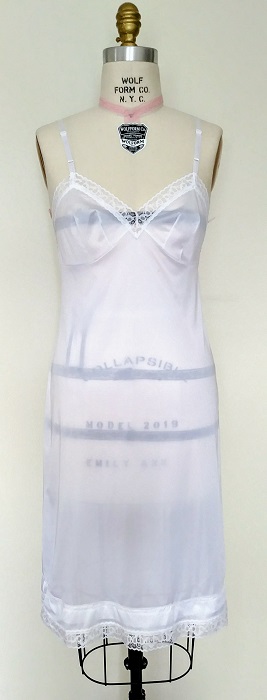
How to hem a nylon and lace full slip

The easiest way to hem a full slip is by creating a tuck near the bottom. Even when the result is a deep tuck it will not ruin the look of the slip. The extra weight at the hem makes the slip hang better.

My reason for preferring to make a tuck is because my sewing machine only has very basic stitches. There are few stitches whether multi-zigzag or blind hemming that work well with the delicate, stretchy nylon of the slips I purchase.

I do not recommend cutting away the extra length unless you do have those stretch stitches or a merrow machine to finish the edges. When the slip has hemline lace you could use the stretch stitches by overlaying the lace on the right side of the slip, about 1/8 to 1/4″ above the new hemline. If you do not have such stitches and prefer to hand sew here is one way to do it.

  1. From 1/8 to 1/4″ above the hemline lace on the right side, measure up the depth of the amount needed to raise the hemline. Mark with white, clay chalk.
  2. Pick up along the 1/8 to 1/4″ line above the hemline lace and bring up to the chalk marked line.
  3. Use fine, long silk pins to pin the hem in place.
  4. Thread a long, fine hand sewing needle with a single strand of cotton basting thread conditioned by passing through a dryer strip. I find a #10 sharp works well. Experiment to find the best needle for your own hemming.
  5. Baste the hem in place along the folded line. Remove the pins.
  6. Pass a long strand of poly-cotton sewing thread through beeswax to coat and prevent tangling. Use it as a single strand with a the same sharp, long hand sewing needled you used in Step 4.
  7. Use a very tiny running stitch all around the tuck. This line should be about 1/8″ down from the tuck.
  8. Make a second line of tiny running stitches about 1/4-3/4″ below the first line of stitches.
  9. The running stitch should not be too tight to prevent puckering. If you hand wash and line dry the slip the stitches remain stable and will not break.
  10. They hold up to machine washing, too, if the slip is washed in a lingerie bag during a delicate cycle.

Hand Worked Buttonholes

Hand worked buttonholes are an acquired talent. They take more practice to become good at. There is a benefit to using them. First it is the mark of a custom made garment. It sets the garment apart from mass produced clothing. There is also more control in the stitching and less risk of stretching or fraying the fashion fabric.

Here is how I make my handmade buttonholes.

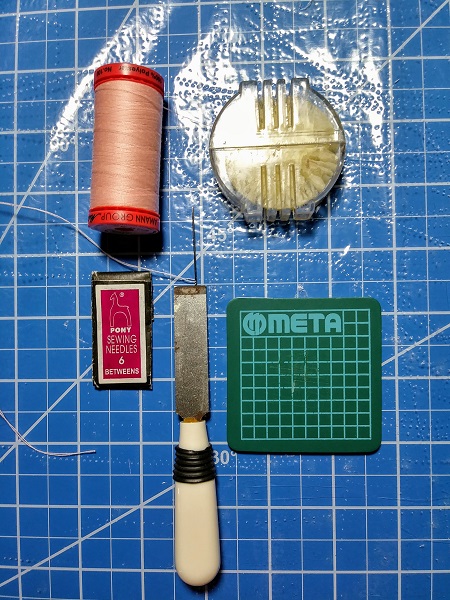
Step 1: Assemble your tools. I use a double strand of poly cotton thread. To prevent tangling, the thread is coated with beeswax. A short sewing needle works best. Experiment to find the size best for you. I use #6 Betweens. To cut the buttonhole cutter set (little mat, blade shown. keyhole punch not shown).

Step 2: Practice first! Use however many layers of fabric as will be in the finished garment. For this practice piece I have two layers of fashion fabric (garment and facing) and interfacing (not shown).

I pressed a line to positioning the cutting line for the button hole. On the finished garment I marked the line using white erasable chalk on the inside of the garment. Then I machine stitched a long line of basting stitches.

The beginning and end of the buttonholes are marked in pencil on the practice piece. On the finished garment they are measured and marked with pins along the line with basting stitches (button and buttonhole placement line). Basting thread is used to mark these points and the pins are removed.

To calculate the length of the finished buttonhole. Measure the width of the button and add it to the height. To this result add 1/8″ for the bar tack at each end. A test buttonhole is the best way to make sure the measurement is correct.

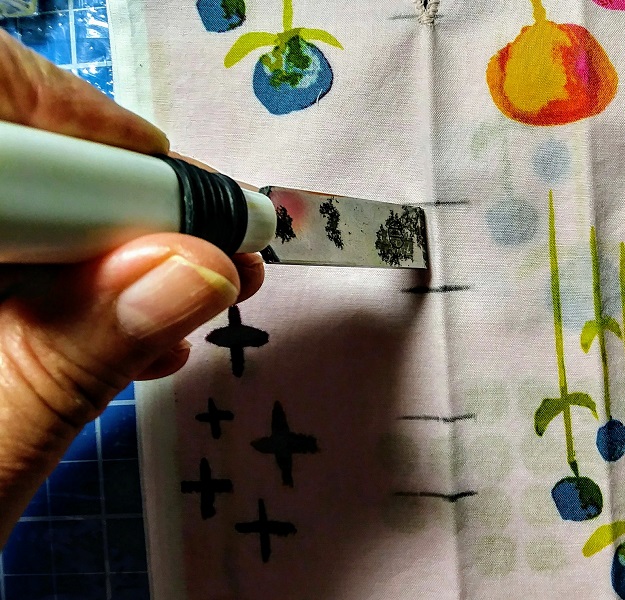
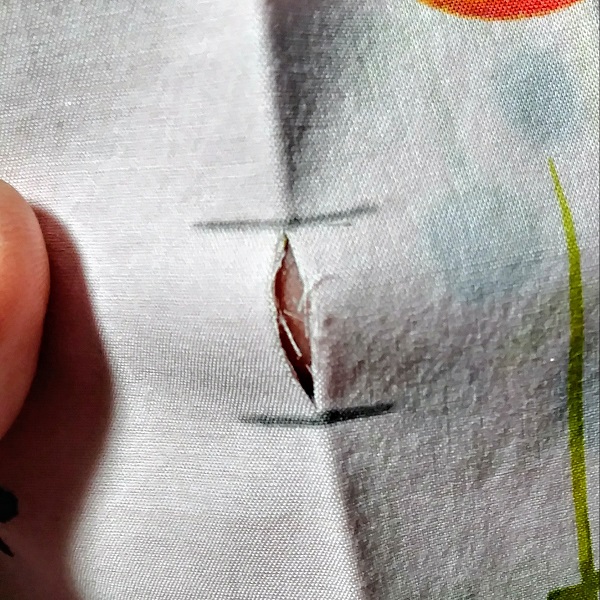
Step 3: The little mat is placed beneath the garment where the buttonhole will be. The garment is placed on top. The blade is positioned along the pressed line (or basting stitched line) and pressed firmly down. A neat opening results. If needed use a small scissor to open the buttonhole a little more.

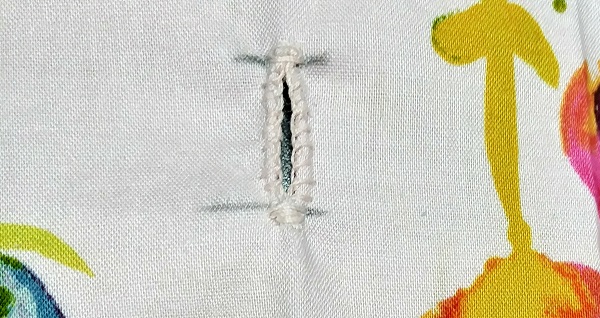
Steps 4 and 5: Using a waxed double strand of thread, first overcast the slit all around. Knot and cut from the wrong side. Wax another double strand of thread. Use a buttonhole stitch to work around the buttonhole. When you come to each end, make the bar tack.

Step 6: Test your buttonhole for length.

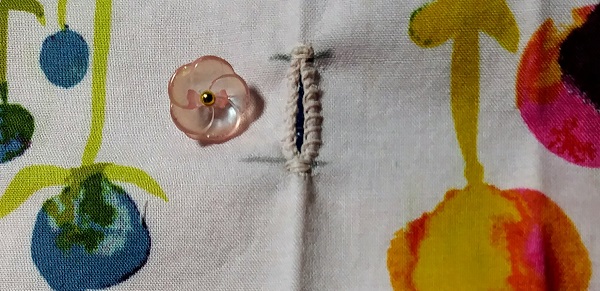
Step 7: Test the workability of your buttonhole. It should go through the buttonhole easily. Sew a button to another piece of fabric and they pass through the buttonhole again. Move the fabric around. The button should stay securely closed. It should not pop out of the buttonhole.

Some people like to steam press the thread after waxing it and before hand stitching their buttonholes. I have had mixed results with this technique. Sometimes the thread is too brittle and breaks. It will all depend on what kind of fashion fabric you use and how thick the layers are.

The Little Black Dress

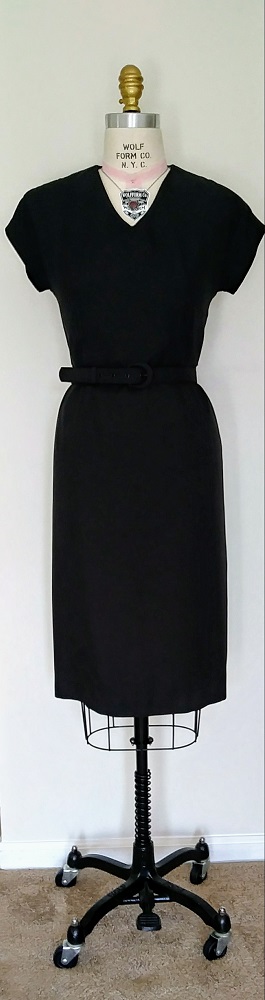
The Little Black Dress is a must when you need a reliable classic to use for many occasions. I made mine using a fitted bodice with short dolman sleeves. Fit was achieved through vertical darts under the bust and on each side of the back. 1/4″ dolman sleeve shoulder pads were trimmed around the edges to accomodate the neckline finish. Shoulder pads were then covered in black lining fabric.

The rayon fabric was lightweight. To provide body and make it opaque, I underlined the complete garment.

The sheath skirt is shaped with just one dart on each side of the front and each side of the back. I kept the fit easy so that it is not too tight. This is important since I wear the dress for family events.

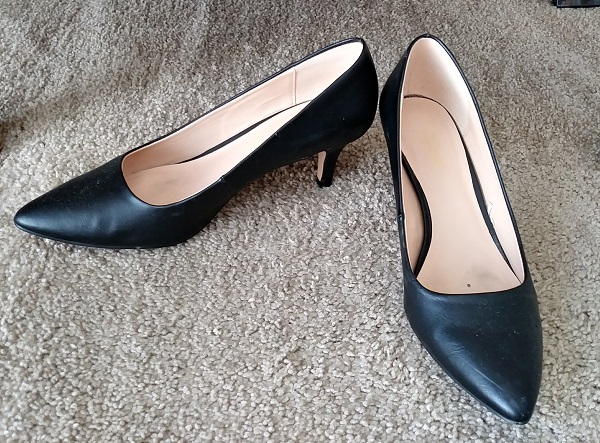
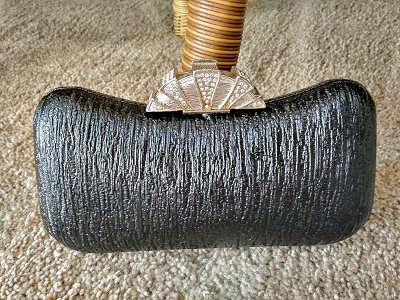
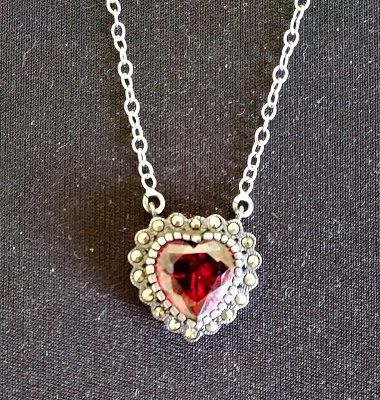
To keep the look understated I often accessorize with black, low heeled pumps and a clutch purse with faux marcasite clasp. A heart shaped red crystal surrounded by marcasite necklace completes the look.

To keep the focus on the accessories I had a fabric covered belt made by Bee Lignes. Please visit their site for your customized belt and covered button needs. The workmanship is top quality. Since the belt is handmade to your specifications you may have to wait a few weeks for delivery.

Office Suite

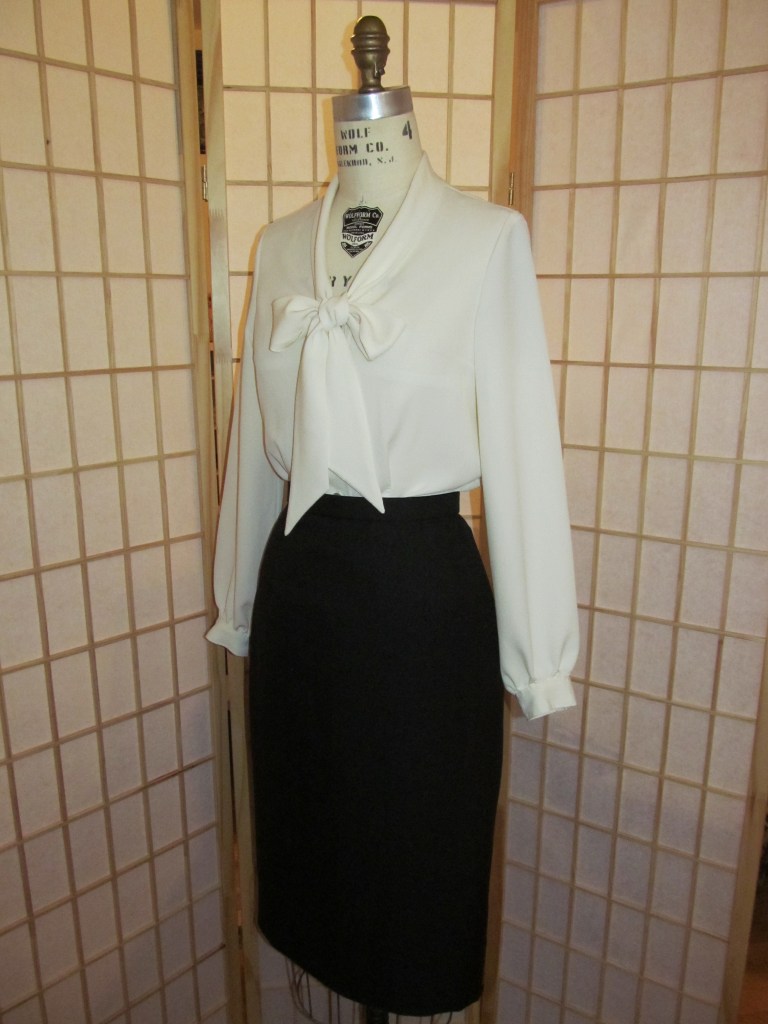
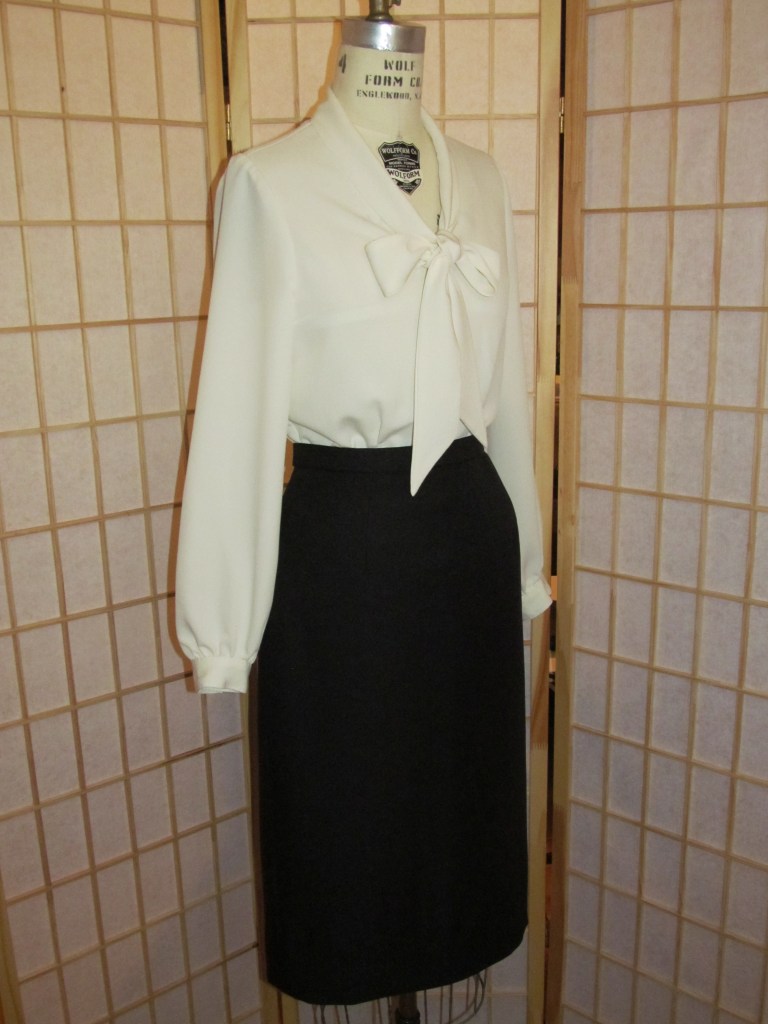
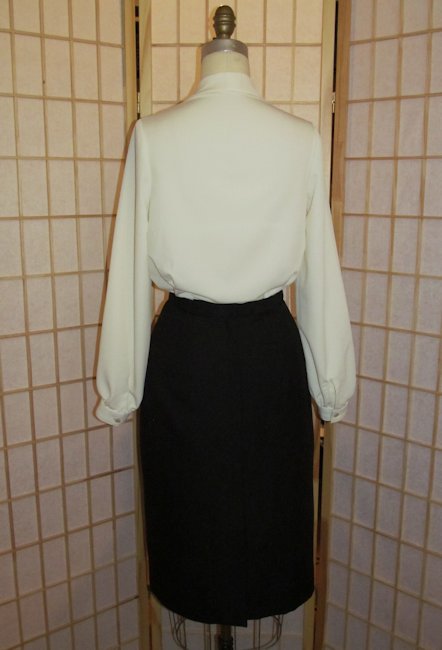
A perfect outfit for work or a meeting with a client. The pebble crepe blouse has a pussycat bow made from a bias strip of fabric which finishes the neckline.

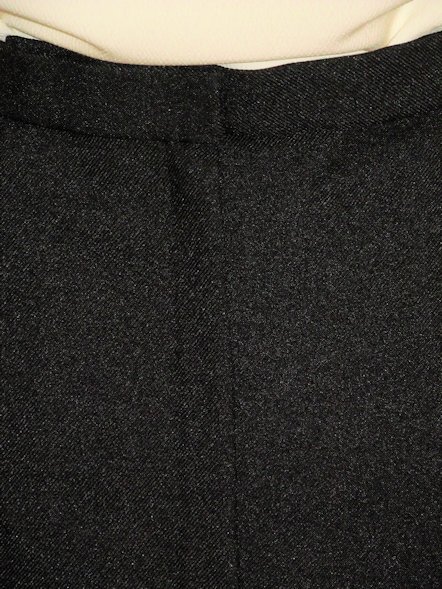
The pencil skirt achieves a good fit through two darts on each side of the front and back. A kick pleat allows greater walking movement without exposing the legs. The zipper is hidden inside of the back seam.

Since the bow is the focal point at center front the best accessories are either earrings or a headband or pretty comb. I chose these stud earrings with amber colored crystals that complement the cream colored crepe of the blouse.

Welcome to Pour Moi!

Pour Moi means for me in French. I chose this name for my new blog because it focuses on the evolution of my personal style…what is flattering, pleasing and best for me. I hope you will join me in this journey and learn some new things to help the development of your own dressmaking skills and personal style.

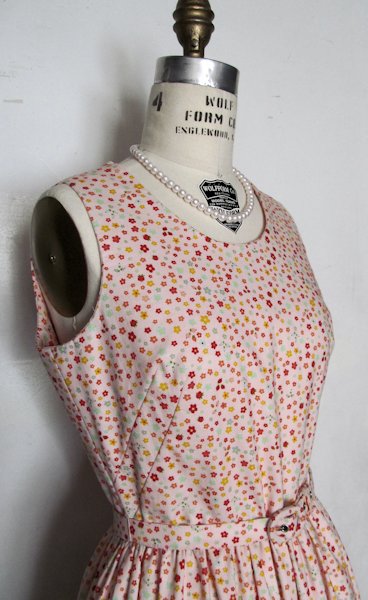
My personal choice of style is understated and simple. I want to make a positive impression but not overwhelm others. Here is an example of one of my favorite styles made in 2014. It consists of a gathered skirt, sleeveless bodice with double French darts and a fabric covered belt. The bodice was draped and the skirt drafted. A string of pink pearls completes the outfit. It looks as good in 2020 as it did in 2014.