Dressmaker’s Library: Gertrude Mason’s Pattern-making Book

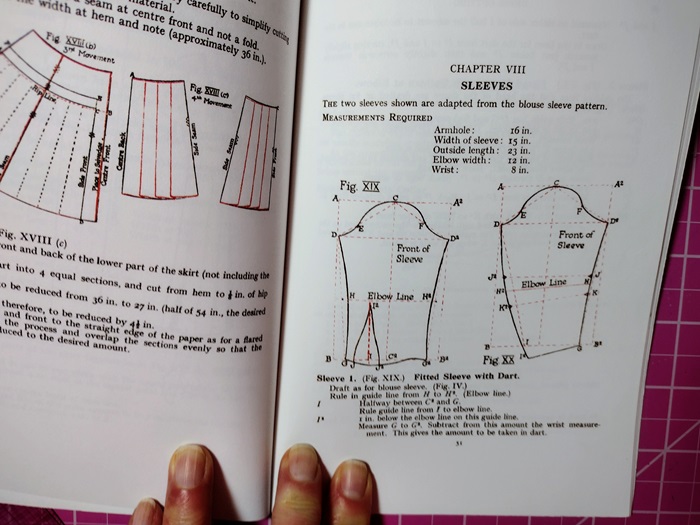
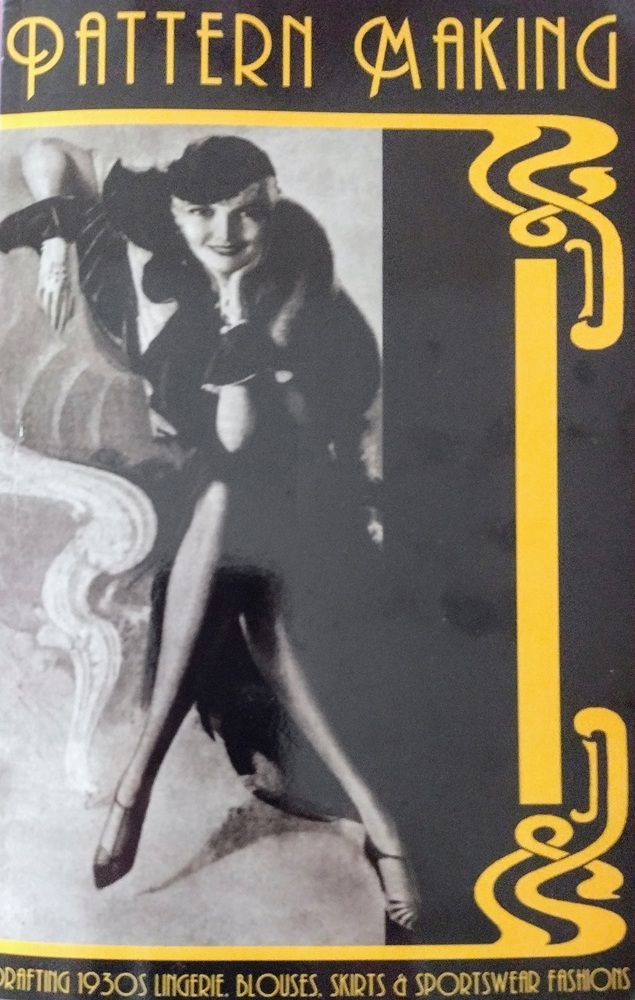
I bought this book through Amazon under the title “Pattern Making: Drafting 1930s Lingerie, Blouses, Skirts & Sportswear Fashions” by Gertrude Mason. The book was originally titled “Gertrude Mason’s Pattern-Making Book” and published in the U.K. in the 1930s. Ms. Mason was, according to the title page in the reprint I purchased, “a lecturer demonstrator in needlework, dressmaking and tailoring under the Board of Education, The Birmingham Education Committee and the Kent Education Committee.”
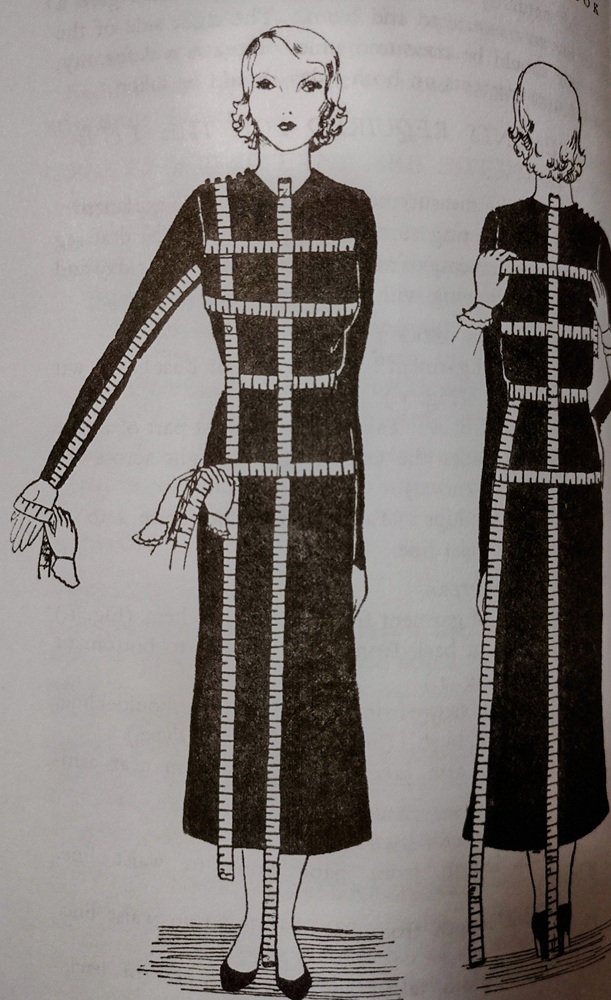
This book may have been part of demonstration materials or course materials for Ms. Mason’s work. In a demonstration or class, there would be hands-on exposure to fitting challenges or times when the resulting pattern did not conform to the examples given in the book. Explanations would be provided. That is why I think this book was intended for such use. It is not the kind of book that makes fitting and altering the results easy for the beginner. This book also lacks a personal touch that would guide the patternmaker along the way. There is little introduction or explanation at the start of each chapter. Instead the reader goes right into instructions for drafting each pattern. The approach is step by step, along with clear illustrations of the resulting pattern. However, at no time are any comments or notes given to explain what should be done if the resulting pattern does not turn out as illustrated.

My review is based on my personal experience using the drafting system and pattern transformations in this book. I followed the chapter on taking measurements using my Wolff professional dress form size 8. The basic patterns for what is called The Magyar and the simpler wraps turned out acceptable, but not outstanding. The results were very loose and could easily be made using a modern day sloper and transforming for a mounted (a/k/a grown-on) sleeve. These early patterns are all unfitted, boxy and without darts. Tucks, pinch pleats, and shirring could be added as shown in the illustrations, but no written instructions are provided.

I then tried drafting the basic skirt pattern using the measurements from my Misses Size 8 dressform. Following the instructions I ended up with a very large back dart on the skirt. I divided the width into three separate darts. Still the skirt did not fit well across the front. The front ended up not being dartless but needing one dart on each side of center front. The resulting skirt was wide at the bottom but did not have the flow and movement of a modern A-line or flared skirt.

There must be adjustments that could be made but overall I did not find the effort worthwhile. I used up a lot of pattern paper and muslin to test the results of this patternmaking system. I could have adapted my modern slopers. Each chapter has a set of measurements used as an example for drafting each pattern. The calculations for each step are also provided. The basic body measurements used in the book are close to a Standard U.S. Misses Size 8. I may revisit this book and use those measurements to draft the patterns. I could then alter the toile to fit my modern Wolff size 8 dress form. From that I could make a sloper. That is one route others can take if they are interested in standard sizes and slopers.

This book does have value for the historical information it provides. Also the illustrations of the transformations can serve as a guide to drafting or adapting any modern patternmaking system to get similar results. In the end, I think it is more important to achieve perfect fit with a vintage look than having to use a vintage pattern drafting system that results in poorly fitting clothes or results that can be easily reproduced with a modern drafting system with perfect fitting.
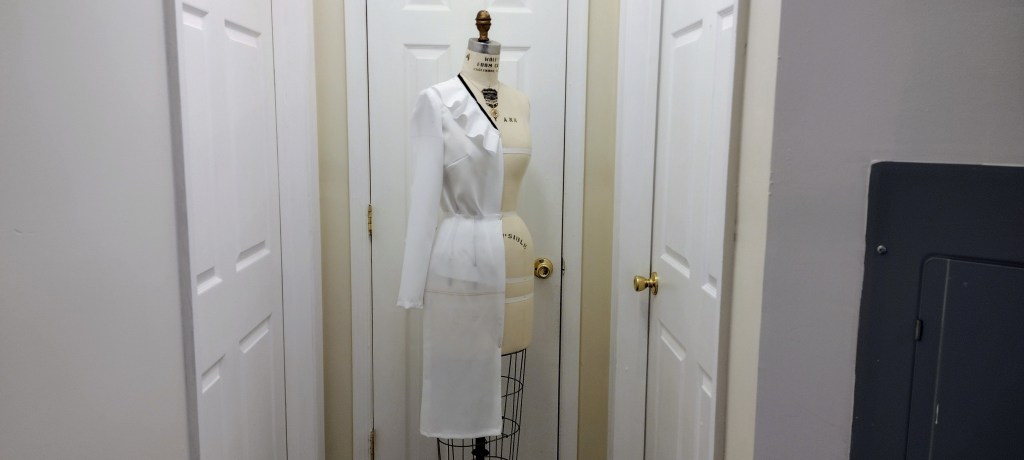
1930s Inspired Skirt and Blouse: Fitting Toile Completed

Introduction

The fitting toile for my 1930s Inspired Skirt and Blouse is finished. I am now thinking of a name for this outfit. I have to research popular women’s names during the 1930s. When I find the one that resonates with this outfit that will be the name I choose. This usually happens after I have completed selecting accessories and lingerie to complete the look.

Please note that the sloper and the pattern are not copies of 1930s patterns or created using a 1930s patternmaking system. I used a modern patternmaking system to save time and because the resulting fit meets the needs of the modern woman for comfort to move and ease in putting on and off.

Details of the Fitting Toile for the 1930s Inspired Skirt and Blouse

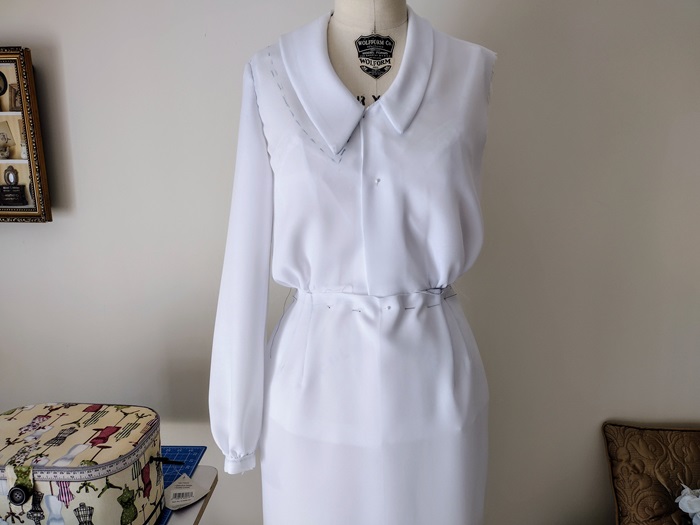
One of the difficult details for me in recreating a 1930s inspired blouse was training my eye and mind to accept a wide, flat fitted collar. On the right hand side of the collar in the photo is the narrow collar I started with. I thought this would look better. As I thought about it I realized that I am thinking too much of the narrow Peter Pan collars of 1950s dresses and blouses. I have experience with those, but not with the bolder, wider styled collars of the 1930s.

To attune my eye so that I created the right width I drafted a wider collar and made a toile from that collar pattern. I then pinned it over the left side shown in the photo. I gave myself time to visually accept the comparisons before making a decision. In time I realized the wider collars felt right and looked better for this style of blouse. So with that the wider flat fitted collar was chosen.

Note: Collar on left is wider than collar on the right. The comparison was made to determine the best width for the overall look of the blouse.

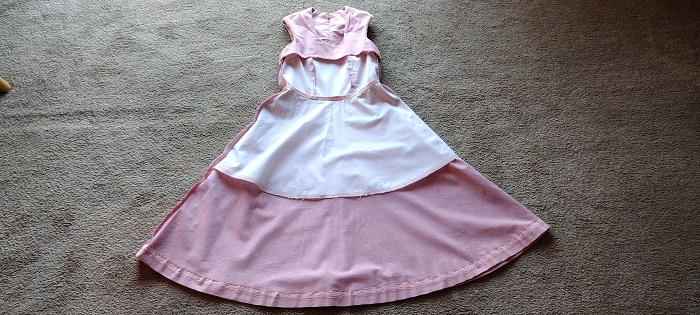
Have you ever noticed how many vintage pattern illustrations from the 1930s and 1940s show blouses with smooth lower portions that look like peplums? Not every blouse with this lower portion that looked like a peplum was indeed a peplum. It was actually a blouse yoke, a feature that is still used in French couture today. The blouse yoke is made from a basic pencil skirt pattern with length equal to distance from waist line to hip line. One or both darts are open to create a very slight flare. The yoke is adjusted during fitting to come a little closer to the hip curve.

The upper portion of the blouse runs from the neckline to waistline. The waist is sewn to the yoke after the bodice side seams are finished. When the skirt is put on, the yoke holds the blouse in place. It also provides a nice fullness and smoothness for the skirt to flow over the hips.

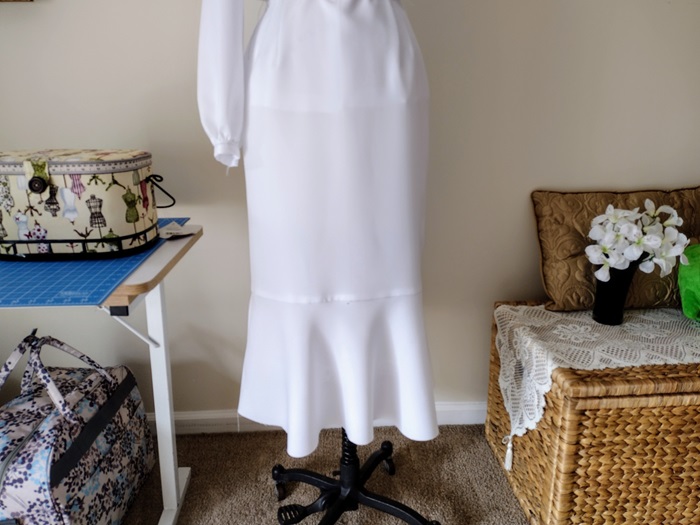
The flounce pattern is derived from cutting a length off the upper skirt pattern. Front and back are evenly divided and opened an equal amount for the slashes. Here is an important tip I learned from trial and error: measure the width of the hem at front and back. They should be equal. Otherwise the flares will look uneven. To get the best and softest flow and movement, cut the flounce at center front placed on the fold of the true bias. This takes more fabric but the result is very beautiful. The flounce can also be cut with center front on the lengthwise grain. There will still be flare but not as much as when cut on true bias.

The skirt will have a 1/2″ to 3/4″ waistband backed with Ban-Rol. This gives a smooth look and fit. The result is that the waistband has an effect similar to a belt. The skirt fits better and the waistband never rolls or bends as it would without interfacing or a non-woven interfacing that is washed or dry cleaned many times.

1930s Skirt and Blouse: Finding the Focal Point

Introduction

This week I reviewed the first sketch made for my next project, a 1930s inspired skirt and blouse. I do not have much experience working with styles of this decade, so it is a big challenge for me. I have only made one dress using design elements from a 1930s book, Paris Frocks at Home. That dress was designed as what I envisioned a woman would have as a special occasion dress during the Great Depression. It was pretty enough for a semi-formal occasion and yet could be worn for more everyday events such as a Sunday visit.

With my new project I am envisioning how a woman would dress for work during the 1930s. I want the skirt and blouse to be pretty and attractive enough to be wearable for today. For this reason I am taking only certain elements from the 1930s, not all of them.

I re-thought the first sketch and was not satisfied with it. I will detail the reasons here while sharing the importance of maintaining a clear focal point for any design.

What is a focal point?

A focal point is that part of the outfit where you want to:

–direct the gaze of the viewer
–emphasize a feature and make it attractive
–express an idea about the outfit, i.e. what is the message

Importance of integrating a focal point into the flow of the design

A focal point must be in harmony with the overall appearance and purpose of the outfit. It has to have pleasing proportions and add to the wearers attractiveness. Learning how to balance focal points takes experience. You want at least one, perhaps two. But never so many that the eye does not rest on any particular area and then move to what feature you are emphasizing. For example, in Version 1 of the 1930s outfit there are, I think, conflicting focal points. The scalloped yoke of the skirt competes with the bow of the blouse.

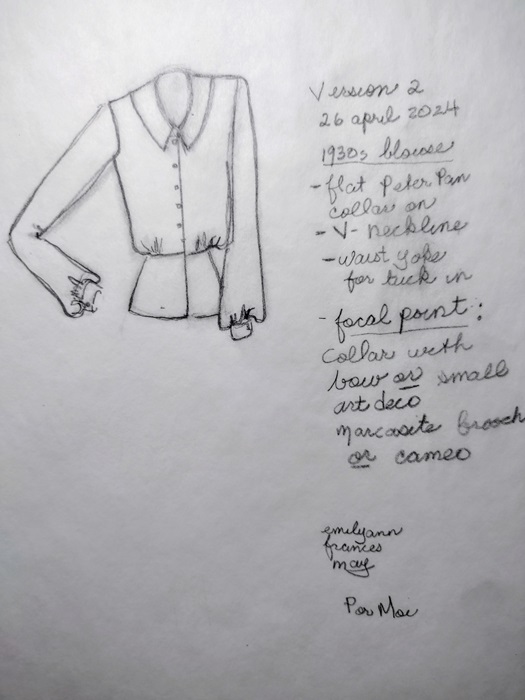
Version no. 2 of the skirt and blouse appears more calm and pleasing to the eye. The flounce at the bottom of the skirt emphasizes the movement when the wearer walks. A second focal point is the v-neckline of the Peter Pan flat collar. A small, marcasite Art Deco broach can be pinned at the neckline to create a second focal point. Or, very pretty but small buttons may be used to create the second focal point. Here there is a more sublte play between the focal points that Version no. 1 lacks.

How to compare focal points and choose the right combinations

One way to choose the right combination of focal points, or choose to have just one focal point, is to make separate sketches of the parts of the outfit. Then make a complete sketch of the outfit put together.

1930s skirt and blouse sketches and notes, Version no. 1

1930s skirt and blouse sketches and notes, Version no. 2.

If doubts remain about the current pairing of separate parts of the outfit, the sketches of the garment pieces can be mixed and matched. This gives some idea on how the elements might or might not work together in a different combination.

Blouse Ver. no. 2 is paired with Skirt Ver. no. 1 on the left. On the right Blouse Ver. no 1 is paired with Skirt Ver. no. 2.

It helps if the sketches are put aside for a day or two. Then they can be reviewed again with a fresh point of view. When performing this review, be aware of what first captures your attention. Then consider how that first focal point works with other elements in the design.

Through this process of sketching, considering, studying and planning you will come up with an important and clear definition of how to proceed in the next steps of your design plans.

My final choice: Version no. 2

Additional Resources

To learn more about focal points in fashion please visit:

UEN Utah Education Network
Emphasis_the_Focal_Point_of_Fashion_1_.pdf
Scroll down and on the right side of the screen are free course materials you can download that will help you understand what the focal point is about.

Purfe: Fashion, design and perfect fit
“Basic Principles of an Outfit Layout: Focal Point”
October 14, 2012
by Olga

1930s Slopers Update: Flared Skirt

Introduction

I am making a series of slopers based on basic patterns created in the 1930s by Margaret C. Ralston. Her drafting system and pattern transformations were published in a book entitled Dress Cutting. 

I am using the pattern drafting system that was taught at the French Fashion Academy. I find this system more suited to making retro inspired clothing., rather than using a vintage pattern drafting system. This route saves me time and makes the process more enjoyable. Ralston’s instructions sometimes make no sense to me. For example the sleeve seam is 3/4″ to the front of the bodice, meaning the sleeve seam will not match the side seam of the bodice. In the instructions for transforming a skirt pattern, she writes that sometimes a skirt side seam can be moved towards the back. I am sure this all made sense to her students and target audience at the time. However, I am not sure of how the results will look now and I do not have the time to go into that kind of nitty gritty effort to be authentic. So long as I can create a pattern and garment with a feeling and a little touch from a selected time period I’m quite satisfied. My goal is always to create a little bit of the look of retro combined with ease and movement of modern clothing.

The patterns for the 1930s sloper are drafted using the measurements for a Standard Misses Size 4. My vision is to create the building blocks of 1930s inspired styles that will look flattering on a smaller range of sizes. When completed the slopers will be put up at my blog. They can be best graded down to Misses sizes 0 -2 and upward to Misses sizes 6-8.

Three inches of ease at the hips and 1 1/2 inches of ease at the waist was added to the basic straight skirt drafted as the basis for this flared skirt.

Creating the flared skirt pattern and fitting toile

Cover of Dress Cutting (left) and pattern diagram for basic flared skirt. Notice how the flares begin at the hipline with overlapping of the pattern from waist to hip.

On the straight skirt pattern, the first dart by the side seam was closed halfway to give the skirt more ease and add a slight flare. The remainder of that dart was taken off from hip to waist.

Front of flared skirt pattern.

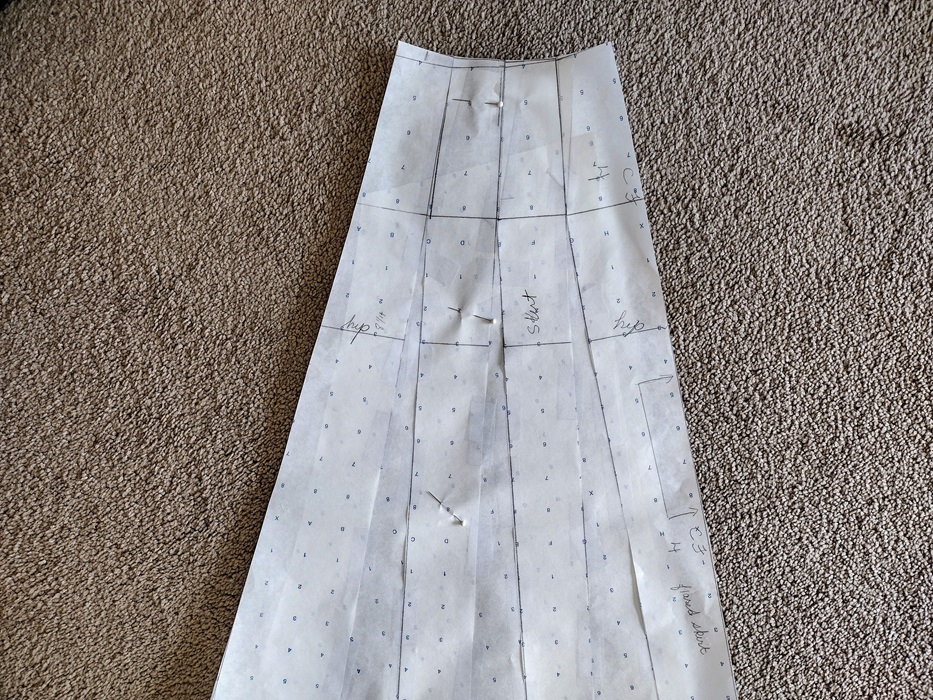
To create the flares the dart intake closer to center front was divided in half. I then drew two new darts equidisant with each having half of the intake. Then I added another slash line. The darts were closed and the third slash line opened. This reduced how high the flares would form. I repeated the same steps for the back skirt pattern.

Fitting toile of flared skirt.

As you can see from the fitting toile this is a very softly flared skirt. The flares begin below the abdomen and the sides fall straight. It feels true to the spirit of the 1930s when dresses were soft and there was lots of flare and movement created by insets, godets and the way in which the grain was used for a blouse, skirt or dress.

As of the date of this posting the skirt has been pinned to the form or 48 hours. I take this step to let the grain settle prior to marking and then putting up the hem. Sometimes I leave it hanging 72 hours. I highly recommend taking this step. Your finished toile will then reflect the way the flares look when hemmed. You will also know if you lose any length due to the way the grain settles. This skirt when finished and hemmed should have a center front length of 27-29 inches, in keeping with the longer skirt lengths of the 1930s.

In the works for 2024: 1930s inspired pattern sloper

In the works for 2024: a1930s style sloper inspired by Margaret Ralston’s book “Dress Cutting”. I added 3″ style ease and base is size Misses 4 because I want to do somethingvfor smaller sizes as a challenge. This sloper is based on the French Fashion Academy. That is why it looks different. there will be a skirt sloper, too. The intention is that one can make 1930s inspired styles like some of the skirts, blouses and drop waist dresses in this or other 1930s books. Test muslin is next.

For background information on this project please see my posting: Researching and preparing a 1930s inspired pattern sloper

#sloper #1930sinspiredsloper #1930s

New pattern: Standard Misses Size 8 Fitting Shell

Introduction

I began work on a new standard size 8 sloper in June 2023. The goal was to achieve a sloper with a more shapely fit that the one I developed for making 1940s style clothing. The technique I used for the 1940s inspired sloper was based on Precision Draping by Nellie Weymouth Link. It resulted in a well fitting sloper that had a bodice adaptable to the shoulder pads and boxy cuts of the 1940s. The skirt has a slight swing in keeping with the slightly A-line shape of 1940s skirts.

I used draping to create a highly structured bodice more suitable for 1950s styles along with a pencil/sheath style skirt. The only thing I did not like about the 1950s style bodice was that it was too, too structured for me. I created a bodice with a vertical dart above and below the bust. The fit was balanced but I did not care for how pointy and emphasized the apex was.

Some disadvantages to draping a style or a sloper

It can be tricky to add style ease to a design made using a sloper. In draping, too, adding a pinch here and a tuck there will change the fit of the garment once the toile is made and fitted on the person or form.

I have seen videos on YouTube where those demonstrating how to drape a sloper on a Misses 8 recommend that the finished garment be labelled a Misses size 6. I didn’t want to go in that direction so I decided to go back to the flat pattern making method I learned at the French Fashion Academy.

Draping still has many advantages. It is a wonderful learning process. Flat patternmaking offers many advantages, too.

Spending three months practicing draping made me very aware of the kind of silhouette I wanted the new size 8 patterns to have. There would be a basic pattern with fitting details but overall a softer effect. For this reason, I created a fitted bodice with only one vertical dart below the bust. The shoulder dart in the back bodice was eliminated. And the fitted sleeve was drafted and adjusted so that there is much less ease to work into the armhole. For the fitting shell, there is less than 7/8″

Fitting Shell vs. Sloper

A professional dressmakers form has some style ease added into it. A sloper for a Size 8 will result in fashions for that size 8 but it may not have ENOUGH style ease to accommodate a range of body types within that Size 8. This is why I decided to go back to the French Fashion Pattern Drafting System.

In the French Fashion system a Fitting Shell is created after taking body measurements. No ease is added. The flat pattern is drafted and the fitting shell tested. It has to fit the form or person like a second skin. When all is corrected, the fitting shell pattern is a blueprint of the form;s or person’s body.

When a pattern is created for a particular style, design ease is added to some of the body measurements. I have found that adding 3″ each to Chest, Bust, and Hips; 3″ to upper arm circumference; 1-2″ to wrist circumference; and 1-1 1/2 inches to waist circumference produces comfortable garments with a good fit. Other garments like coats and suit jackets may need more ease.

This means every style has to have the basic patterns drafted with the style ease added in. It is more work but the results are much more accurate for me. In 2024 I begin drafting and making designs using the patterns based on the measurements used to create the fitting shell.

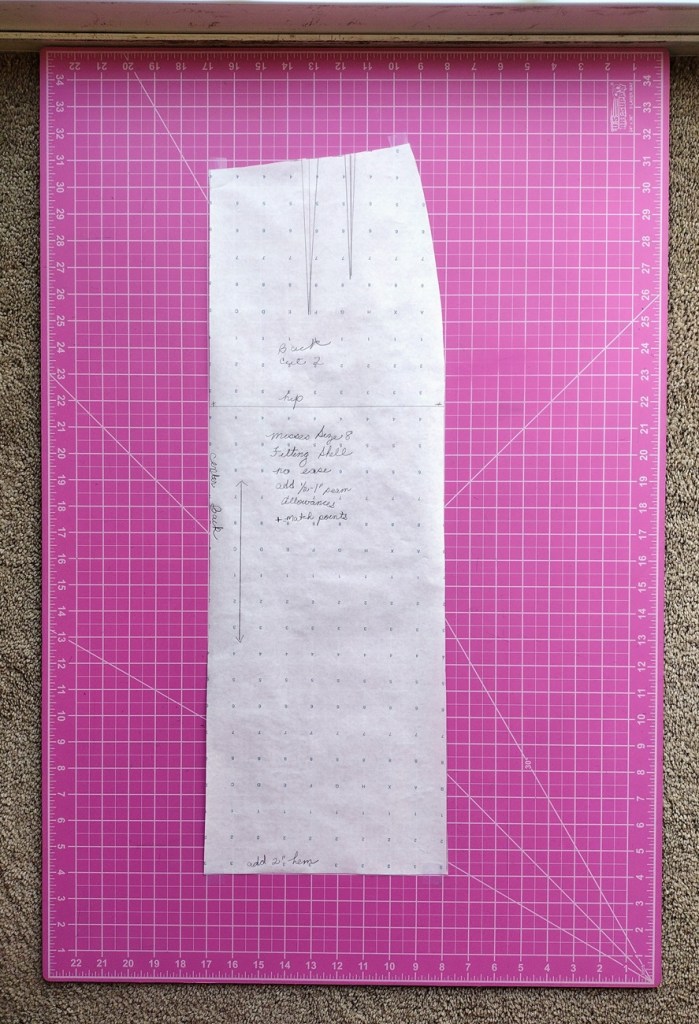
I offer these photos of the fitting shell for copying. You may reproduce and grade the pattern for your own use. Please test each time making a muslin toile.

Notes about using the Fitting Shell

This fitting shell was created using the Standard Measurements for Misses Size 8, 

–There is no style ease added.
–You need to add 1/2″ to 1″ seam allowances. Wider seam allowances make it easier to make adjustments if have to let out the seams.
–Match points are marked with a “+”.
–To sew the sleeve: Use a double row of machine stitches all around the cap. When basting the cap to the armhole, match the “+” marks and the dot on the cap to the shoulder seam. Draw up the stitches and distribute ease around the cap then baste to the armhole.
–The skirt length is 25-27″ for typical 1950s fashions. Add a two inch hem for the fitting shell.

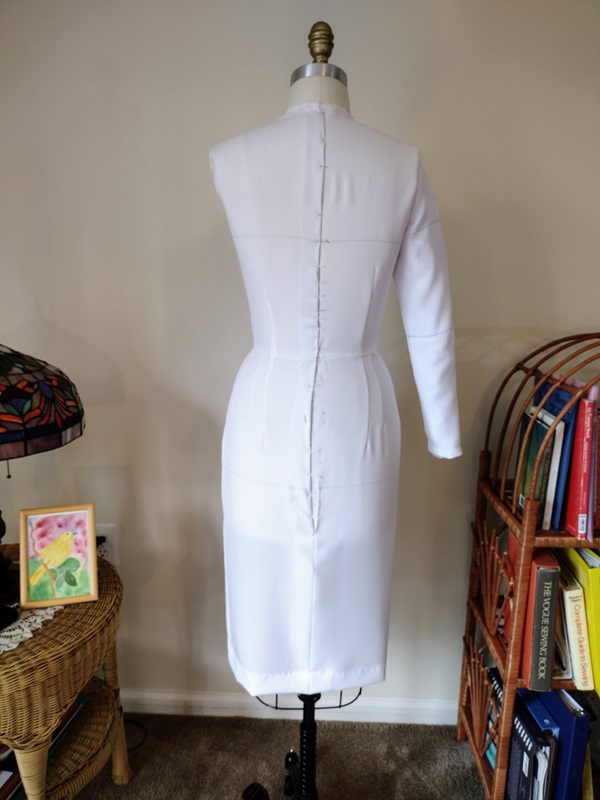
Photos of the Misses Size 8 Fitting Shell

Please Note:  a few adjustments were made after these photos were taken.  i did not make another fitting shell because the adjustments are minor.  This was a working version, of the fitting shell which is why you see the pen marks on it.

Misses Size 8 Fitting Shell

I release these photos into the commons. They may be copied, sized in your graphics program, graded and used for whatever purpose you choose.

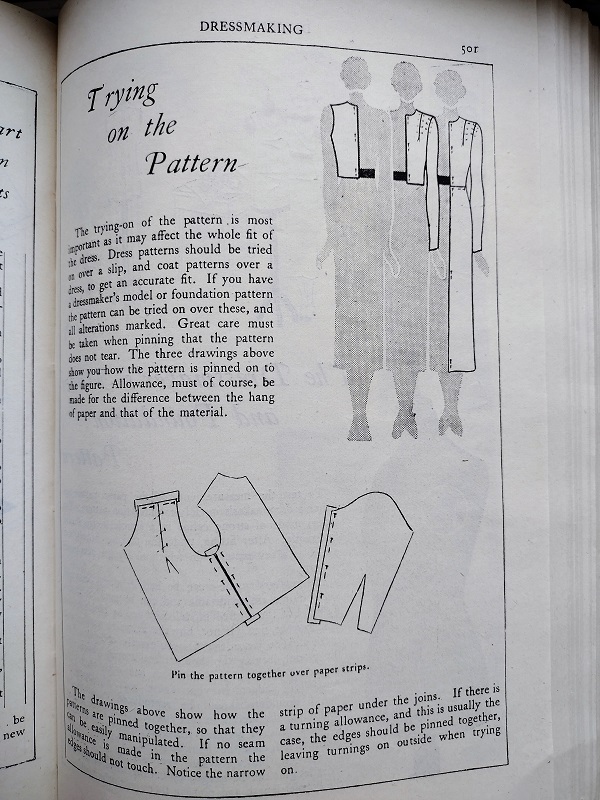
The Dressmaker’s Model and Fitting Pattern in the 1930s, Part 1

Introduction

This posting initiates a series on my adventure into creating a 1930s type sloper in a modern day Misses size 4. I think modern sewistas and patternmakers can get a similar look without the expense of a vintage pattern purchase. Nor will there be the many fitting challenges that come with using a vintage pattern. My goal is to simplify a process of creation, not complicate it or make it overly time consuming. I think if enough research is done, it will be possible to come close to the shapes of a basic sloper for the 1930s.

Draping Technique I will use

I am going to use the 1940s draping system called Precision Draping which was developed by Nellie Weymouth Link. The book has been reprinted and is available at booksellers online new or used. While this is not a 1930s draping technique, it is a vintage one. It is easy to learn and provides a good foundation for exploration into the styles of other decades.

Beginning point

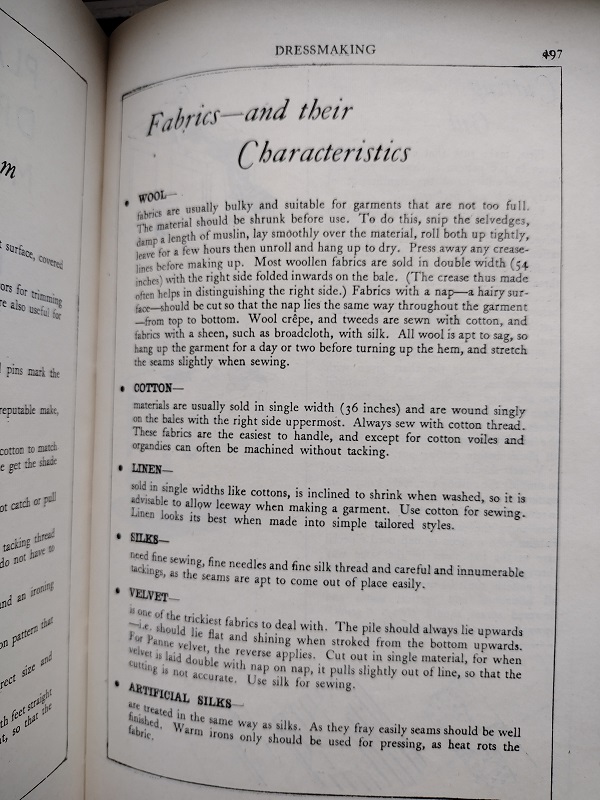
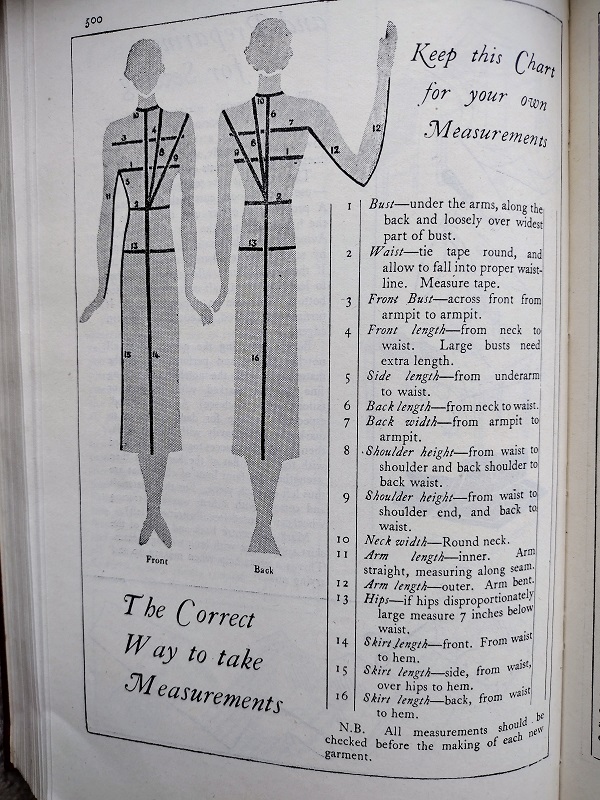
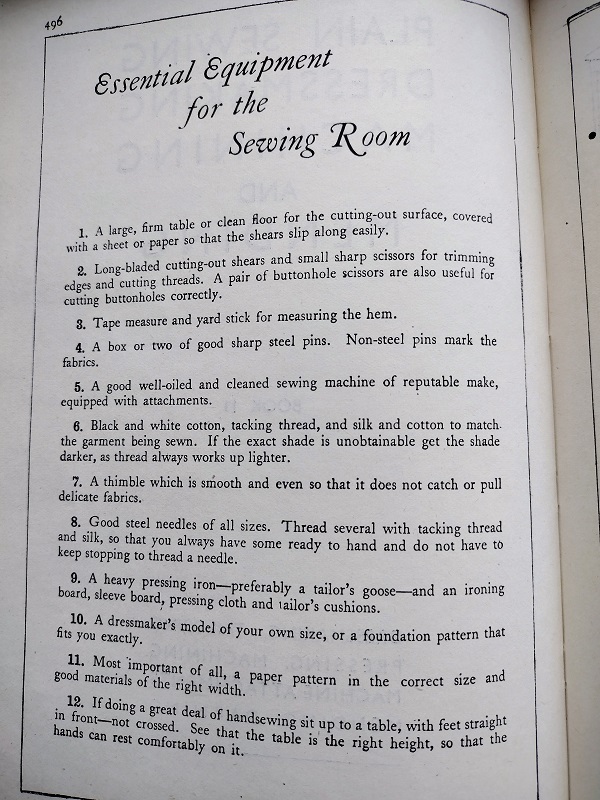
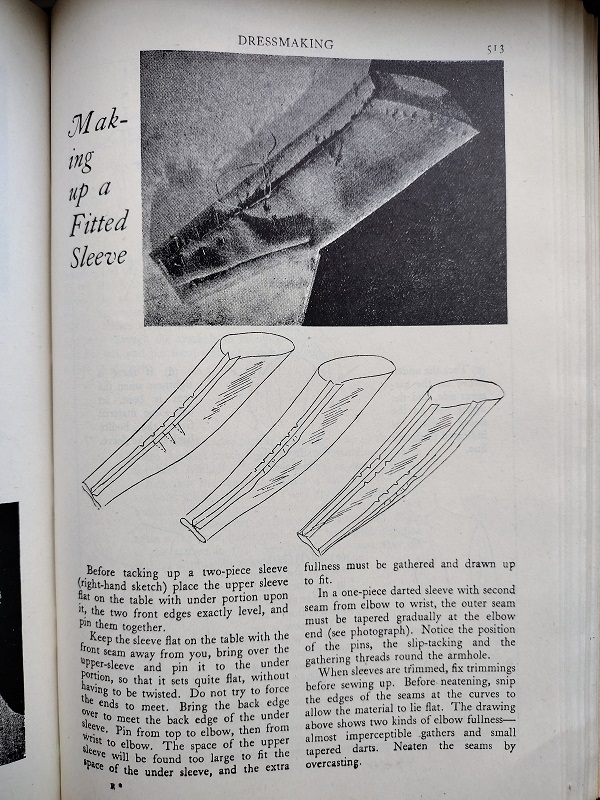
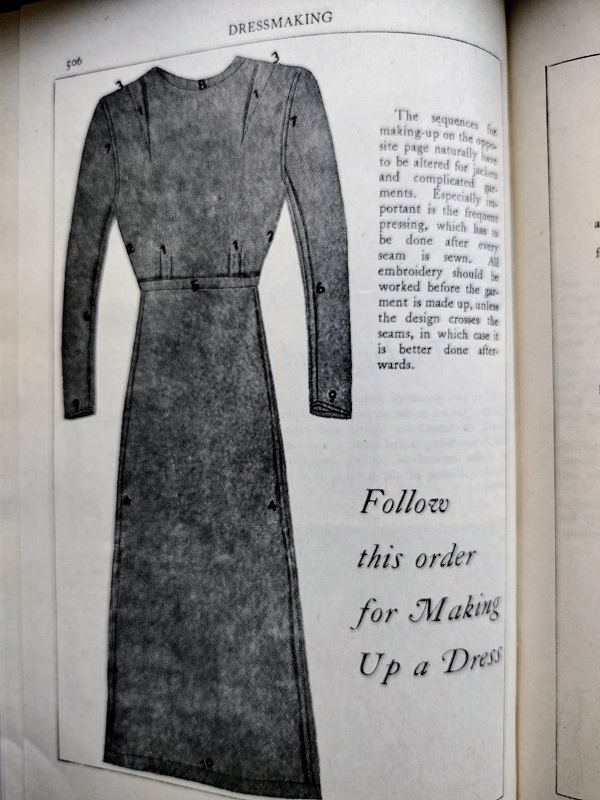
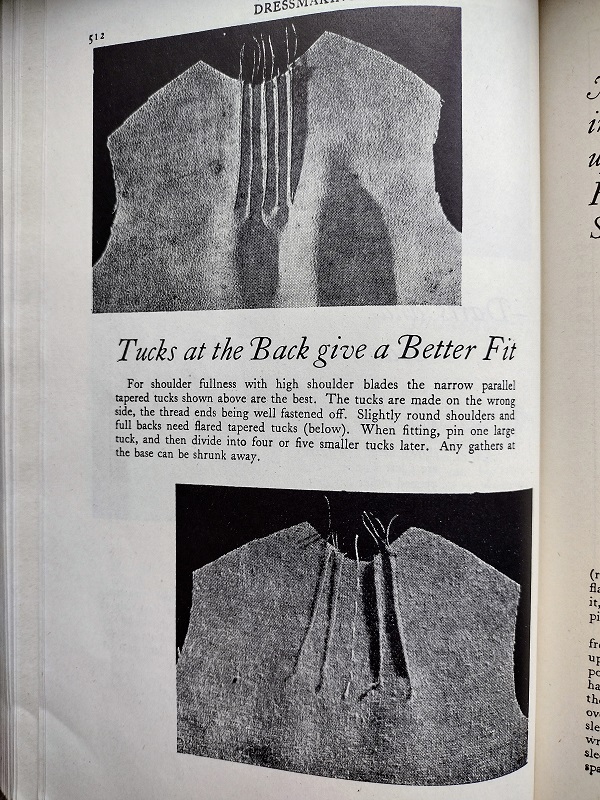
As always, research and reading provide insights and ideas. I begin this journey by making available for you a section of Weldons Encyclopedia of Needlework from my very small collection of vintage sewing books. It was published by The Waverley Book Col, Ltd. of Farringdon Street, London, E.C. 4, but no date of publication exists in the book! I estimate that the edition I have was published in the 1930s. As you can see in the illustrations that follow, the silhouette is close to 1930s fashions with longer hemlines and flowing skirts. The fashion figure is also slender and soft. The boxier fashions with emphasis on the shoulder line of the 1940s is not present in the chapter I post here.

We will continue this exploration into the elements of a 1930 sloper and the key takeaways for creating a sloper that can approximate the look in the next posting. For now I hope you enjoy this look into what a sloper and dress form from the 1930s looked like. What is shown here may or may not be typical but it has elements that appear in another flat pattern drafting system from the 1930s that appear in another book I have and will use in this series.

“The Dressmaker’s Model and Fitting Pattern” from Weldon’s Encyclopedia of Needlework

Free 1949 flat patternmaking book available!

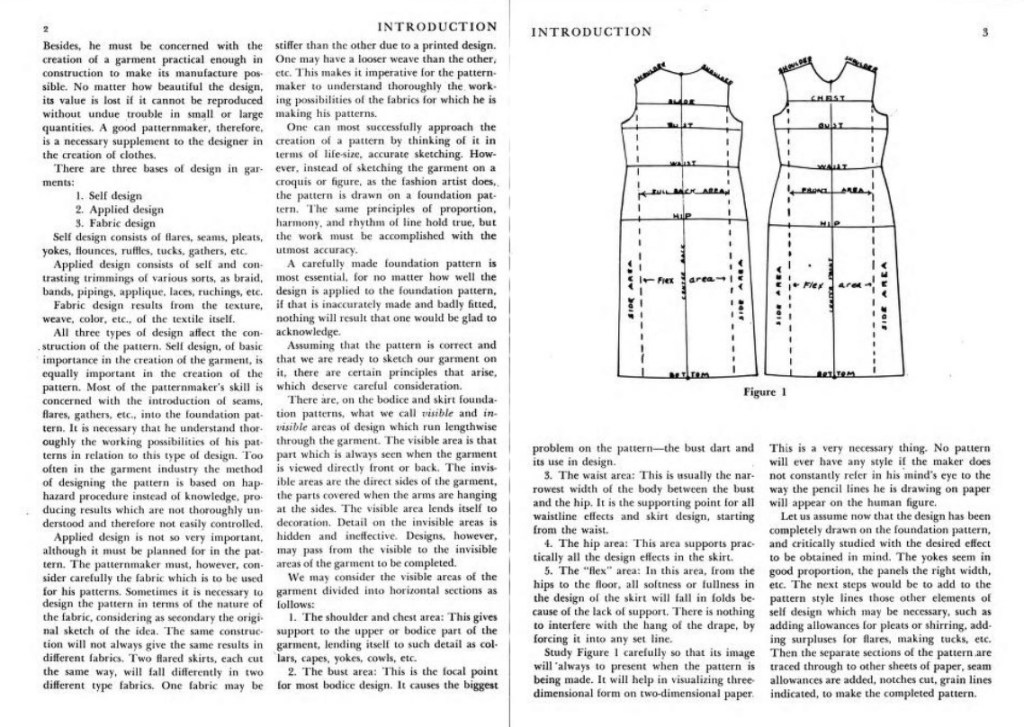
Thanks to the Internet Archive, vintage sewing and fashion enthusiasts can download a PDF version of How to design beautiful clothes, by Esther Pivnick. The book was published in 1949.

The patternmaking system used is the same as what was taught at the Traphagen School of Design in New York City. This book offers a complete guide to taking measurements, creating basic patterns and then transforming them.

Even if you do not use the pattern drafting system, there are details and pattern transformations that can be experimented with using your own sloper. It is well worth it to download a PDF version as the original book sells for over $100 when in good condition.

Here are screen shots from the book. I was surprised to see that the skirt is similar to the result I obtained when using the Precision Draping technique from the 1947 book by Nellie Weymouth Link. There is a slight flare to the skirt. It is not the straight, tubular shape of the 1950s basic skirt.

Here are screen shots from How to design beautiful clothes which show the resulting basic front and back bodices; back and front skirt patterns; and a diagram showing the measurements needed.

Draped Princess Bodice and Flared Skirt Jumper 1950s Style

Introduction

I always wanted a princess seamed dress or overblouse. Now that I have fulfilled the realization of my idea I have to say that it did not fulfill all my expectations. It did turn into a good learning experience about fit, style lines and individual body shapes.

Photos of the Jumper

Background of the pattern

The pattern was based on the Misses Size 8 sloper developed using the Precision Draping technique created by Nellie Weymouth Link. The technique is detailed in a reprint of the 1947 book through Amazon and other booksellers online.

I altered the pattern after fitting the toile on myself and making adjustments.

Expectations vs. Reality

Originally I envisioned the princess seam over my bustline to be very flattering. Once it was finished I did not care for the look on myself.

I have sloping shoulders. This causes the apex of my bustline to be lower than a standard size. The result is that the princess seam curves a bit lower, emphasizing both my bustline and narrow, sloping shoulders. I straightened the curve on the pattern, but that did not make much difference.

I offer this experience as a way for others to learn what makes the most flattering fit for their own body type.

I love the flared skirt of the jumper, the neckline and the armholes. If I were to make this again I would use a vertical dart below the bust or perhaps two French darts in the side seam of the bodice front.

Sewing Techniques

The jumper is made from 100% cotton chambray I ordered from Mood Fabrics. The underlining is cotton batiste.

I underlined the bodice. The skirt was underlined from waist to a few inches below the waistline. I wanted the fabric to have less transparency. The underlining also served as an anchor to the zipper.

Hidden Zipper: A 1960s Couture Technique

I used the instructions for the hidden zipper sewing technique detailed in Couture Sewing by Claire Shaeffer.

The zipper must be sewn to garment pieces that are underlined. This is because the finished seam is anchored to the underlining with catch stitches or fell stitches.

The resulting zipper is a little like an invisible zipper but less rigid.

Seam Finishes

I cut the seams wider than usual because the fabric frayed. Edges were pinked and zig-zagged for durability.

Other Finishes

The all-in-one facing and hemline were finished with Wright’s Flexi-Lace. I used the Flexi-Lace for the waistline stay, too.

New Precision Draping Project: Pencil skirt and blouse with ruffled collar

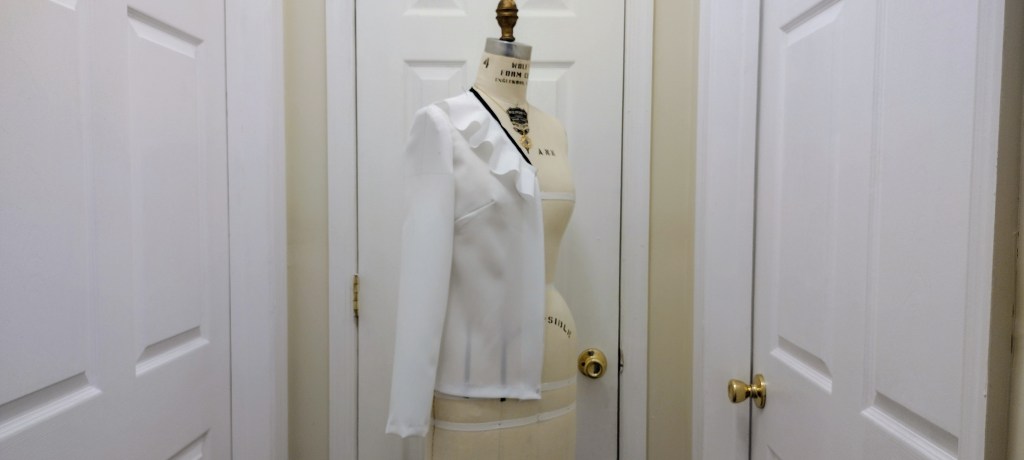
More practice in Precision Draping.  Half-toile of pattern made from tissue paper drape.  First fitting.  Sleeve made through flat patternmaking.  Ruffled collar made off of the drape through flat patternmaking. Facing and buttonhole extension to be added.  To be paired with a pencil skirt drafted from a pattern created with instructions from the 60s.  
Style influences are from the clothes my Mom and the neighborhood women wore when I was growing up in Dyker Heights, Brooklyn.