Draped Princess Bodice and Flared Skirt Jumper 1950s Style

Introduction

I always wanted a princess seamed dress or overblouse. Now that I have fulfilled the realization of my idea I have to say that it did not fulfill all my expectations. It did turn into a good learning experience about fit, style lines and individual body shapes.

Photos of the Jumper

Background of the pattern

The pattern was based on the Misses Size 8 sloper developed using the Precision Draping technique created by Nellie Weymouth Link. The technique is detailed in a reprint of the 1947 book through Amazon and other booksellers online.

I altered the pattern after fitting the toile on myself and making adjustments.

Expectations vs. Reality

Originally I envisioned the princess seam over my bustline to be very flattering. Once it was finished I did not care for the look on myself.

I have sloping shoulders. This causes the apex of my bustline to be lower than a standard size. The result is that the princess seam curves a bit lower, emphasizing both my bustline and narrow, sloping shoulders. I straightened the curve on the pattern, but that did not make much difference.

I offer this experience as a way for others to learn what makes the most flattering fit for their own body type.

I love the flared skirt of the jumper, the neckline and the armholes. If I were to make this again I would use a vertical dart below the bust or perhaps two French darts in the side seam of the bodice front.

Sewing Techniques

The jumper is made from 100% cotton chambray I ordered from Mood Fabrics. The underlining is cotton batiste.
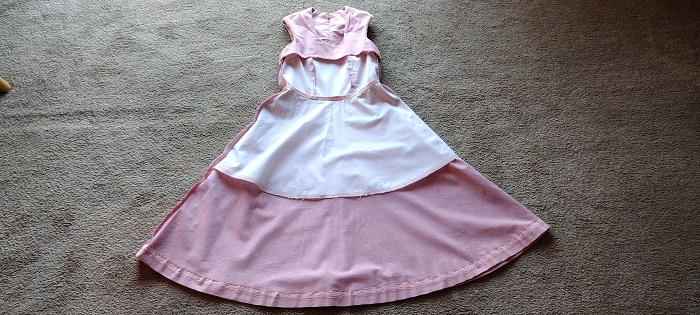
I underlined the bodice. The skirt was underlined from waist to a few inches below the waistline. I wanted the fabric to have less transparency. The underlining also served as an anchor to the zipper.

Hidden Zipper: A 1960s Couture Technique

I used the instructions for the hidden zipper sewing technique detailed in Couture Sewing by Claire Shaeffer.

The zipper must be sewn to garment pieces that are underlined. This is because the finished seam is anchored to the underlining with catch stitches or fell stitches.

The resulting zipper is a little like an invisible zipper but less rigid.

Seam Finishes

I cut the seams wider than usual because the fabric frayed. Edges were pinked and zig-zagged for durability.

Other Finishes

The all-in-one facing and hemline were finished with Wright’s Flexi-Lace. I used the Flexi-Lace for the waistline stay, too.

How to refine a Denim Sheath Skirt look

Introduction

In this posting I share some of the fitting and sewing techniques I used to refine my favorite denim sheath skirt. The skirt is made with a bottom weight 100% cotton denim by Kauffman. The fabric was laundered and dried prior to marking, cutting and sewing.

The pattern was developed entirely through draping in cotton muslin.

The skirt had several parts of the construction done by hand. The blouse was purchased online.

Fit is Everything!

To give the skirt more style ease I had to add extra width at waist, hip and hemline. Some sewing books say extra width can be added at the side seam. I found that it is better to open the pattern between the second dart and the side seam. You measure the mid-way point between the dart and the side seam. Draw a vertical line from waist to hem. Then open 1/4 of the total amount of style ease needed. This alteration is the same for front and back of the basic sheath skirt pattern.

In the photo of the back pattern piece for the skirt you can see the place where the cut was made and extra paper added to the pattern between the second dart and the side seam.

Note: The pattern for the skirt was made using Precision Draping by Nellie Weymouth Link. I gained weight since the time the original drape and pattern was made. This necessitated the need for the alteration.

Dressmaker Finishes for a Refined Look

A slot zipper application was used. I followed the hand sewing technique detailed in Couture Sewing by Claire Schaeffer. Instead of using a prick stitch or back stitch, the zipper is sewed into the seam using tiny running stitches. To further secure the zipper in place, the zipper tape is fell stitched only to the side seams, at the edges. The zipper stop is covered by a lightweight piece of lining fabric. I used a small piece of lace hem tape instead.

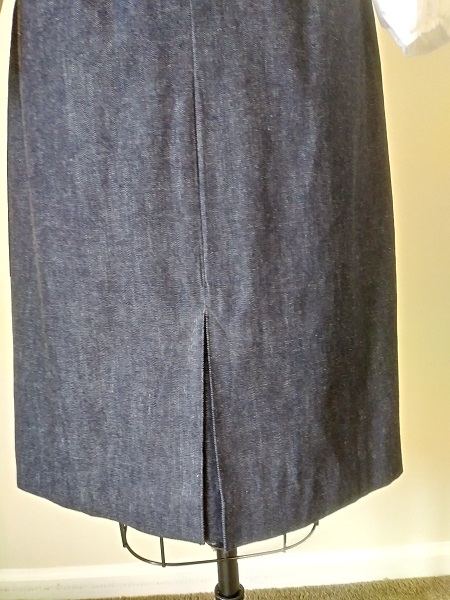
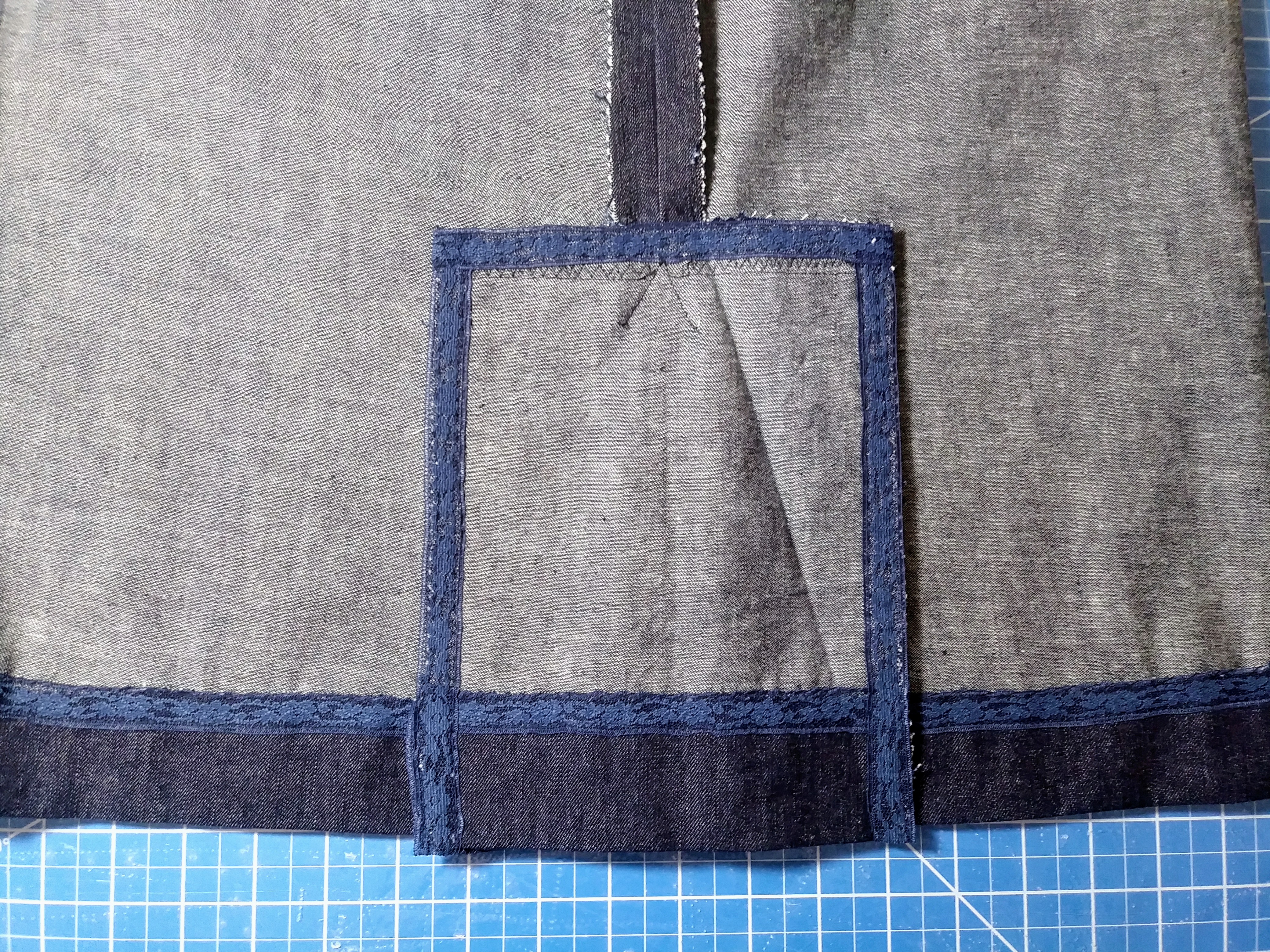
A kick pleat with insert was made in.center back seam. It provides ease of movement as well as a finishing touch. The top of the kick pleat is stitched into place using a triangular shape. A kick pleat is more refined than a high slit at center back of the skirt. That is why this skirt works well for casual dress days at work or an outside meeting with business associates.

All seams were pinked and then edge stitched. Wrights Flexi-Lace tape provided a finish for the hem and kickpleat.

Standard Misses 8 and my Altered Customized Sloper

Introduction

The basic fitting shell for the Misses Size 8 was draped. A toile was made twice each time refining the fit. When the basic Size 8 was turned into a sloper I then went on to customize it for myself.

Why not draft a custom made pattern?

I have been drafting patterns to my own measurements and have become very comfortable with the system I use. During the COVID-19 related furlough from my job this past Spring I decided it was time to take on a few challenges.

I am weak in the making of alterations. Since my dress form is a standard Misses 8, I decided to take on the challenges of draping and altering a Misses 8 for myself. I am between a Misses 6 and 8 for the bodice. For a skirt I am between a Misses 8 and 10.

I also have fitting challenges resulting from a small bustline, concave chestline and sloping shoulders. There were a few challenges I wanted to take up on the time I had to stay home from March until June 2020.

Working with Oaktag

The goal of using sloper was on my To Do list since 2018. The large roll of oaktag I bought from Steinlauf & Stoller moved with me from Brooklyn, NY to Linden, NJ waiting to be used. Being tightly rolled up for 2 years made it difficult to get into a workable state for making a sloper.

I had to roll the oaktag out on the floor and keep it in place with heavy books. I then cut the oak tag into length and width suitable to each pattern piece. To stop the curling I pressed each piece of oak tag by covering them with a thick towel. Then I used a steam iron to press flat.

The ends still curled so I laid the pressed oaktag pieces on top of each other onto the floor. The I piled heavy books evenly across them.

After two days the oak tag was flat enough. The pattern pieces were laid on top and the markings transferred. I cut out the darts because I want to try pivoting the pattern pieces to change the dart intake when working on transformations.

Finished Slopers

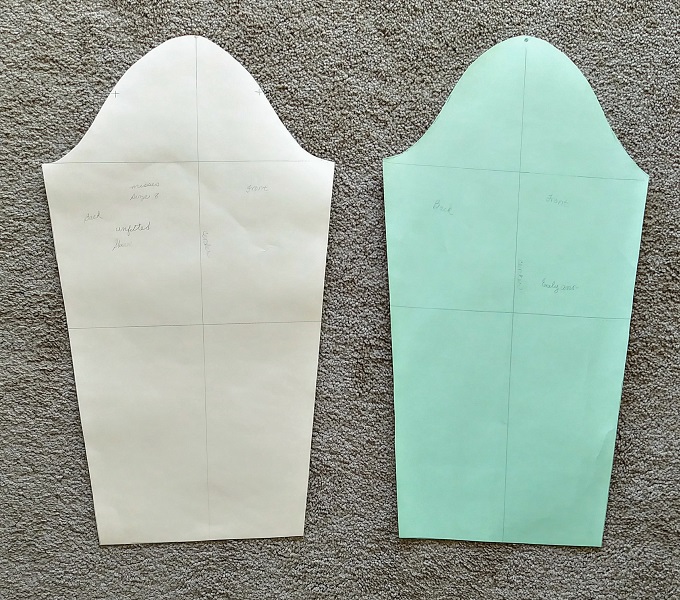
The white slopers are for the standard Misses Size 8. The green are mine. You can immediately see where my figure differs from the standard. I have to get a hole puncher. Then the hooks from which to hang the sloper pieces.

Bodice and Skirt Slopers. Misses Size 8 left. Size 8 altered to my figure on right.

Misses Size 8 unfitted sleeve on left. Sleeve adjusted to my figure on right.