Dressmaker’s Library: Gertrude Mason’s Pattern-making Book

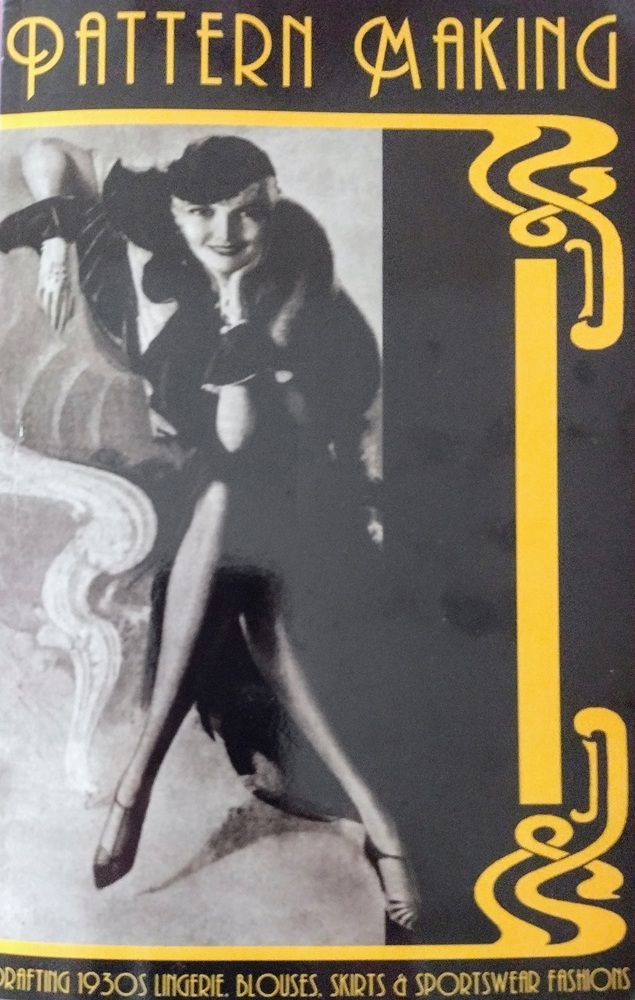
I bought this book through Amazon under the title “Pattern Making: Drafting 1930s Lingerie, Blouses, Skirts & Sportswear Fashions” by Gertrude Mason. The book was originally titled “Gertrude Mason’s Pattern-Making Book” and published in the U.K. in the 1930s. Ms. Mason was, according to the title page in the reprint I purchased, “a lecturer demonstrator in needlework, dressmaking and tailoring under the Board of Education, The Birmingham Education Committee and the Kent Education Committee.”
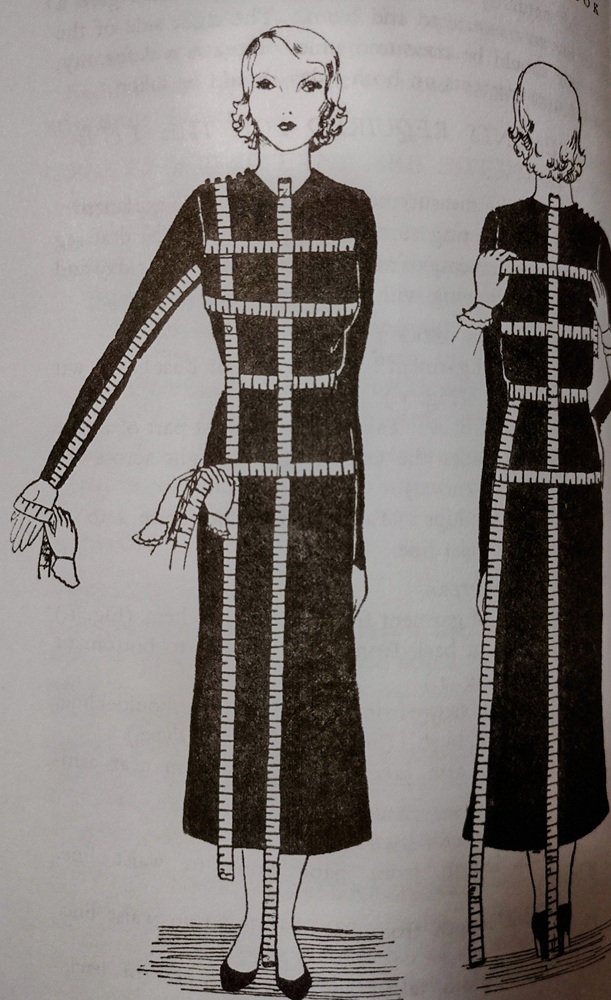
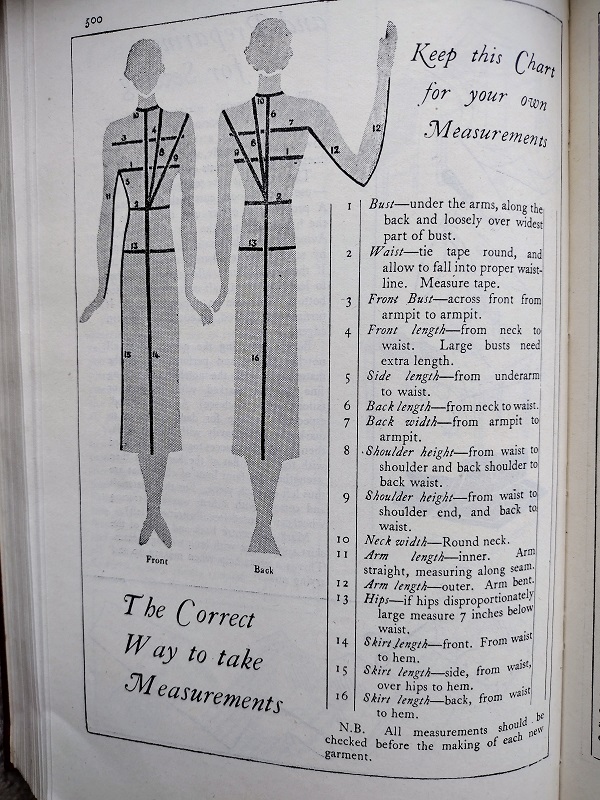
This book may have been part of demonstration materials or course materials for Ms. Mason’s work. In a demonstration or class, there would be hands-on exposure to fitting challenges or times when the resulting pattern did not conform to the examples given in the book. Explanations would be provided. That is why I think this book was intended for such use. It is not the kind of book that makes fitting and altering the results easy for the beginner. This book also lacks a personal touch that would guide the patternmaker along the way. There is little introduction or explanation at the start of each chapter. Instead the reader goes right into instructions for drafting each pattern. The approach is step by step, along with clear illustrations of the resulting pattern. However, at no time are any comments or notes given to explain what should be done if the resulting pattern does not turn out as illustrated.

My review is based on my personal experience using the drafting system and pattern transformations in this book. I followed the chapter on taking measurements using my Wolff professional dress form size 8. The basic patterns for what is called The Magyar and the simpler wraps turned out acceptable, but not outstanding. The results were very loose and could easily be made using a modern day sloper and transforming for a mounted (a/k/a grown-on) sleeve. These early patterns are all unfitted, boxy and without darts. Tucks, pinch pleats, and shirring could be added as shown in the illustrations, but no written instructions are provided.

I then tried drafting the basic skirt pattern using the measurements from my Misses Size 8 dressform. Following the instructions I ended up with a very large back dart on the skirt. I divided the width into three separate darts. Still the skirt did not fit well across the front. The front ended up not being dartless but needing one dart on each side of center front. The resulting skirt was wide at the bottom but did not have the flow and movement of a modern A-line or flared skirt.

There must be adjustments that could be made but overall I did not find the effort worthwhile. I used up a lot of pattern paper and muslin to test the results of this patternmaking system. I could have adapted my modern slopers. Each chapter has a set of measurements used as an example for drafting each pattern. The calculations for each step are also provided. The basic body measurements used in the book are close to a Standard U.S. Misses Size 8. I may revisit this book and use those measurements to draft the patterns. I could then alter the toile to fit my modern Wolff size 8 dress form. From that I could make a sloper. That is one route others can take if they are interested in standard sizes and slopers.

This book does have value for the historical information it provides. Also the illustrations of the transformations can serve as a guide to drafting or adapting any modern patternmaking system to get similar results. In the end, I think it is more important to achieve perfect fit with a vintage look than having to use a vintage pattern drafting system that results in poorly fitting clothes or results that can be easily reproduced with a modern drafting system with perfect fitting.

Dressmaker’s Library: Young Originals (Emily Wilkens)

Introduction

Emily Wilkens was an American designer who came to prominence during the 1940s. What Emily designed at that time was considered new, innovative and an important development in the fashion industry. Until the late 1930s-early 1940s, clothing for pre-teens mirrored the clothing for little girls. Teenage girls between the ages of 13-19 had choices, although not attractive ones for their developing figures and personalities. Some designers created clothing sized for the teenage body but that looked very much like that of a little girl’s outfit. Other designers worked with inspiration from the clothing for mature women and sized them for teenage girls. The result was that there was little that was fresh and new until Emily Wilkens set her focus on the developing teenage market.

Emily Wilkins’ Contributions to Fashion

Original sketch and dress with smocking for teenage girls, designed by Emily Wilkens.

“Young Originals” is as much the story of Emily Wilkens as a designer as it is about the birth of her design label Young Originals.

Researcher and writer Rebecca Jumper Matheson has created a book that is informative and exciting to read. She presents an excellent view of the market forces that brought the teenage girl into focus and made her the center of Emily’s design vision. Teenagers were coming into their own by the 1940s and were emerging as a separate market with unique needs and desires. Emily was part of this trend that marked a definite break with the past.

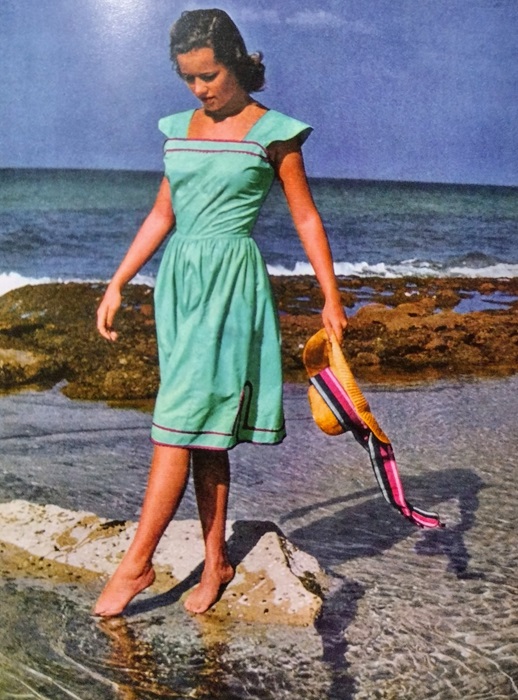
Tee Matheson was one of Emily’s favorite teenage models during the 1940s.

Emily’s ideal model was healthy and radiated a confident beauty. She did not need much make-up, jewelry or fancy hairstyling. Well fitting clothing, tasteful accessories and attention to healthy hair, skin and body were what mattered. Emily sought to free the teenage girl and young woman from the artifice put before the public as a standard of beauty. The famous actress of Hollywood was not an image for Emily. Instead she wanted teenage girls to look at themselves in the mirror and work with what would be most flattering to them.

Evening gown for a teenage girl or young woman, by Emily Wilkens.

Although she set a new trend, Emily’s fashions were very modest when we look at them today. In fact from our vantage in time they do not seem as they did when they made their debut. If anything some of Emily’s dresses look a bit too little girl and not enough for the young woman developing during the teen years. Still there is a fresh, easy going quality to her designs that can be adapted to the styles of the past that inspire modern sewistas, patternmakers and hobbyists.

Sketch of one of Emily’s designs.

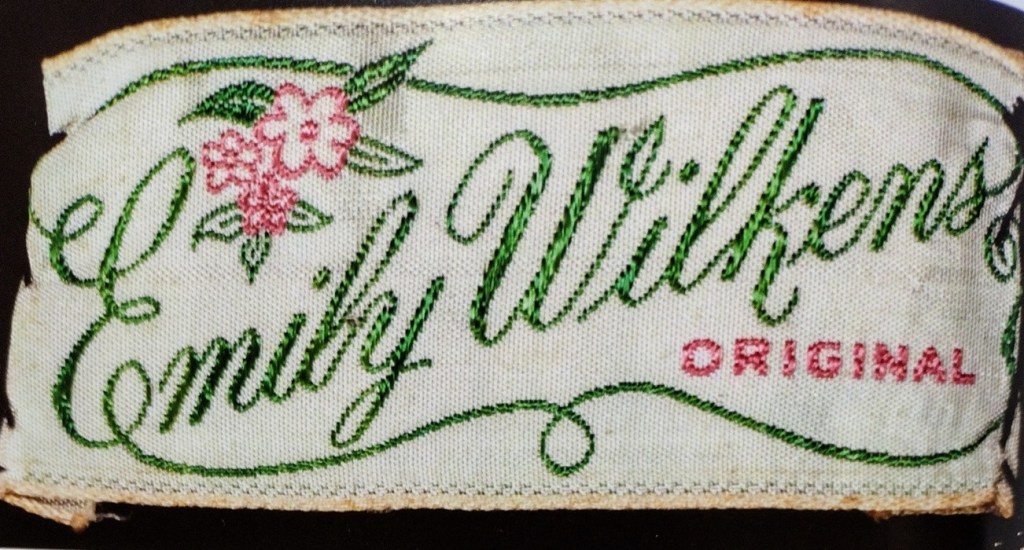
The book contains many technical sketches of Emily’s designs, as well as photos from private collections. From a photo of an Emily Wilkens label in this book, I got an idea of how I wanted the labels made for my own dressmaking creations. I also like the details on some of her dresses like the bows and appliques. Her use of gloves and handbags also inspires me when I need to draw on how accessories made her total look for teenage girls unique.

Label used for Emily Wilken’s designs.

I recommend this book to dressmakers and hobbyists with an interest in fashion history. You will learn how the market for teenage clothing for girls and young women started. This knowledge will enrich your understanding of how fashions for this market segment continued rapid growth during the 1950s, 60s and beyond.

Late 1950s Cocktail Dress: style and garment construction analysis

Introduction

I purchased this dress during the Covid-19 Lockdown of Spring 2020. At the time I was teaching myself Precision Draping, a vintage draping technique created by Nellie Weymouth Link. Through that self-learning I was becoming very aware of the effects dart manipulation had on creating vintage looks. I bought this dress as a study piece.

No specific decade was assigned to the dress. After studying the construction I estimate it was made late 1950s-early 1960s. I say that because of the lapped zipper application at center back. Many of the early 1950s dresses I have as study pieces, have lapped zippers in the side seam. Another indicator of time period is the skirt length. At the height of the 1950s skirt lengths were to mid-calf. As the 1960s began hemlines rose to an inch or a few inches right below the knee. This skirt comes to about 1 1/2″ below the knee when I am wearing it. I am 5′ 5″ tall.

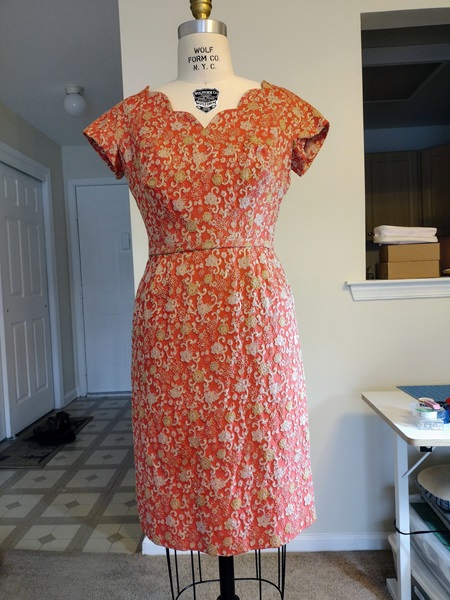
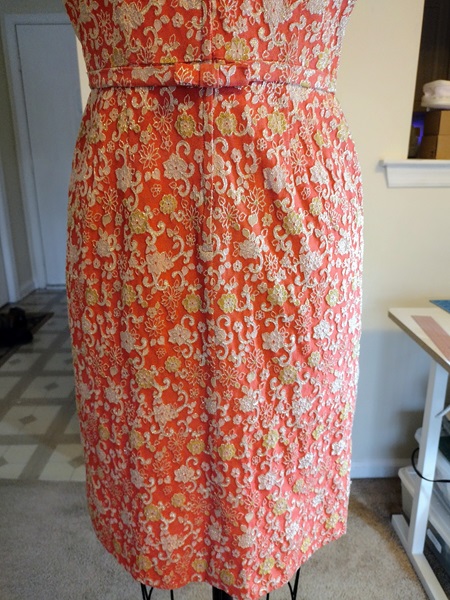
The dress is shown here on my 2019 Wolf Misses Size 8 dress form. This dress may have been custom made. The waist is situated an inch above the dress form waistline. The bust apex is also slightly higher than the apex on the form.

I want to share the inside details with you because they offer a wealth of information about how dressmakers and home sewistas constructed their clothing during the late 1950s-early 1960s.

Bodice Front: Bustline Darts and Apex Point

There are 2 darts shaping the bodice front. The darts meet very closely at an apex point slightly above where the apex point is on the dress form. On the form the length from neck to apex point is 10 inches. On the dress the apex is about 1/2-5/8 inch above that. I can only think that the dress was designed based on the bullet bras or balconette bras of the time period. These were highly boned and made to uplift the bust very high, so that it would be visible against a low cut neckline. The neckline on this dress is not so low, so I think the point created by the two darts is intended to draw the eye further upward. It creates interest at the bust and lessens the ability of the eye to see that the wearer is short waisted.

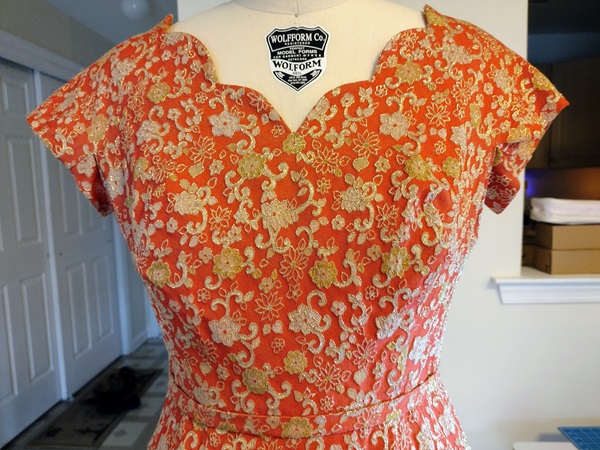
As you can see in this closeup, the two darts converge at the apex point of the bust. There is a horizontal dart beginning at the front side seam. The vertical dart originates at the waistline, and goes up to the apex. From the apex it angles upwards. I think this bodice might have been adjusted for a customized fit. The angled portion above the apex could have been created during a fitting. The only other explanation I have for this unusual vertical dart is that another dart may have existed at the neckline. It was closed and transferred to the vertical dart. The neckline might have required contouring so that it fit better. Both on the dress form and myself the effect of the vertical, angled dart does not look flattering up close. Not even my underwire push-up bra makes the bodice look good! That is how high up the apex is!

Sleeve: Short Mounted Sleeve with Gusset

Short mounted sleeves with a gusset were used for the dress. The point of the gusset begins a little above the waistline. The point and corners of the gusset are very neatly sewn. You can get a better idea of how neat the sewing is by looking at the lining.

This type of sleeve gives a very close fit under the arm. It may have been chosen because the upper part of the sleeve is cut in one with the bodice at front and back. In wearing this dress, I loved the look but not the restriction on my movement. If I raised my arms very high or very often, the entire dress moved up with them. There is not enough room to move very freely or with a great scope of movement.

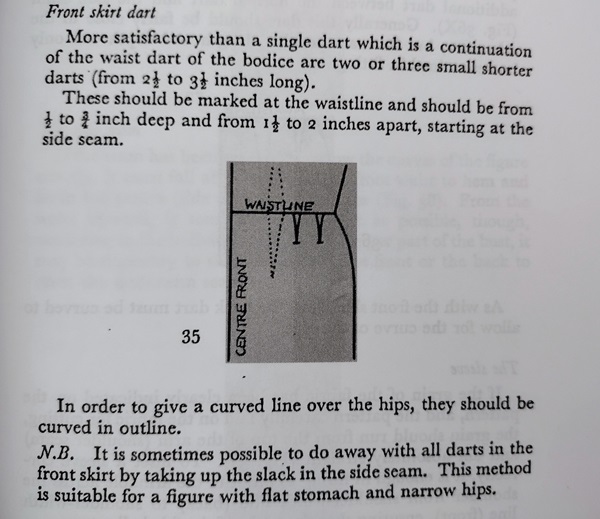
The darts of front and back skirt are not as long as darts on modern skirts. They are also positioned more to the side seams than close or on the princess lines. The front darts are about 2 1/2″ each, the back darts 4 1/2″ each. The effect is very rounded. Again, this indicates to me that the dress was custom fitted.

For flat patternmaking I use the French Fashion Academy Method by John Klamar. In that system the dart placement for the first dart is center of each skirt panel. This means half distance from Center Back and half distance from Center Front.skirt. The second dart is 1 1/2″ from the center of the first dart. Dart lengths are longer, too. The entire effect is more elongated and, I think, more flattering when the basic skirt is made up.

Closure: Center Back Lapped Zipper

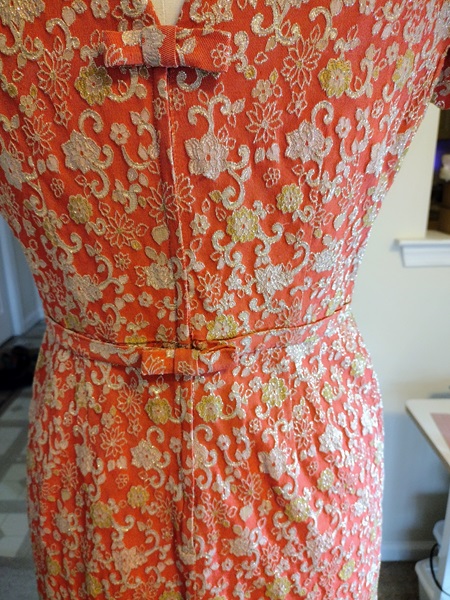
The zipper closure at center back is beautifully finished. The addition of two bows at the waistline and top of the zipper adds yet another unique touch to this dress. The folded band over the waisline is hand sewn into place. It creates the look of a belt. The zipper even has a fabric loop and hook at top.

Finishings: Seam finishes, hems, bra strap holders

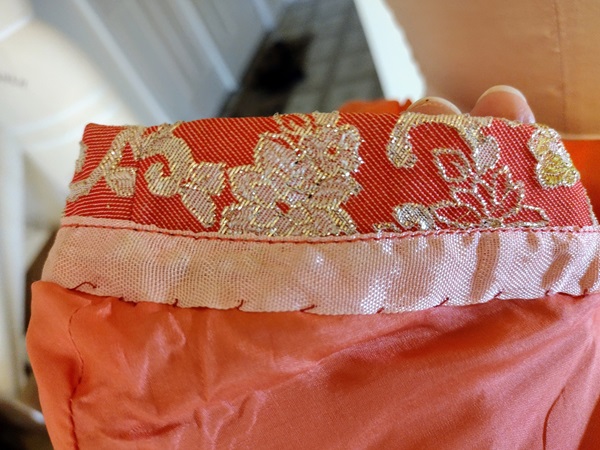
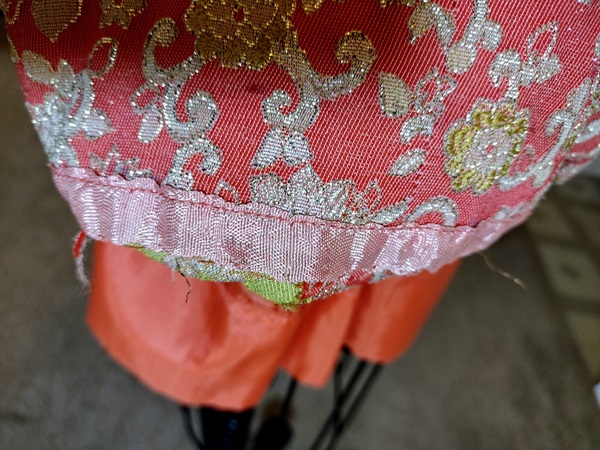
The dress is completely lined. The skirt lining hangs freely away from the bodice and is machine hemmed. The rest of the dress was hemmed by hand at skirt hem, sleeves and where the lining is attached to the neckline facing. Seams were pinked. The bra strap holder was made with the lining fabric.

What is the story with the darts?

I wondered why so many darts were used at the bustline, and why the darts at the hipline created a more rounded effect than I am used to seeing, even in vintage clothing.

I recently bought a reprint of a late 1950s sewing book entitled Sew The French Way by Line Jaque. I do not have any information about the author except that the book was originally written in French. In this book Line Jaque provides fitting instructions that are outside the norms of commercial patterns. The emphasis is on using as many darts as needed to achieve a good fit.

There are illustrations showing the kinds of dart placement found on the skirt of my cocktail dress. The lengths recommended in the book are the same as the dart lenghts for the skirt of my dress. I found this very interesting, too, because Line Jaque states it’s not necessary to have skirt darts align with bodice darts. Everything must be placed for the best fit possible.

Here is another illustration from the book showing the bodice of a dress with long mounted sleeves that have a gusset. Note the skirt darts. I hope this analysis has helped further your understanding of vintage garment sewing construction and design details.

Researching and preparing a 1930s inspired pattern sloper

Introduction

I am preparing two slopers this summer. I already created one that I use for 1940s to early 1950s inspired styles. I used that for the Alice Elizabeth dress and the Linda skirt and blouse. I am now in the progress of creating a more structured sloper that I think will work well with the more detailed and fitted styles of the mid-1950s. As a challenge and contrast, I am also researching slopers from the 1930s. The look of the 1930s was very flowing and not fitted the way 1950s clothing was.

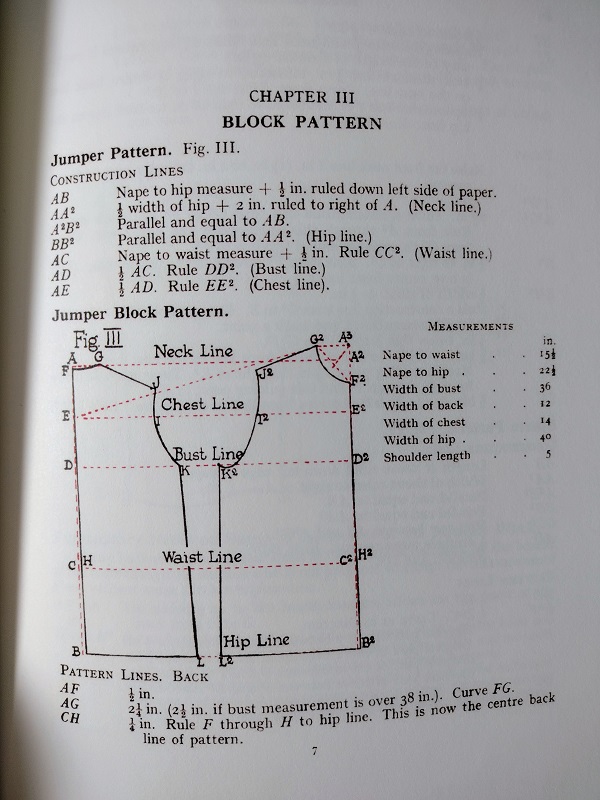
My 1940s sloper is available for copying and sizing here. It is a standard Misses 8. The sloper for the 1950s structured fashions is also in a size 8. However, I think the 1930s look is very flattering to smaller sizes so that sloper will be in a standard Misses 4. I do not intend to use drafting systems from the 1930s. Instead, I will drape a basic unfitted bodice and skirt that approximate the look of a set of pattern blocks I located in a small paperback book called Dress Cutting by Margaret C. Ralston. I will draft a fitted sleeve with vertical dart to complete the sloper.

Here are the screen shots showing the basic block Margaret created from her drafting system. I find it a bit confusing to follow. I am also not sure the fit will be comfortable for the modern women. The sleeve looks very fitted and the sleeve seam is 3/4″ to the front of the bodice side seam. While I love vintage styles I do not think it is essential to go so far to recreate or be inspired by the look. The key for me is inspired interpretation.

Pattern Block from Dress Cutting by Margaret Ralston

The bodice front and back appear to be completely unfitted. In some directions for pattern transformations one dart above the bodice is shown. It might also be a tuck. I assume the bodice block had enough width for this dart-tuck to be created.

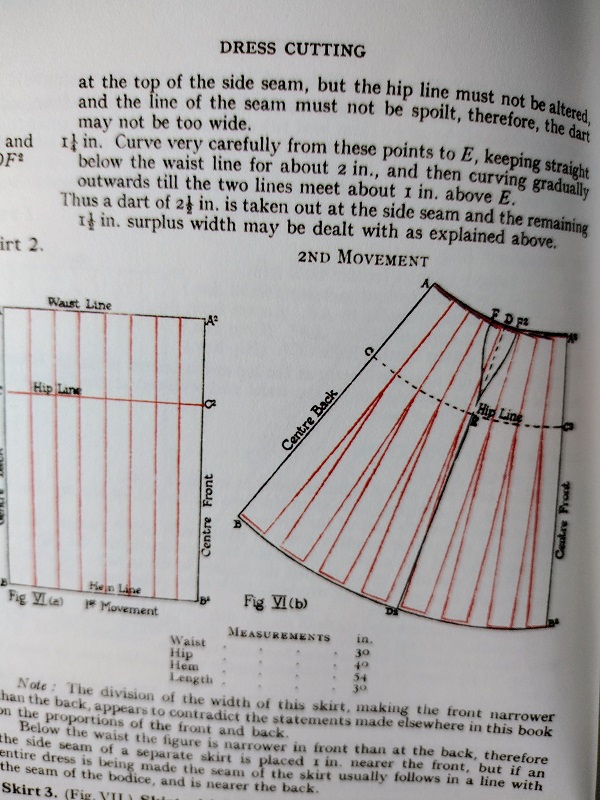
The skirt is a rectangle equal to half the hip circumference. It is then slashed and overlapped and the top edge so that the waistline measurement results. I plan to drape a basic sheath skirt. Once that fits, I will distribute the dart ease across skirt front and back waistline. Then slightly overlap the sections. That will produce a slightly flared, straight skirt which is the starting point for the skirt styles in this book. For the bodice I will drape an unfitted bodice. It will go straight to the hip and have the waistline marked off as well. There will be one vertical dart above the bust in front and a neckline dart or two in the back. I’m basing the dart positions on the fitting dress or toile shown in the previous posting.

I think developing different bodice and skirt slopers gives one a more extensive collection of shapes to work from. As I research the 1930s, I’m understanding that for the 1960s an unfitted dress sloper works well. So would an A-Line skirt sloper. Those are the two key shapes for dresses and skirts of the 1960s.

Here are the snap shots of the pattern blocks from Dress Cutting. The last snap shot is a dress that can be made using he pattern blocks and transformation instructions in the book.
Cover of Dress Cutting by Margaret Ralston.

Bodice front and back.

Basic skirt front and back.

Basic sleeve.

Fitted sleeves.

One of the styles that can be created using the block and instructions in Dress Cutting by Margaret Ralston.

The Dressmaker’s Model and Fitting Pattern in the 1930s, Part 1

Introduction

This posting initiates a series on my adventure into creating a 1930s type sloper in a modern day Misses size 4. I think modern sewistas and patternmakers can get a similar look without the expense of a vintage pattern purchase. Nor will there be the many fitting challenges that come with using a vintage pattern. My goal is to simplify a process of creation, not complicate it or make it overly time consuming. I think if enough research is done, it will be possible to come close to the shapes of a basic sloper for the 1930s.

Draping Technique I will use

I am going to use the 1940s draping system called Precision Draping which was developed by Nellie Weymouth Link. The book has been reprinted and is available at booksellers online new or used. While this is not a 1930s draping technique, it is a vintage one. It is easy to learn and provides a good foundation for exploration into the styles of other decades.

Beginning point

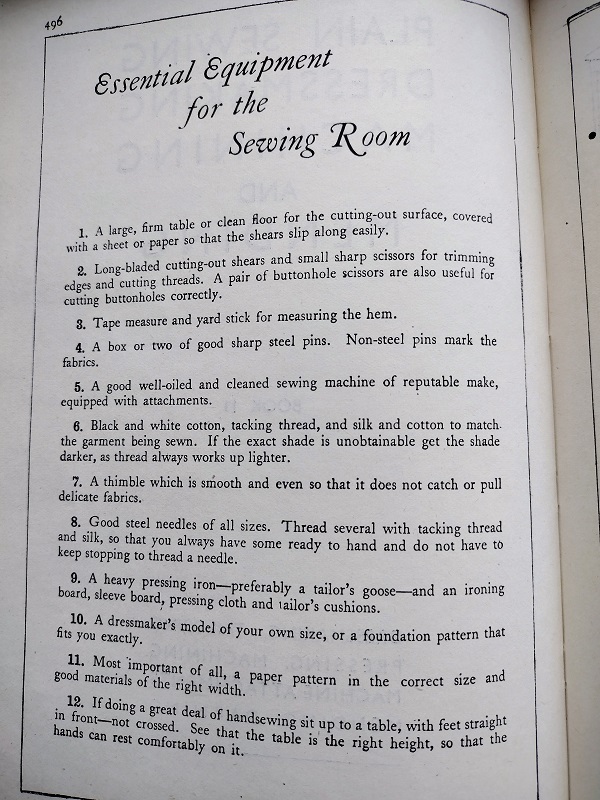
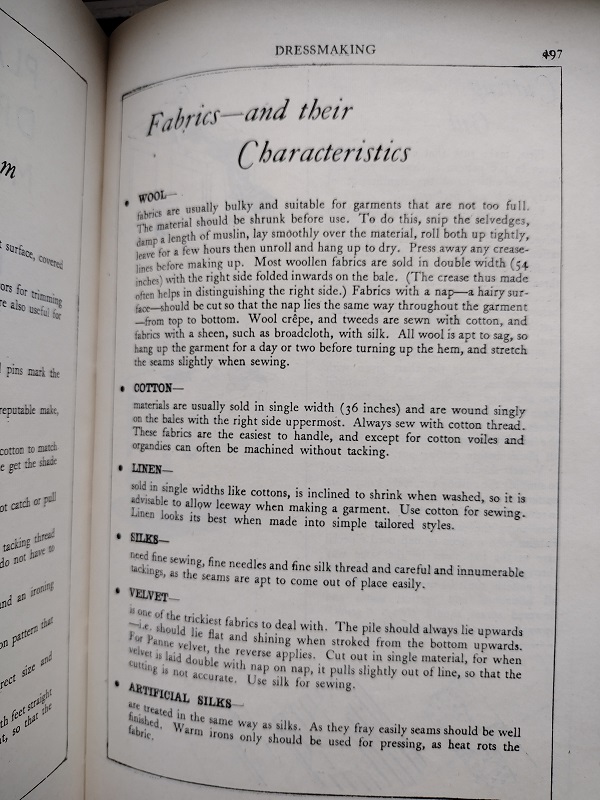
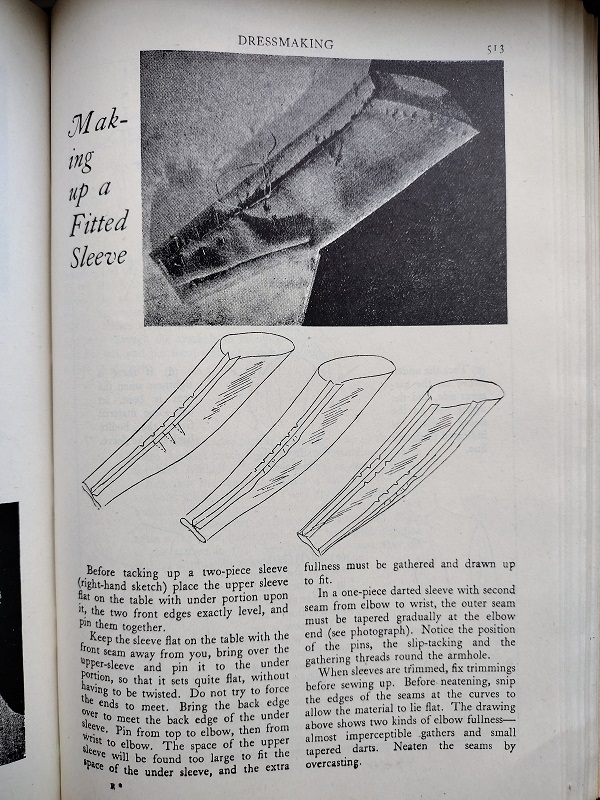
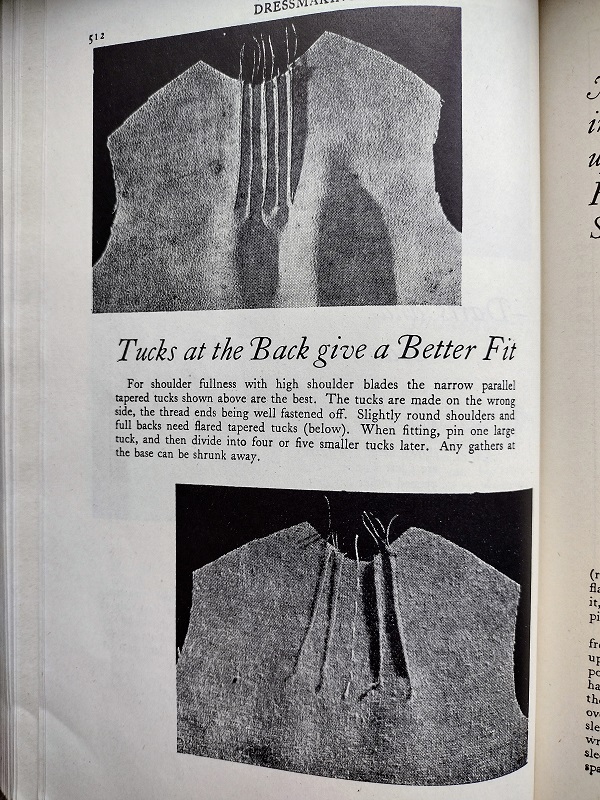
As always, research and reading provide insights and ideas. I begin this journey by making available for you a section of Weldons Encyclopedia of Needlework from my very small collection of vintage sewing books. It was published by The Waverley Book Col, Ltd. of Farringdon Street, London, E.C. 4, but no date of publication exists in the book! I estimate that the edition I have was published in the 1930s. As you can see in the illustrations that follow, the silhouette is close to 1930s fashions with longer hemlines and flowing skirts. The fashion figure is also slender and soft. The boxier fashions with emphasis on the shoulder line of the 1940s is not present in the chapter I post here.

We will continue this exploration into the elements of a 1930 sloper and the key takeaways for creating a sloper that can approximate the look in the next posting. For now I hope you enjoy this look into what a sloper and dress form from the 1930s looked like. What is shown here may or may not be typical but it has elements that appear in another flat pattern drafting system from the 1930s that appear in another book I have and will use in this series.
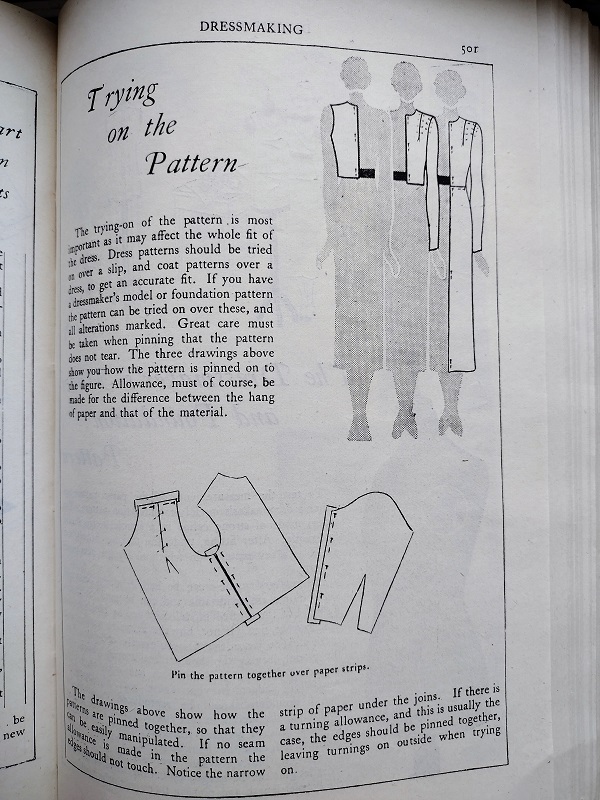
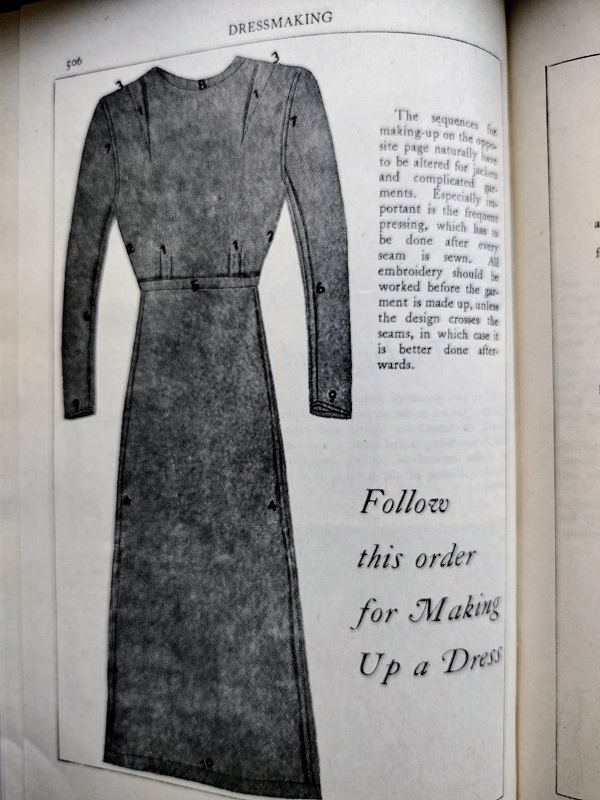
“The Dressmaker’s Model and Fitting Pattern” from Weldon’s Encyclopedia of Needlework

Dressmaking Past & Present: Tailoring a dressmaker’s suit-Tips from Coats & Clark in the 1940s

Introduction

Dressmaking Past & Present is a new feature at Pour Moi. Fashion History provides us with inspirations for our personal style. Understanding and learning about techniques used in the past and the present helps us find a variety of methods for possible use in our own projects.

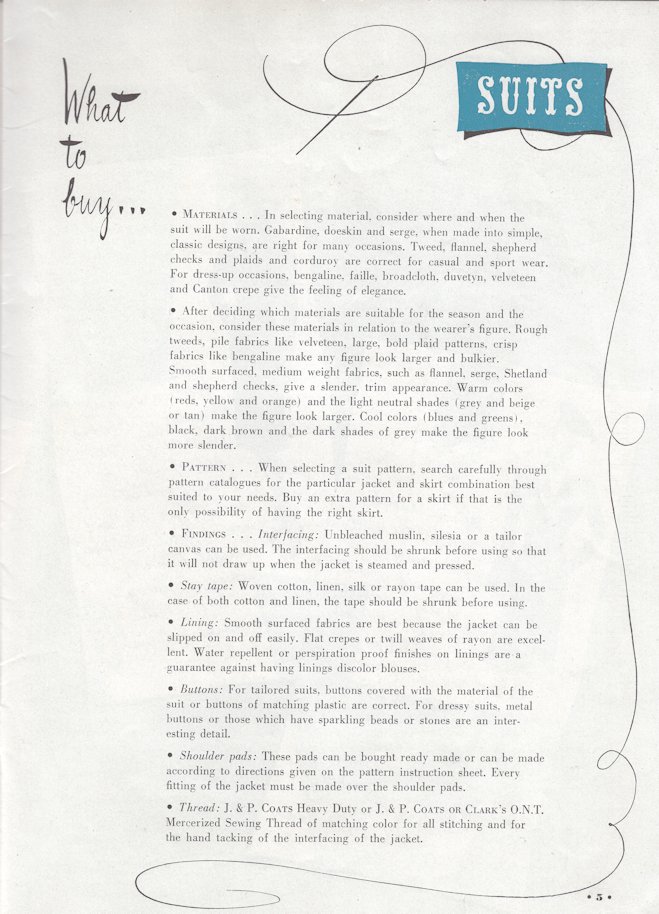
This week, I put up some scans from a small booklet published by Coats & Clark in the 1940s. Dressmaker’s Suits have some tailoring but not to the extent that a fully tailored suit does. Here are some recommendations from the booklet that can help the dressmaker achieve the look in each illustration.

“Tailoring” by Coats & Clark – Tips for sewing a dressmaker’s suit

Dressmaker’s Library:  Drawing the Fashion Figure for Body Positivity

Introduction

The standard croquis favored in fashion illustration is an elongated, slender figure that can be 8, 10 or 12 heads high.  However, this style of croquis is not a modern model of beauty.  It has come and gone with variations throughout the 20th century and into the current time.

Fashion designer Erte favored an elongated figure upon which to draw his extravagant designs worn by high society women and actresses on stage during the late 1910s.  The boyish, angular fashion figure of the 1920s gave way to the willowy, softly curving fashion croquis of the 1930s.  Come the 1940s and 1950s the feminine form filled out and there were some artists writing and illustrating their own books showing students, aspiring illustrators and hobbyists how to draw male and female figures more reflective of the everyday body shapes .

In this posting I share screen shots of three fashion illustration books that I hope put the subject of body positivity and fashion illustration into a historical perspective.

My purpose is to set forth a balanced perspective not only in books that provide croquis to trace over.  I also want to make more widely known books that show you how to draw a body positive croquis in a step-by-step approach.  All croquis are based upon preliminary drawings consisting of ovals, rectangles, cylinders, circles and wedge shapes.  With practice you can gain even a rudimentary ability and in time you will be able to do quick sketches.  The key is to practice and let your hand movements flow without fear or worry. Enjoy the process and discover what is waiting to be expressed.

It is good to know how to draw croquis of different sizes and styles.  This diversifies your skillset and helps connect you as a dressmaker to a broader sense of proportion based on different sizes.

The style of croquis you use should be the one that pleases you and best expresses the idea you are working on.

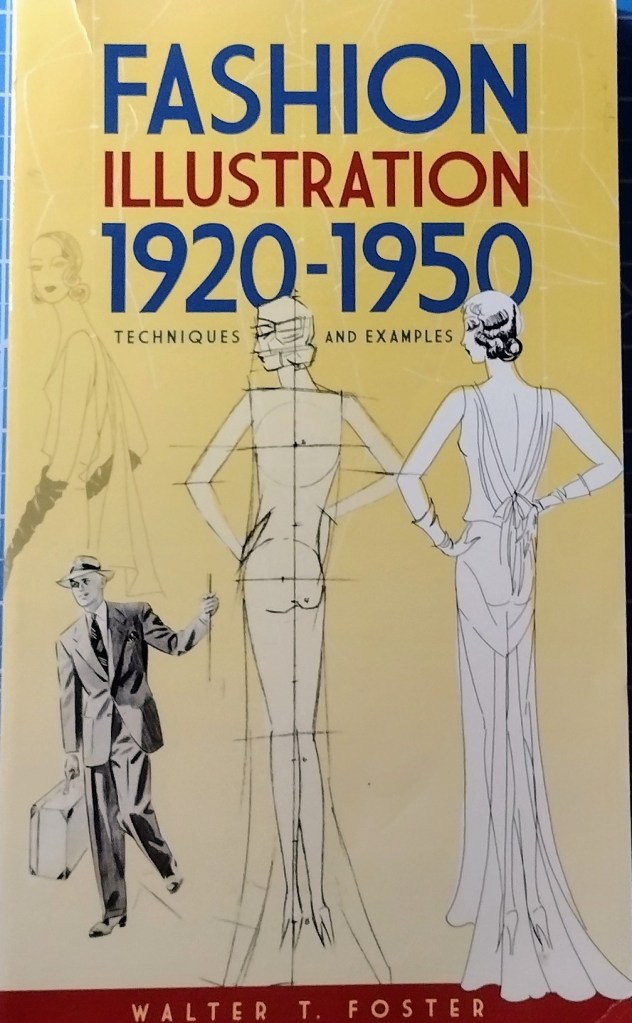
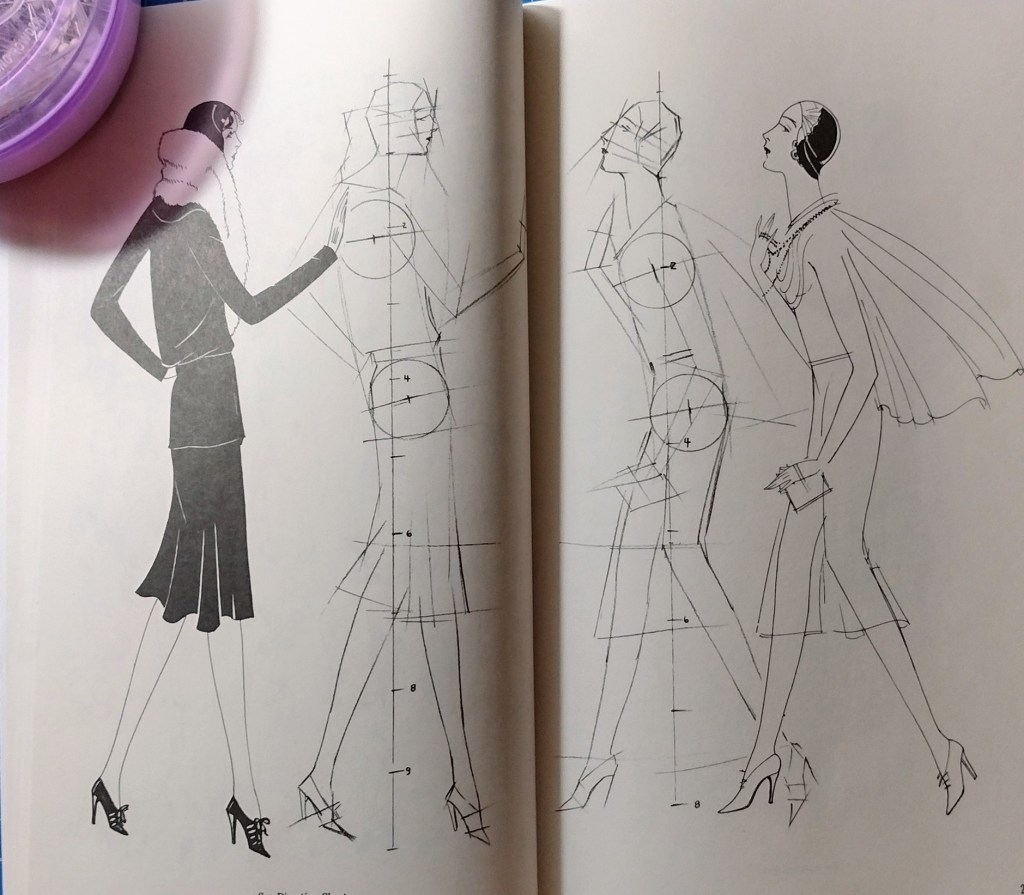
Fashion Illustration 1920-1950
Techniques and Examples
by Walter T. Foster

Foster’s book offers detailed diagrams for figures and clothing of the period from 1920s to 1950s.  This is one of my favorite books for fashion illustration because the figure changes with each decade.  Male and female figures are given and detailed.

Drawing the Head and Figure
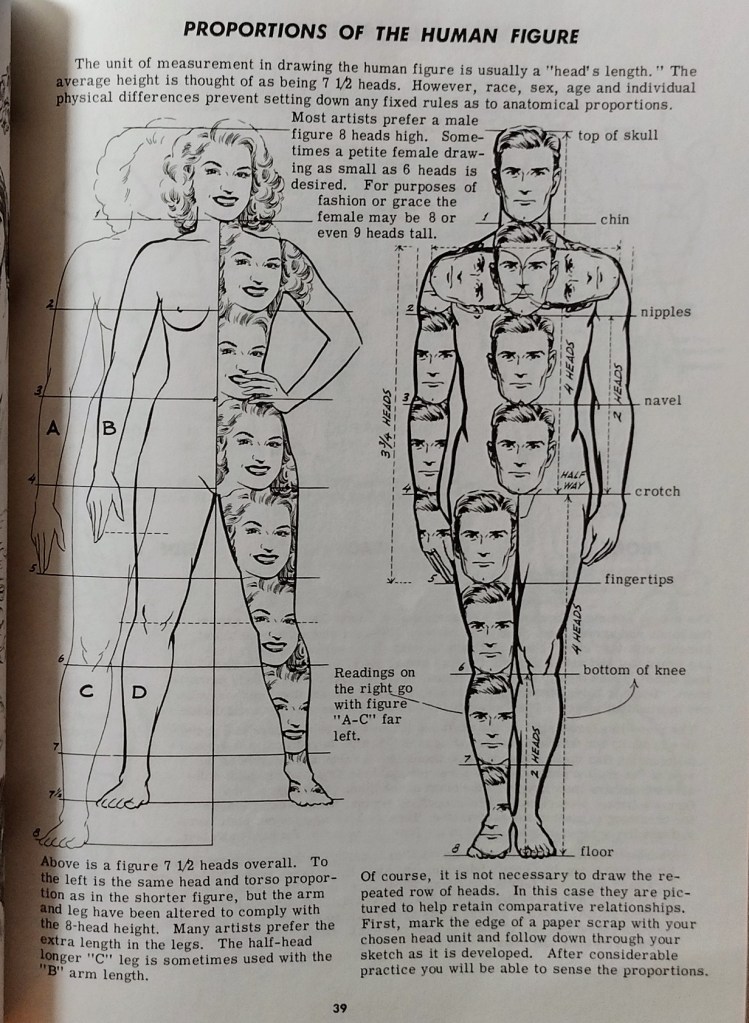
by Jack Hamm

This book was published in 1963.  The croquis and technique used will help you draw figures in tune with the current call to create more realistic renderings of female body shapes.  The technique used in the book will provide looks that work well with retro styles of the 1940s and 1950s.  Examples are also give for drawing the male figure.

Gertie’s New Fashion Sketchbook
by Gretchen Hirsch

The premise of Gertie’s book is a good one.  Gertie’s body positive croquis are intended to represent the a more realistic body upon which clothes can be sketched. The croquis are smaller than most standard sized croquis.  The upper and lower torsos are each two heads high with the length of each head being about 3/8 to 1/2 inch high. Each page has two to three croquis in different poses (front, back and side views).

The drawback is how faint the croquis are on each page. This is not a book of figures to trace over. Rather these are figures to draw on.  Each page is perforated and meant to be torn out and drawn over.  Because the figures are so very lightly printed I’d recommend using the pages over a light box.  Otherwise a very bright desk lamp is needed to ensure you draw the lines as best as possible.

Gertie’s croquis remind me of the ones Jack Hamm drew, only his are bolder and easier to render if photocopies are made and then traced over.

Marfy “Evergreen” Edition

The Marfy pattern books are published by Marfy Studio Stilistico in Ferrara, Italy. Each edition comes with a free, multi-sized pattern. The illustrations are detailed enough so that dressmakers and patternmakers can get ideas for their own projects.

Along with the exquisite illustrations, there are fabric recommendations. The color combinations are sometimes striking, other times subdued. There is something for every style preference. The illustrations include jewelry, shoes, hats, handbags that complete all the must know details to create your own version of the look.

I recently bought the “Evergreen” collection catalogue. It includes Marfy pattern illustrations from the past and the present. There is a wide variety of looks from evening wear to casual wear. Many outfits consist of skirts, slacks, blouses and a various styles of coats and jackets. The lines are simple which make for a look that will last beyond current trends.