Celebrating a New Chapter and a Free Gift for You!

Introduction

I am so happy to welcome you back to my corner of the internet. For the past year, you might have noticed a shift here on PorMoi.com. I focused on styling modern clothes instead of sharing my usual vintage designs. This was a very intentional choice.

I needed to take an unannounced break to gain some perspective. My work was getting a bit too close to the actual past. I felt pushed to make very elaborate 1930s sleeves and collars. At other times, I got too close to the “little girl” look of the 1940s with rick rack and short puffy sleeves on grown women.

I used this break to study what modern women wear today. I looked closely at modern colors, makeup, hairstyles, and accessories. This time away gave me exactly what I was looking for. I now have a much clearer view of when vintage style is beautifully inspired, and when it crosses over into a costume or camp.

I realized that I love a hint of vintage style for the modern woman. Moving forward, my patterns will have more “style ease.” They will always offer you freedom of movement and a flattering fit.


Introducing the Alice Elizabeth Dress

To celebrate this exciting new chapter, I have released a brand new pattern booklet! It features my Alice Elizabeth dress, and it is my gift to you.

I love vintage details, but I also love modern comfort. Because of that, this pattern features front buttons on the bodice. The skirt closes with snaps. This keeps the design lines look clean. It also makes the dress very easy to put on and take off! If you want to change these closures, you can absolutely do so.

It creates a beautiful, basic outfit. It looks best if you wear a bra, lightweight panty girdle, and a slip underneath, but those are absolutely not required! I do not design for the tight corsets of the past.

This pattern is highly adaptable and up to your own creativity:

  • Mix and Match: Use the bodice with a different skirt.
  • Change the Length: Adapt the gored skirt into a short or midi-skirt.
  • Easy Digital Sizing: The pattern photos are laid out on a grid with 1-inch markings. You can download them into a graphics editor like Adobe to size them up to a Misses Size 8.
  • Print or Grade: Once sized to a Misses 8, you can print the pieces out or grade them to your exact size. I have included full measurements for my Size 8 and other helpful details.
  • Bonus Guide: The booklet includes a full style and sewing analysis of the 1950s Pat Perkins dress that inspired me.

Download Your Free Copy Now

This booklet is uploaded to Wikimedia Commons for everyone to enjoy. You are free to use, copy, and share this work as much as you like!

  • If you share it as-is: Please do not alter the original files.
  • If you modify the pattern: You must list my original pattern as the source, but please add your own name as the person who changed it.

👉 Click Here to Download the Alice Elizabeth Pattern Booklet on Wikimedia Commons

Thank you for your warmth, courtesy, and support during my year of rest. I cannot wait to see what you create with this dress!


A Note on Collaboration and Transparency

This blog posting is a collaboration between myself and Gemini, accessed through Google Search. The idea and the words are my own. Gemini acts as an editor at a publishing house does for an author helping to refine and polish the idea and words used. I thank Google for making this valuable resource available to all. It is helping me to be more and do more personally and professionally.
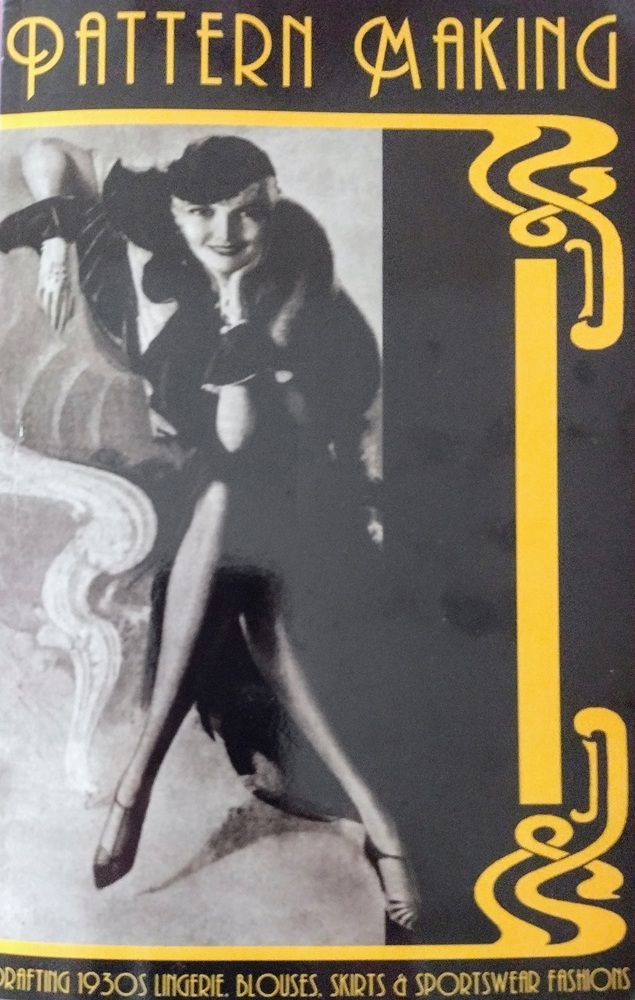
Dressmaker’s Library: Gertrude Mason’s Pattern-making Book

I bought this book through Amazon under the title “Pattern Making: Drafting 1930s Lingerie, Blouses, Skirts & Sportswear Fashions” by Gertrude Mason. The book was originally titled “Gertrude Mason’s Pattern-Making Book” and published in the U.K. in the 1930s. Ms. Mason was, according to the title page in the reprint I purchased, “a lecturer demonstrator in needlework, dressmaking and tailoring under the Board of Education, The Birmingham Education Committee and the Kent Education Committee.”

This book may have been part of demonstration materials or course materials for Ms. Mason’s work. In a demonstration or class, there would be hands-on exposure to fitting challenges or times when the resulting pattern did not conform to the examples given in the book. Explanations would be provided. That is why I think this book was intended for such use. It is not the kind of book that makes fitting and altering the results easy for the beginner. This book also lacks a personal touch that would guide the patternmaker along the way. There is little introduction or explanation at the start of each chapter. Instead the reader goes right into instructions for drafting each pattern. The approach is step by step, along with clear illustrations of the resulting pattern. However, at no time are any comments or notes given to explain what should be done if the resulting pattern does not turn out as illustrated.

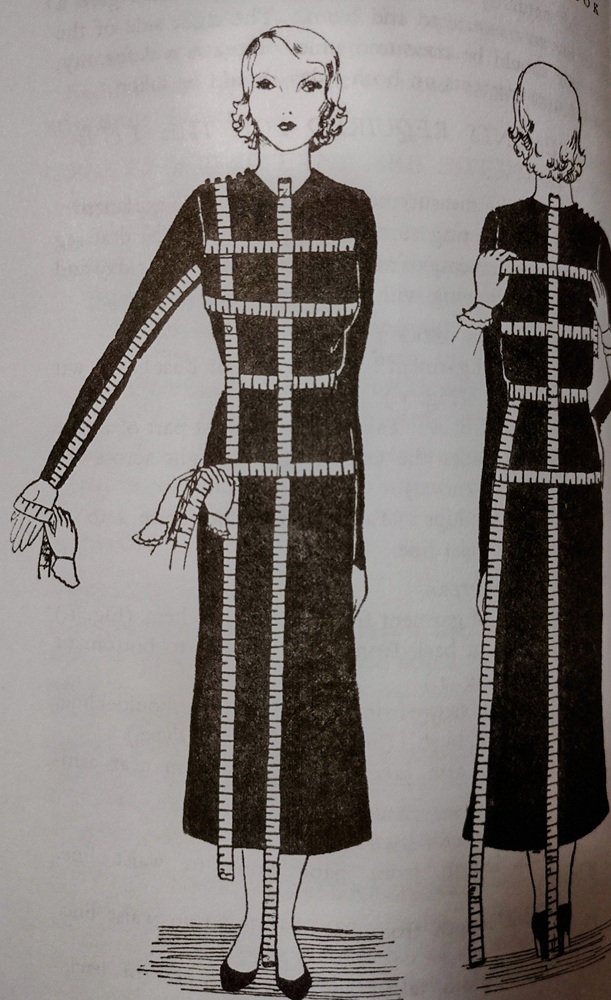
My review is based on my personal experience using the drafting system and pattern transformations in this book. I followed the chapter on taking measurements using my Wolff professional dress form size 8. The basic patterns for what is called The Magyar and the simpler wraps turned out acceptable, but not outstanding. The results were very loose and could easily be made using a modern day sloper and transforming for a mounted (a/k/a grown-on) sleeve. These early patterns are all unfitted, boxy and without darts. Tucks, pinch pleats, and shirring could be added as shown in the illustrations, but no written instructions are provided.

I then tried drafting the basic skirt pattern using the measurements from my Misses Size 8 dressform. Following the instructions I ended up with a very large back dart on the skirt. I divided the width into three separate darts. Still the skirt did not fit well across the front. The front ended up not being dartless but needing one dart on each side of center front. The resulting skirt was wide at the bottom but did not have the flow and movement of a modern A-line or flared skirt.

There must be adjustments that could be made but overall I did not find the effort worthwhile. I used up a lot of pattern paper and muslin to test the results of this patternmaking system. I could have adapted my modern slopers. Each chapter has a set of measurements used as an example for drafting each pattern. The calculations for each step are also provided. The basic body measurements used in the book are close to a Standard U.S. Misses Size 8. I may revisit this book and use those measurements to draft the patterns. I could then alter the toile to fit my modern Wolff size 8 dress form. From that I could make a sloper. That is one route others can take if they are interested in standard sizes and slopers.

This book does have value for the historical information it provides. Also the illustrations of the transformations can serve as a guide to drafting or adapting any modern patternmaking system to get similar results. In the end, I think it is more important to achieve perfect fit with a vintage look than having to use a vintage pattern drafting system that results in poorly fitting clothes or results that can be easily reproduced with a modern drafting system with perfect fitting.