
Introduction
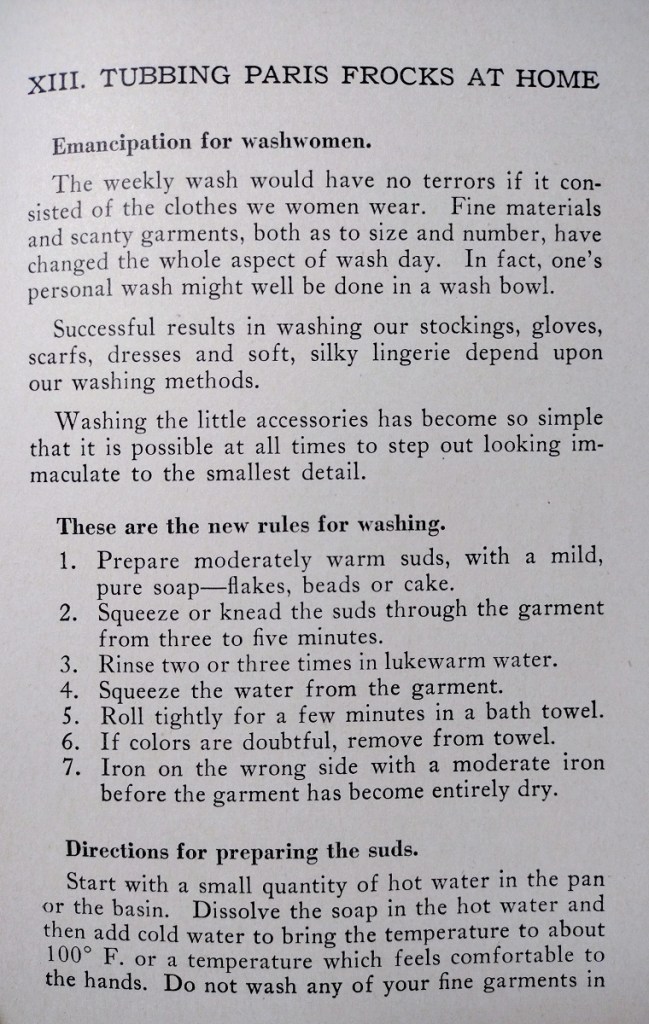
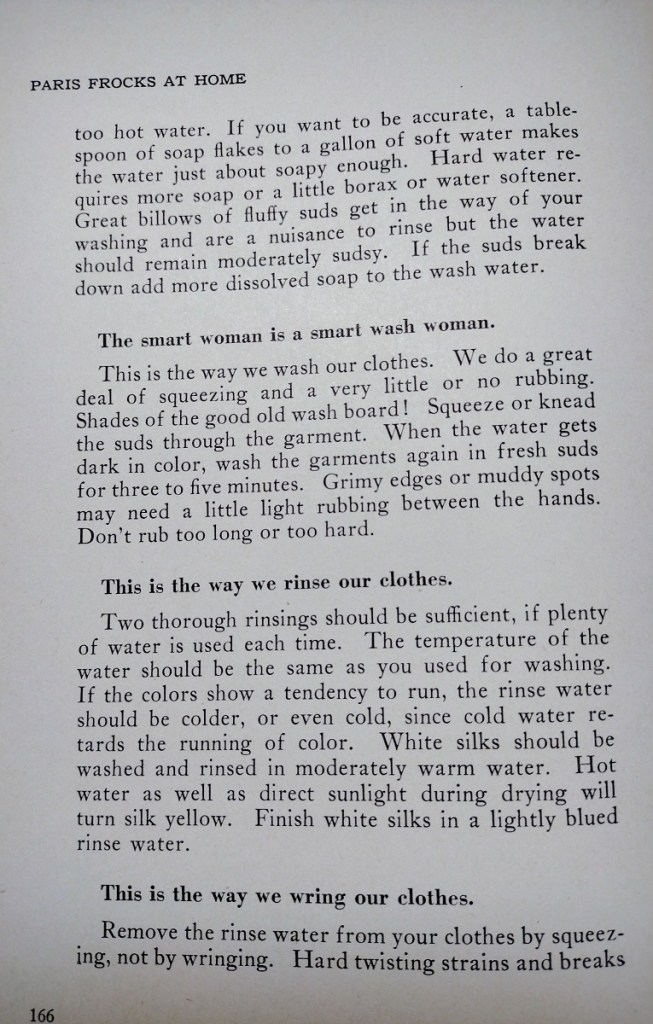
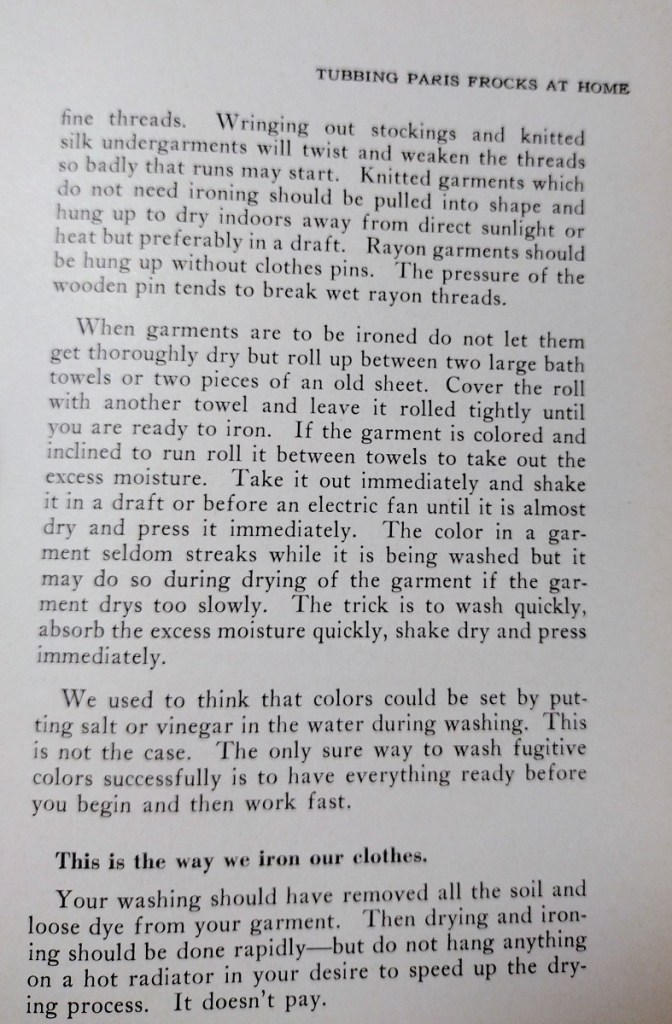
In my previous posting, CLOTHING CARE FOR WASHABLE HANDMADE AND VINTAGE CLOTHING, PART 2, I presented screen shots from the 1930 book Paris Frocks at Home. The instructions in this chapter of the book present useful pointers for hand washing the lightweight, delicate garments coming into vogue as the 1930s started. It was no longer necessary to use a scrub board, harsh soaps and very hot water. The new way to wash garments made from lightweight fabrics was by ‘tubbing’ them. This meant washing by hand using a mild soap and warm water. The clothes were gently moved through the water to let the suds work through the garment. Then the garments soaked for a few minutes before rinsing. I have adapted some of these techniques to my own manner of handwashing delicate lingerie, vintage lingerie, handmade clothing and delicate clothing. They have worked very well for me. Perhaps there are some aspects of the washing routine in the previous posting and this one that will prove useful to you.
Examples of what I handwash


Examples of lingerie and garments I hand wash.
In these photos are examples of hand washables. From left to right: a vintage 1960s cotton half slip; a modern pull over with handbeading and sequins at the neckline; an underwire, uplift bra; panty girdle; pantyhose.
How to protect delicate clothing and lingerie

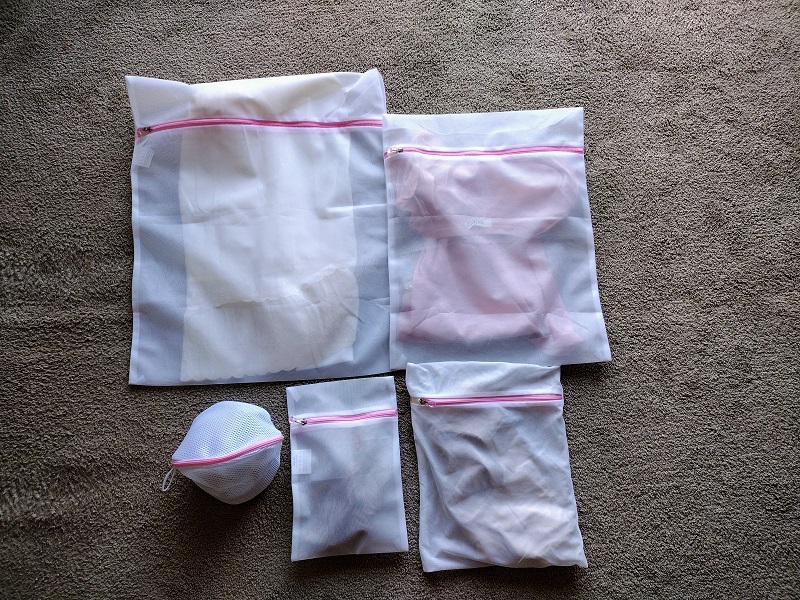
Mesh laundry bags protect delicate clothes during the wash cycle in a washing machine. The clothing can remain in the mesh bag during the drying cycle, too. I use mesh laundry bags for hand washing, too. They protect my pantyhose and stockings from snagging. They protect the embroidery on a panty girdle from snagging or fraying due to a hook on a bra in the laundry tub. Beading on a garment is also protected from pulling caused by another garment in the wash tub.
In the photo on the right are the garments shown in the previous section. The pantyhose and stockings go in the smallest bag. Two white slips are in the largest bag. The pink top with beaded neckline is in the medium sized mesh bag.
What you need to hand wash your vintage and delicate clothing and lingerie
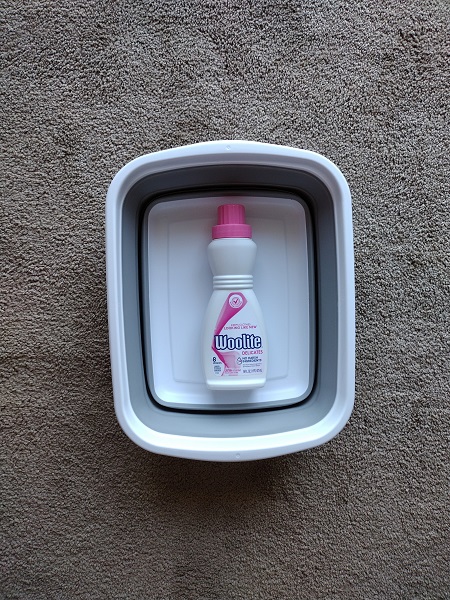
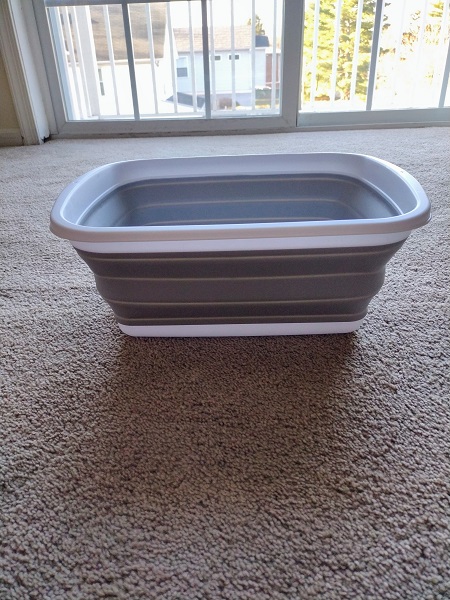
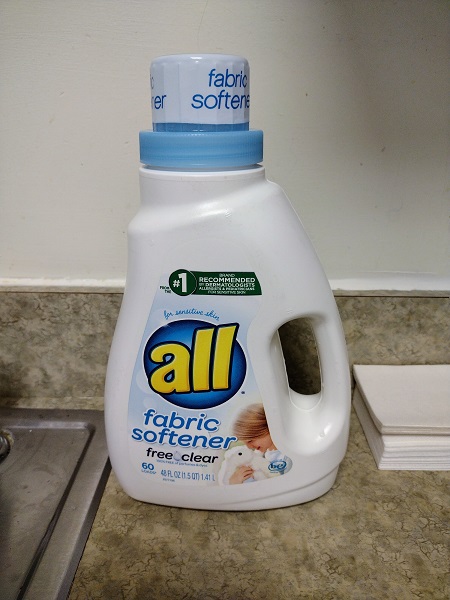

First, a very gentle and effective laundry soap is necessary. Shop for one that works with cold water. A fabric softener is optional. I use a brand made for sensitive skin. It is very mild and leaves the clothing soft and smooth. Use of a softener also makes the clothes and lingerie easier to iron.
I have a collapsible wash tub. It saves space when not in use. For drying I chose a bamboo clothes dryer. Plastic or steel is also good. The important thing is to let the rack dry out before folding and storing. It pays to clean it off at least once a month with soap and water. This will prevent the growth of black mildew which can rub off and stain what you hang on the rack.
Hand washing and drying
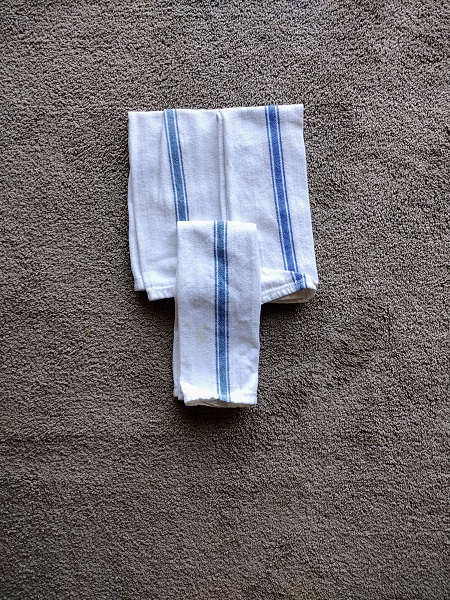


Make sure to have white, lint free bath towels available. White cotton kitchen towels that are clean and unstained can also be used. I have some cotton towels that I reserve only for use when hand washing.
I wash colored clothes and lingerie in one soaking. Whites are washed separately. They are soaked in the soapy water for 10 minutes. All items remain in their mesh laundry bags. They are rinsed and then soaked in fabric softener for 5 minutes. The water is drained off and the mesh laundry bags remain in the sink for a few minutes.
Each mesh bag is placed on a white, cotton dish towel and rolled up. The excess water is squeezed out. The laundered clothing and lingerie is then hung on the drying rack. I place a towel underneath the rack. It is rare that a lot of water drips off since the excess was squeezed out before. As suggested in Paris Frocks at Home, I use an electric fan placed in front of the drying rack to dry the clothes and lingerie off. I usually leave the fan on high for 20-30 minutes.
After this, I might place the rack in the living room near the door to the balcony. On a sunny day everything dries nicely with the benefit of the sunshine. Once dry, the cotton slip is ready for ironing. In the next posting I’ll offer some tips from ironing clothes based on vintage sewing books and my own experiences.



 Pour Moi
You must be logged in to post a comment.