Easy elegance for styling in 2026

Katie’s personal style sense for 2026 is understated elegance. It includes a feeling for vintage while keeping her style sense modern.

Introduction

Happy New Year to all! I wish everyone success in their fashion related endeavors. I am still in the progress of refining my 1930s slopers and approach to inspirations routed in vintage aesthetics. I will be posting about the changes in my design approach once I have my new toiles and patterns ready for release to the commons. In this posting, I am sharing Katie’s New Year’s look.

Personal style approach for 2026

The key words for 2026 are personal style. Style is your own unique sensibility. You bring this to every outfit you coordinate and every wardrobe you curate. As we move into a New Year, I will be introducing the new elements that have enriched my personal approach to patternmaking, styling and the creation of vintage inspired looks for my patterns.

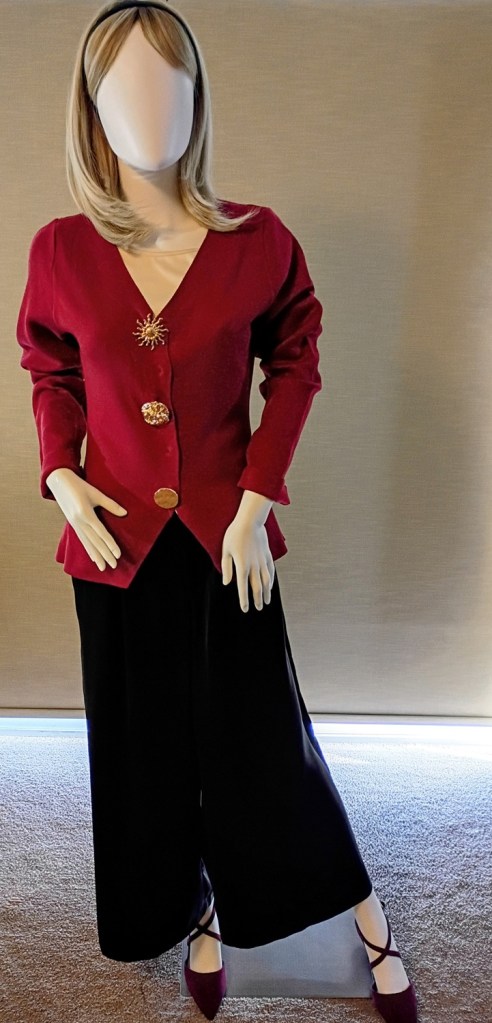
Katie’s New Year’s style is minimal. It is a look created for a professional business woman entertaining guests at home or attending a formal function for work. It is rich, yet understated. It is elegant, yet comfortable. Let’s breakdown the individual pieces in this outfit.

Elements of Katie’s New Year’s Look

Blouse: A simple scoop neck pull-over top with short sleeves begins the look. The understated champagne colored hue and silky surface set the tone for the other pieces. The blouse is made of a stretchy poly-silk fabric. It is unfitted and drapes beautifully. Katie wears a white camisole underneath for modesty and to maintain a professional appearance.

Sweater: The claret colored sweater is semi-fitted through tapering at the side seams. The slight flare at the hipline creates a dramatic flow that harmonizes with the black palazzo pants. The unbroken line creates a flattering silhouette. The sleeves of the sweater are intentionally longer. They can be pushed up or folded at the wrist to create different looks. I went for pushing the sleeves up to create a slightly casual feeling to the outfit. Katie is dressed up and relaxed about it.

The buttons on the sweater are not only a focal point. These large gold toned buttons make a statement about Katie’s values and her message for the New Year. The first button is a sunburst. This symbolizes the dawn of the New Year. The second button is unevenly textured. It looks like waves in the churning ocean. This can be seen as being receptive to intuitive and creative promptings. It signifies looking within for creative expression. The last button resembles a hammered surface. The slight indentations have not damaged the button’s appearance. Instead they lend interest to it. This can be viewed as acknowledging one’s shortcomings as well as one’s talents. Difficulties and shortcomings are always overcome when accepting the challenge. Working through a situation, and asking for help if needed, will bring a resolution. This is how Katie and I interpret the messages these buttons symbolize.

What makes the buttons so interesting is the Rule of Three. In visual marketing odd numbers attract more viewers than even numbers. This rule can be applied to a grouping of three mannequins, three accessories, the use of three different display stands of varying height and so on.

Slacks: The black palazzo pants offer an unexpected element of fluidity and flare to the outfit. They are more comfortable and gentle on the figure. This pair has pleats at the waist and pockets. The slacks rests on the natural waistline. It has belt loops for a 1″ belt. This makes more styling possibilities for future outfits featuring belts or sashes.

Shoes: Burgundy suede shoes with pointy toes and a 2″heel complete this elegant look. I intentionally chose burgundy so that the claret colored sweater retained interest. Burgundy brings the idea to a close and does so elegantly. The outfit is united in colors that work together, but not so coordinated as to be uninteresting.

My source of inspiration

I got the idea for the colors used while reading through a wine list at a holiday party. It was a delightful adventure shopping for these pieces based on the color palette. I never expected that. It proves that remaining open to those inner creative promptings will bring new and heightened sensitivities to color and coordination of outfit elements.

Note: I wrote this entire posting on my own. No AI has been used for refining of revising.
Photo: taken with my LG Android phone

Styling with Intention: Katie’s Executive Look and the 60-30-10 Rule in Motion


🍂Introduction

As we transition into fall, our wardrobes naturally shift toward deeper hues and richer neutrals. The 60-30-10 rule—often used in interior design—offers a helpful framework for styling: 60% dominant color, 30% secondary, and 10% accent. But in legacy curation and intuitive dressing, this rule is best held gently. It’s a guide, not a grid. And when the pieces come together through thoughtful collection rather than fast shopping, the final look sings with harmony and soul.

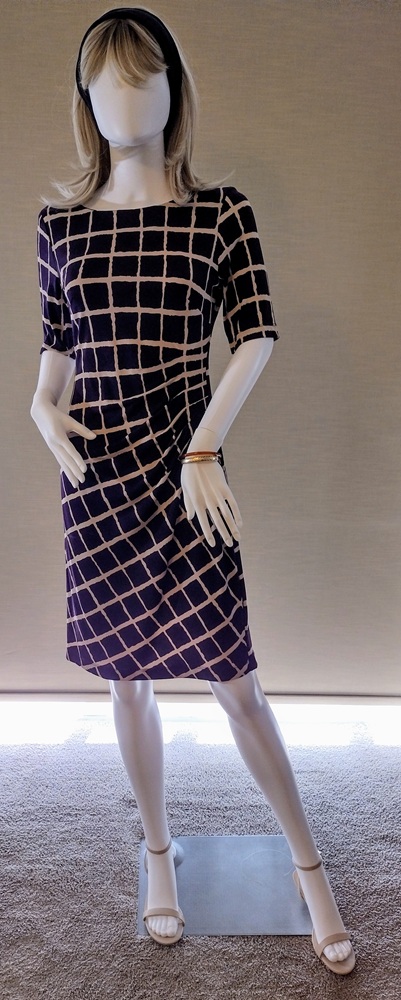
Katie’s outfit, styled for an Executive Office setting, is a masterclass in intentional wardrobe curation. None of the pieces were purchased together, yet they speak fluently in the same visual language—one of quiet sophistication, subtle pattern play, and emotionally resonant accents.

🖤 The Foundation: 60% Black-Navy Hue

Katie’s dress is the anchor of the look—a pull-over poly knit that requires no zippers, buttons, or pressing. It’s effortless yet refined, shaped by dart tucks on the left side seam that release fullness past the bust apex. These tucks send the skirt on the bias, transforming the lattice print from evenly spaced squares above the waist to elegant diamond shapes below. The fabric’s black-with-a-whisper-of-navy tone forms the dominant color, grounding the ensemble in a deep, seasonally appropriate neutral.

🤎 The Complement: 30% Tan Lattice

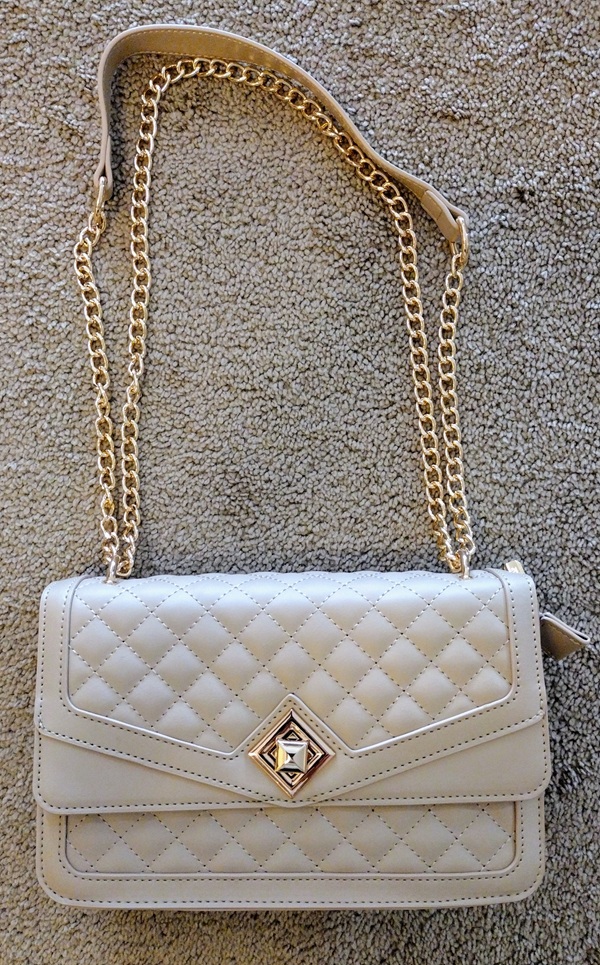
The tan lattice print is the secondary shade, adding warmth and visual interest. It’s not just a pattern—it’s a focal point. The geometric shift created by the bias cut adds movement and intrigue, making the dress feel both tailored and artistic. This tan tone is echoed in Katie’s quilted pocketbook and sandals—two pieces acquired at different times, yet perfectly matched in shade and spirit. The bag’s adjustable gold-tone chain and hardware elevate the look without overwhelming it.

✨ The Accent: 10% Gold and Amber

Accessories are minimal but meaningful. Katie wears two bracelets: a 14K gold bangle from my late mother, and a slim Russian amber bangle gifted by a cherished coworker. These pieces aren’t just adornments—they’re legacy touches, carrying emotional weight and subtle sparkle. They provide the perfect 10% contrast, adding warmth and depth to the darker palette.

🧥 The Layer: A Jacket with Quiet Authority

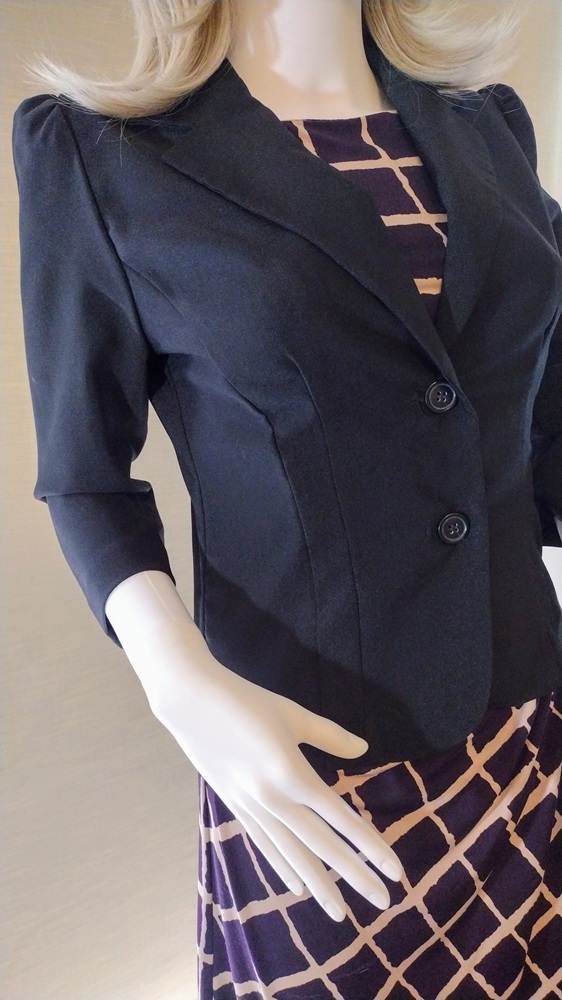
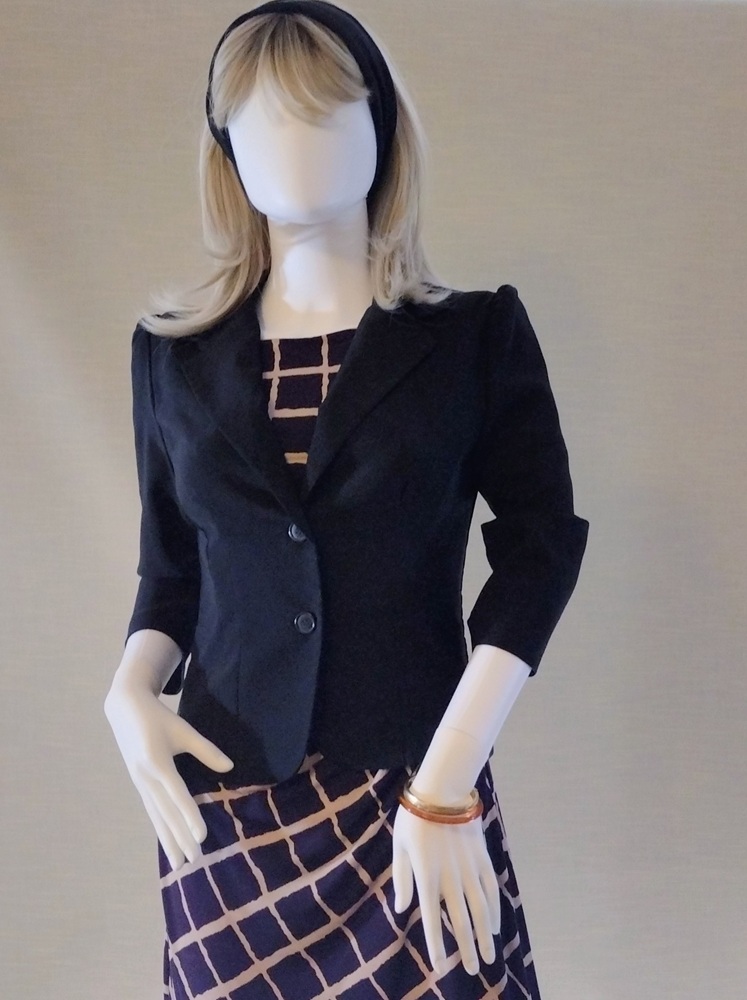
Over the dress, Katie wears a sculpted black jacket with a hint of navy. Though made from a different fabric than the dress, the dye lot differences are softened by the beige lattice print and the coordinating accessories. The jacket’s ¾ sleeves are gently gathered and puffed at the cap, offering structure without stiffness. It’s tailored yet comfortable—ideal for a professional setting where movement and presence matter.

The jacket achieves its flattering fit through thoughtful construction:

  • Princess seams run from the middle of the front armhole to the hemline, which stops at abdomen level.
  • A vertical dart in the side princess panel adds subtle shaping.
  • At the back, a center seam and vertical darts on either side contour the silhouette.
  • The wide lapel collar gives the illusion of shoulder pads, though the jacket is unlined, lightweight, and pad-free—proof that structure can be achieved without bulk.

🎀 The Finishing Touch

Katie completes her look with a simple black hairband—an understated detail that ties the ensemble together. And there she has it: an outfit created by shopping her closet, curated with care, and ready to take her from a day at the office to a casual dinner out.


🌿 Final Thoughts: Flexibility with Finesse

Katie’s look is a testament to the power of wardrobe curation. The 60-30-10 rule provided a starting point, but the final composition was guided by intuition, emotional resonance, and a deep understanding of color relationships. The result? A polished, professional outfit that feels cohesive, expressive, and entirely her own.

Whether you’re dressing for work, curating legacy offerings, or simply seeking harmony in your closet, let the rule guide you—but let your spirit lead.


Disclosure and Credits: This posting was researched and drafted by me. It was rewritten and condensed by Copilot for easier readability. All photos taken by me using the camera in my LG Android phone. Photos edited in the phone and in MS Paint.–EmilyAnn Frances May

Style Sense: Summer Chic in Antique Cream and Pink Roses

Introduction

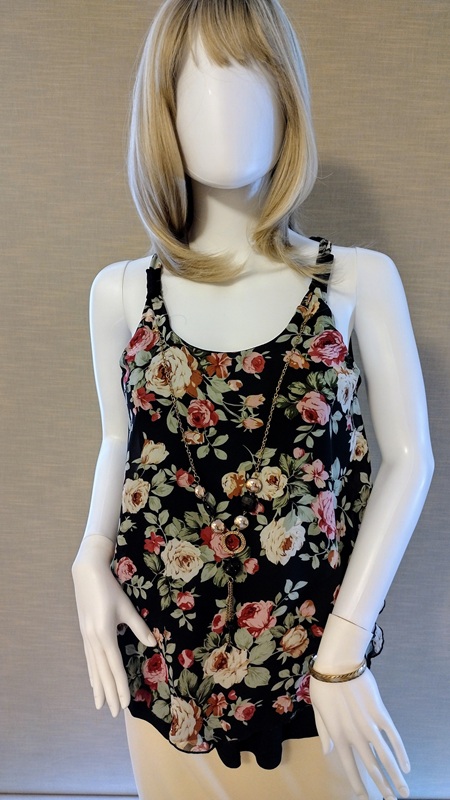
The styling exercise this week builds on the outfit featured in last week’s posting, Summer Chic: Vanilla Creme. The top is made from fabric featuring a pattern of roses against a black background. When the top of an outfit is a darker color than the bottom, consideration should be given about keeping all elements of the outfit in balance. I will share with you the decisions I made to keep the top as the focal point of this outfit.

Summer Chic: Antique Cream and Pink Roses

I wanted to draw the eye to the pretty floral print of the top and keep the focus there. The top has a necklace attached. It adds additional visual interest and focus. To draw the eye to the top it was important to use the tan colored sandals with the vanilla colored skirt. If black sandals were used to accessorize this outfit the eye would then move between the top and the sandals because of the strong difference to the lighter colors in the outfit.

I wanted the contrast between the top and the skirt to be effortless. The print fabric features roses in shades of antique cream and soft pink-red. The antique cream roses harmonize with the color of the skirt. Although this outfit looks like a set, it is not. The top was bought over 10 years ago! Since the top and skirt are basics and the colors classics the outfit works well for summer in any year. This is why I always encourage others to stay true to their style preferences and shop with timeless elegance and quality in mind.

Summary

To achieve balance between a dark colored top and a light colored bottom for an outfit:

–Keep the shoes and bottom garment the same or similar neutral hue.

–Select a color for the top that works in harmony with the netural hue. Make sure the color is not too strong. Otherwise the outfit will lack an element of balance.

–When the top is made of printed fabric find one color in the print that has is close to the neutral shade of the bottom.

I wanted the contrast between the top and the skirt to be effortless. The print fabric features roses in shades of antique cream and soft pink-red. The antique cream roses harmonize with the color of the skirt. Although this outfit looks like a set, it is not. The top was bought over 10 years ago! Since the top and skirt are basics and the colors classics the outfit works well for summer in any year. This is why I always encourage others to stay true to their style preferences and shop with timeless elegance and quality in mind.

Summary

To achieve balance between a dark colored top and a light colored bottom for an outfit:

–Keep the shoes and bottom garment the same or similar neutral hue.

–Select a color for the top that works in harmony with the netural hue. Make sure the color is not too strong. Otherwise the outfit will lack an element of balance.

–When the top is made of printed fabric find one color in the print that has is close to the neutral shade of the bottom.

Combining Minimalism and Vintage to Style a LBD

Introduction

For this styling exercise I wanted to apply the principles of Minumalism. Here are a few key elements of Minamulism in design and styling:

* Clothing is well fitting.
* Neutral shades predominate.
* Classic styling with minimal details.
* High quality fabrics and notions.
* Form follows function. There must be a purpose to every part of the garment. This results in fewer frills and non-essential details.
* Accessories must be carefully chosen and contribute to a refined look.

I started with my favorite Little Black Dress (LBD).

LBD Details

I bought this LBD at a small boutique on Fifth Avenue in Bay Ridge, Brooklyn. A sewista with mid-level skills will be able to analyze the style lines and understand how the fit is achieved. This LBD skims the body but is not form fitting. Fit is achieved through vertical princess seaming from shoulder to hem on each side of center front and center back. The princess seams intersect with the bust dart and vertical dart on the front of the basic sheath dress pattern. They also go through where the shoulder dart and vertical dart on the back basic pattern are.

There are two layers to the butterfly sleeves. Each layer is lined with a lightweight black satin. The dress is also lined with the same material. This helps the dress fit smoothly over the body. My challenge was to find one accessory that adds visual interest and works as a definitive focal point for the outfit. Determing the focal point is a skill developed through practice. My ability in this area is still developing.

The Focal Point for the LBD

I decided there could be two different focal points. Which one I would apply depended on the occassion.
Styling #1

The fluttery butterfly sleeves reminded me of similar sleeves on dresses and blouses of the 1930s. I wanted to add a combination of retro Art Deco and Modern Minimalism in the choice of the accessory to define the focal point.

I selected a wide elastic band belt with a triangular mock Marcasite belt. The sparkling belt buckle creates a striking contrast against the black dress. The width of the belt works well to create a more fitted look. The width of the belt is just right since it keeps the eye focused on the waist area. This is where I wanted the focal point to be.

Styling #2

For a different look, I removed the belt and considered accessories that create a different impact and vocal point. These accessories provide some interest but keep the eye focused on the fit and flow of the LBD. I chose costume jewelry in the form of a mock cubic zirconia ring set. The purse has a mock marcasite closure that also carries a little feeling of Art Deco. It may be used as a clutch. It also comes with silver chains with clasps that connect with loops that swivel up from the inside of the purse. For a little added sophistication, a silvery rhinestone perfume atomizer or lipstick case can add further interest to the purse as a focal point.

Conclusion

It is possible to combine the principles of timelessness and simplicity of Minimalism with one or two elements of vintage fashion. Practice and experimentation will help develop the sensibilities needed.

The Value of Styling and Visual Merchandising for Dressmakers

Have you ever wondered how you can sharpen your style sense and design vision? Developing your style sense is a path of continual improvement. How does a sewist or sewista practice color coordination and accessorizing? I asked myself these questions a few months ago. This is why I bought a mannequin. I named her Katie and she serves as a model and advisor. It is one thing to envision an outfit I will make or coordinate from clothing I purchased. It is another experience to see that outfit on a mannequin.

A mannequin can be another you, your muse or the customer you target for your creations. The mannequin enables you to step back and behold the impact of the outfit. In this sense, you can experience the outfit and the impression it makes. This experience takes place in real time, whenever you walk into the room and see the mannequin. It is more immediate and vivid that reviewing selfies, or photos others have taken of you in the outfit. The mannequin lets you experience the outfit in real time.

I am styling outfits for Katie from the clothing I already have. For this posting I created a casual back-to-the office look using separates. I did not buy any of the pieces at the same time. My preference for certain colors made the coordination of this outfit possible. Choosing a basic black mini-skirt and pumps also made the outfit come together. I would recommend a similar approach if you decide to start styling outfits on a mannequin. Choose one piece in black, white, navy blue, grey, or brown. Then pair it with a piece in a complementary color or print.

Sharing photos of your styled look will help you get feedback.. There is an excitement to discussing a new outfit and consulting with others what will round it out. In the process you will be interacting with others in a way that design team members do. Everyone will see the outfit in a different way. Some will suggest you add an element, and some may critique it. It is important to accept the feedback with grace and use it as a means to grow your style sense and design skills.