
Introduction
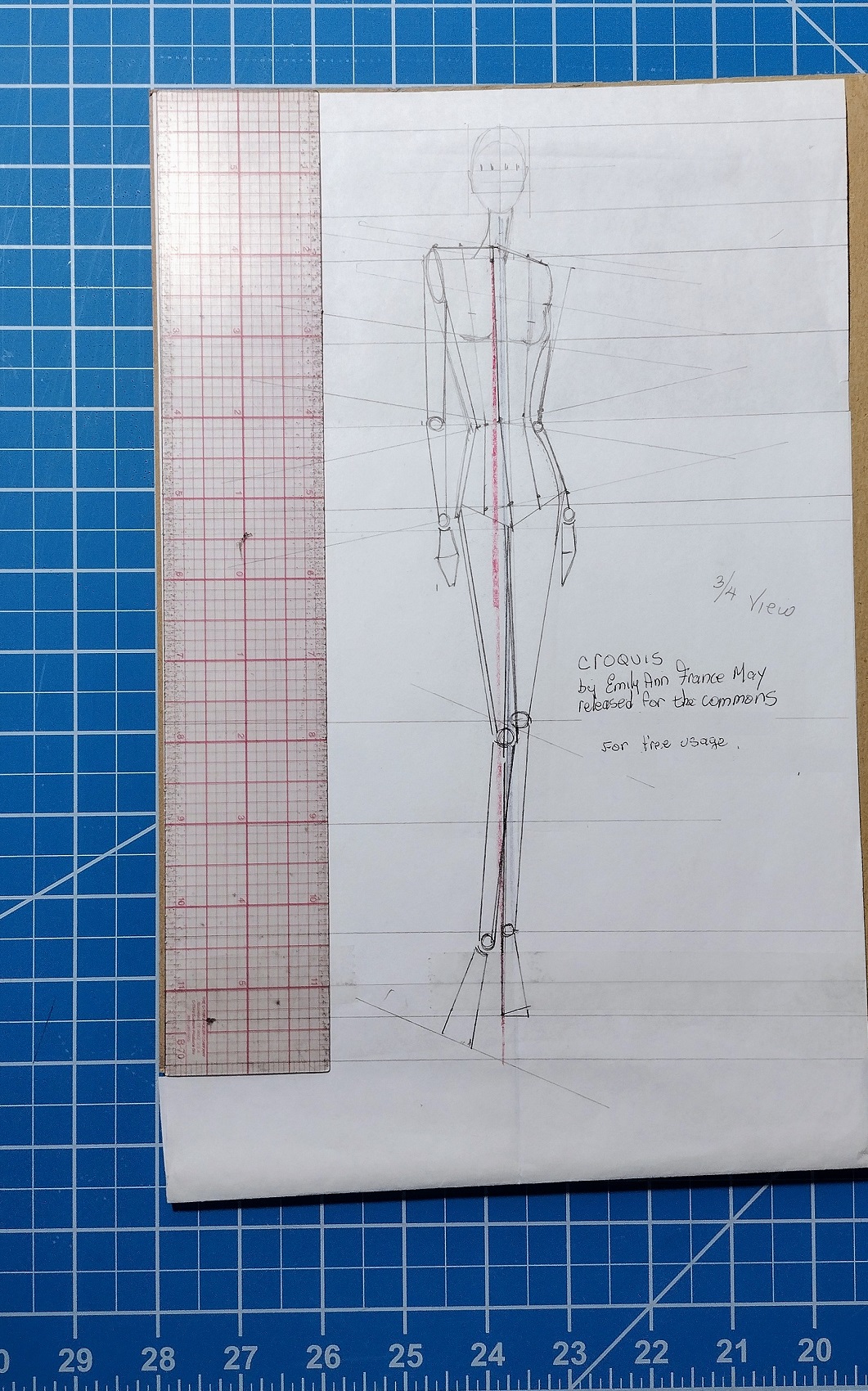
The standard croquis favored in fashion illustration is an elongated, slender figure that can be 8, 10 or 12 heads high. However, this style of croquis is not a modern model of beauty. It has come and gone with variations throughout the 20th century and into the current time.
Fashion designer Erte favored an elongated figure upon which to draw his extravagant designs worn by high society women and actresses on stage during the late 1910s. The boyish, angular fashion figure of the 1920s gave way to the willowy, softly curving fashion croquis of the 1930s. Come the 1940s and 1950s the feminine form filled out and there were some artists writing and illustrating their own books showing students, aspiring illustrators and hobbyists how to draw male and female figures more reflective of the everyday body shapes .
In this posting I share screen shots of three fashion illustration books that I hope put the subject of body positivity and fashion illustration into a historical perspective.
My purpose is to set forth a balanced perspective not only in books that provide croquis to trace over. I also want to make more widely known books that show you how to draw a body positive croquis in a step-by-step approach. All croquis are based upon preliminary drawings consisting of ovals, rectangles, cylinders, circles and wedge shapes. With practice you can gain even a rudimentary ability and in time you will be able to do quick sketches. The key is to practice and let your hand movements flow without fear or worry. Enjoy the process and discover what is waiting to be expressed.
It is good to know how to draw croquis of different sizes and styles. This diversifies your skillset and helps connect you as a dressmaker to a broader sense of proportion based on different sizes.
The style of croquis you use should be the one that pleases you and best expresses the idea you are working on.
Fashion Illustration 1920-1950
Techniques and Examples
by Walter T. Foster
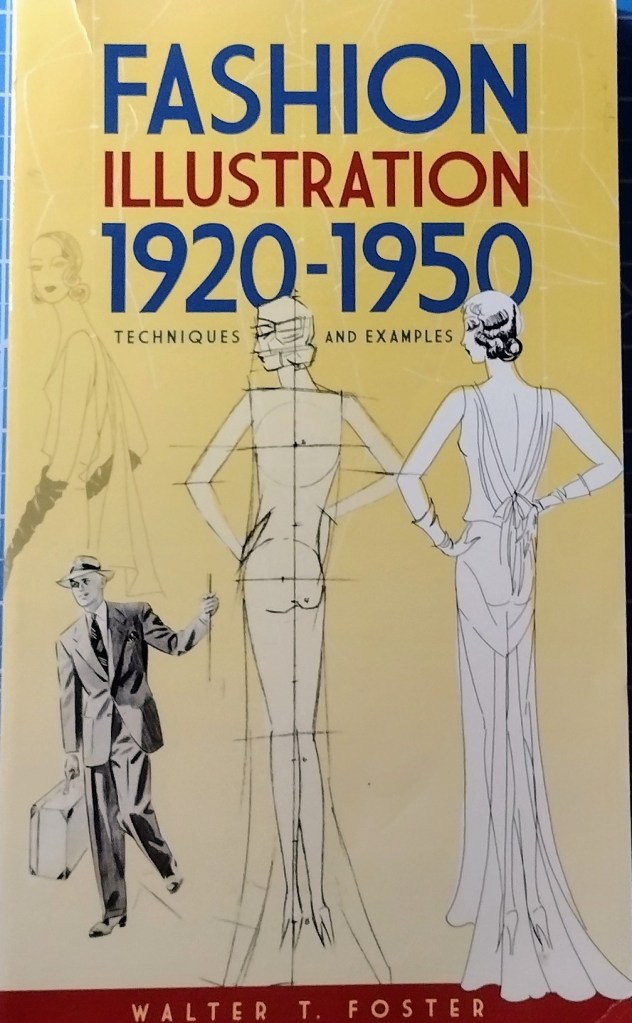
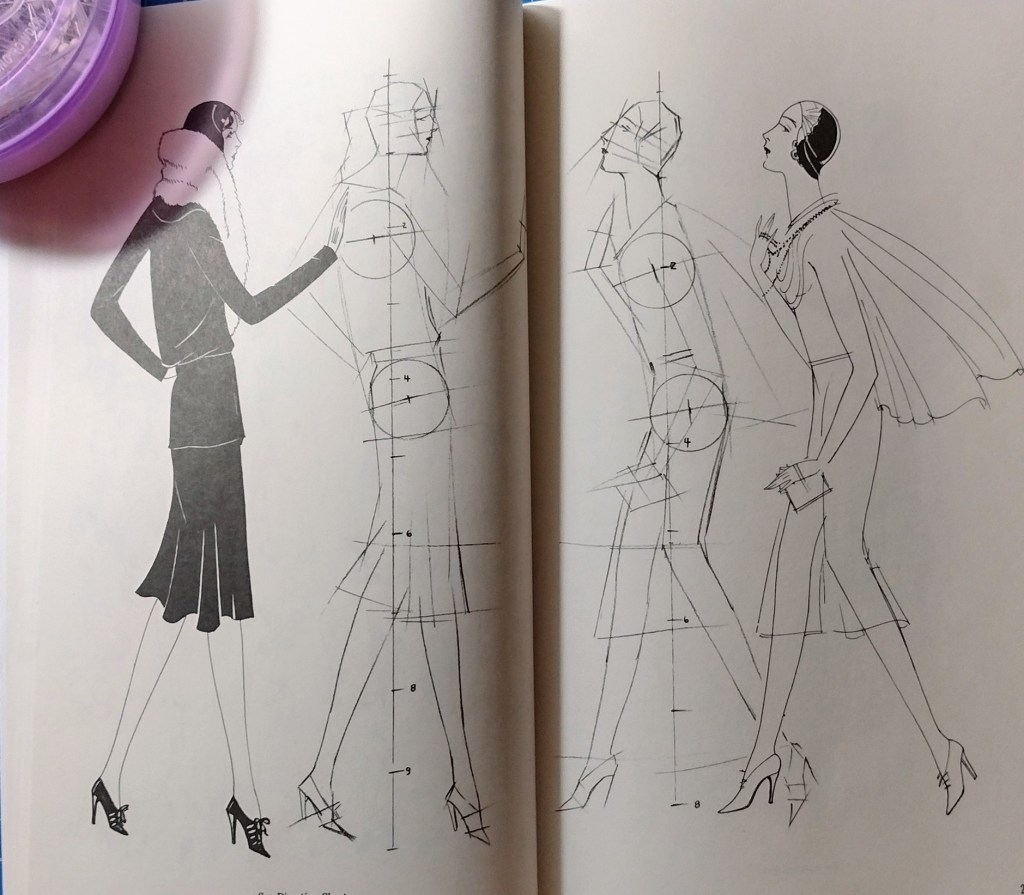

Foster’s book offers detailed diagrams for figures and clothing of the period from 1920s to 1950s. This is one of my favorite books for fashion illustration because the figure changes with each decade. Male and female figures are given and detailed.
Drawing the Head and Figure
by Jack Hamm

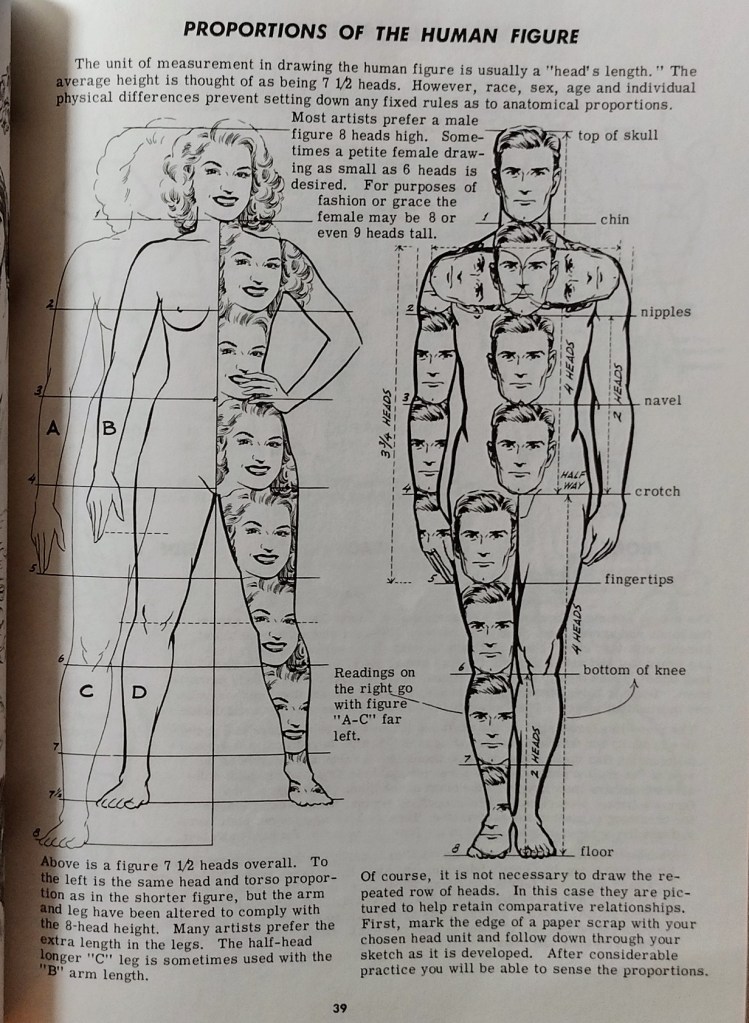

This book was published in 1963. The croquis and technique used will help you draw figures in tune with the current call to create more realistic renderings of female body shapes. The technique used in the book will provide looks that work well with retro styles of the 1940s and 1950s. Examples are also give for drawing the male figure.
Gertie’s New Fashion Sketchbook
by Gretchen Hirsch

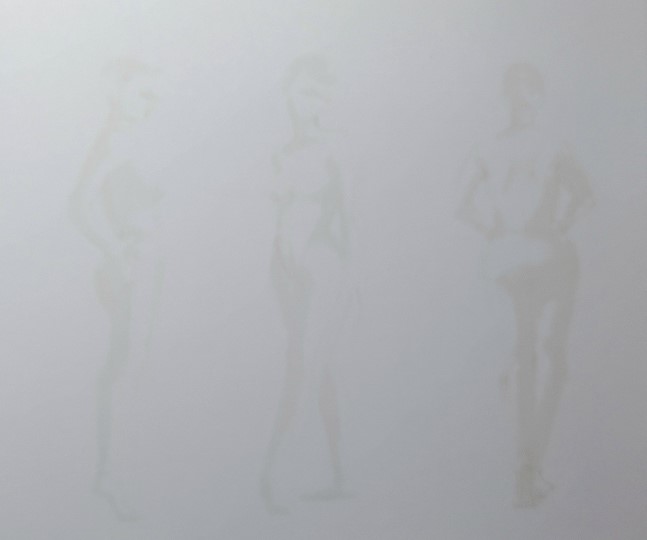

The premise of Gertie’s book is a good one. Gertie’s body positive croquis are intended to represent the a more realistic body upon which clothes can be sketched. The croquis are smaller than most standard sized croquis. The upper and lower torsos are each two heads high with the length of each head being about 3/8 to 1/2 inch high. Each page has two to three croquis in different poses (front, back and side views).
The drawback is how faint the croquis are on each page. This is not a book of figures to trace over. Rather these are figures to draw on. Each page is perforated and meant to be torn out and drawn over. Because the figures are so very lightly printed I’d recommend using the pages over a light box. Otherwise a very bright desk lamp is needed to ensure you draw the lines as best as possible.
Gertie’s croquis remind me of the ones Jack Hamm drew, only his are bolder and easier to render if photocopies are made and then traced over.


 Pour Moi
You must be logged in to post a comment.